



Victorian Tea Jar
A victorian tea jar brings the quiet ceremony of nineteenth-century hospitality into the modern room.
Victorian Tea Jar
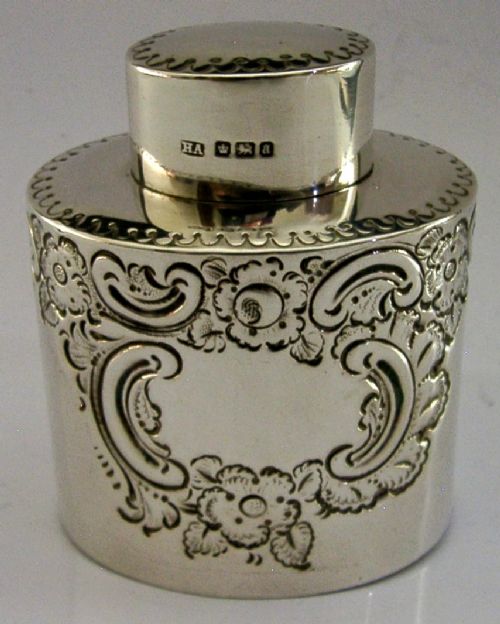
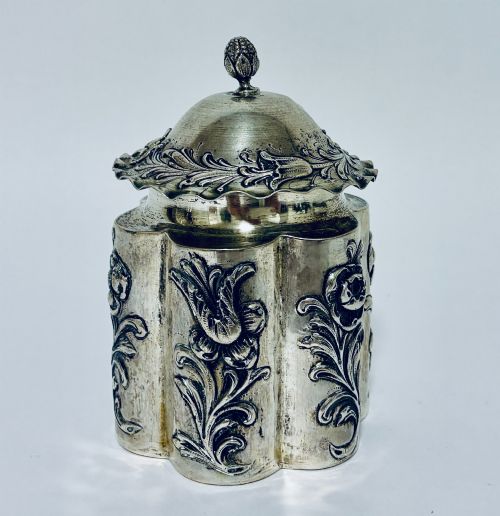
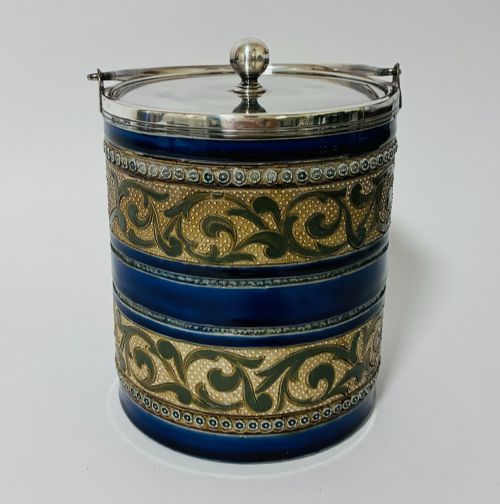
When searching for a victorian tea jar, collectors examine vessels designed to store dry leaves or biscuits securely upon the parlour table. The listings here primarily comprise sterling silver and silver-plated containers alongside ceramic bodies and oak boxes.
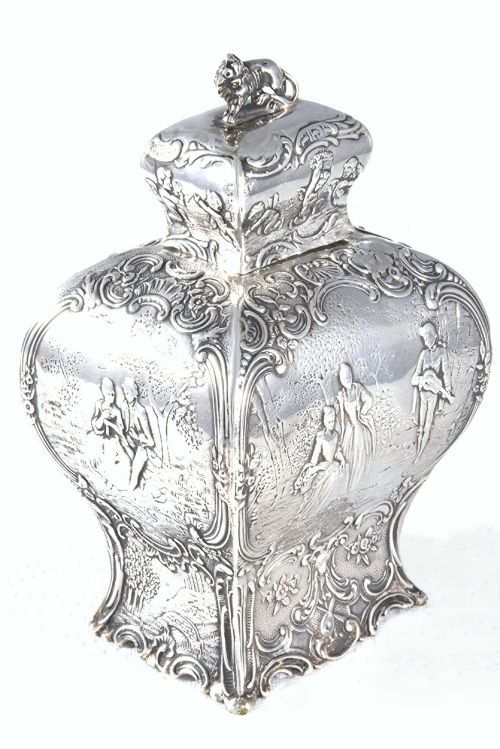
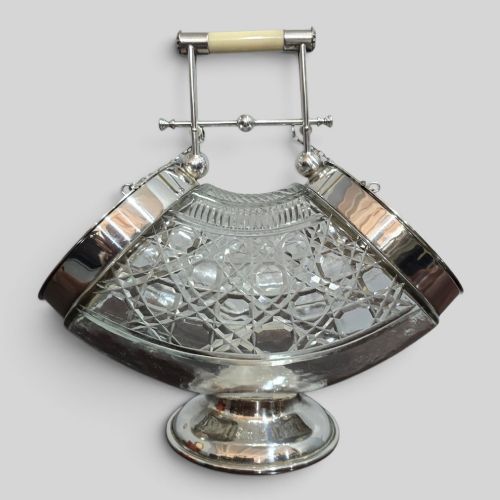
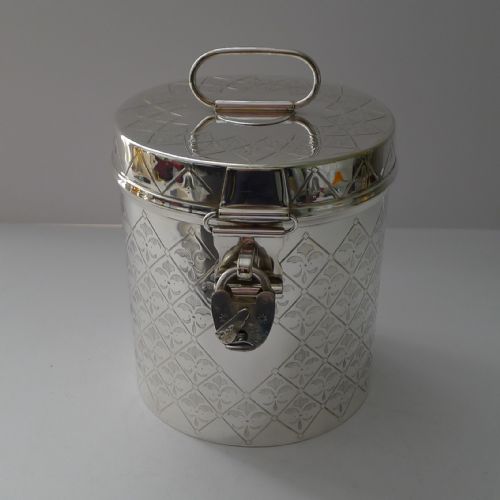
Makers often shaped these pieces as cylindrical canisters, bombe boxes, or heavy glass barrels mounted in metal frames. Many examples display specific nineteenth-century hallmarks or regional ceramic marks that date their production precisely.
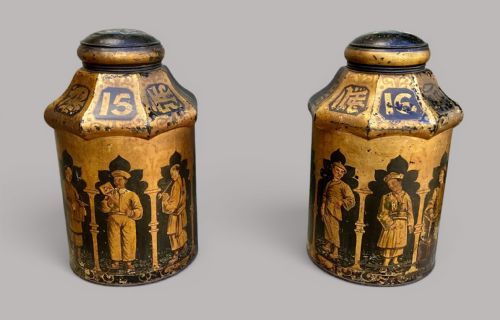
The assortment extends from plain domestic storage to elaborate Chinoiserie and Rococo revival designs intended for display. Buyers encounter both small tabletop caddies and larger lidded jars suited for dry goods.
Materials and construction methods
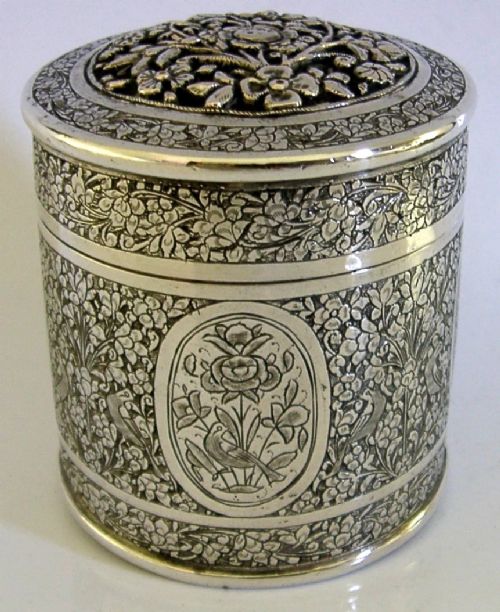
Silversmiths constructed sterling silver and plated vessels using hand-beating, repoussé, and piercing techniques to create textured floral and scroll motifs. Cut glass bodies required deep wheel-cutting to achieve light-refracting patterns on heavy lead crystal barrels.
Potteries shaped ceramic canisters from fine earthenware and porcelain, applying transfer-printed or hand-painted glazes such as Imari palettes and Chinoiserie scenes. Woodworkers joined seasoned oak with internal metal linings to build sturdy lidded boxes.
Mounts and locking mechanisms relied on cast brass and electroplated nickel silver to secure hinged lids and moving handles. Craftsmen finished metal surfaces through polishing and gold leaf gilding.
Maker marks across the selection include prominent Sheffield and Birmingham silversmiths alongside major English potteries.
Assessing material standards
Quality rests upon the thickness of the metal gauge and the crispness of the chased or cast ornament. Superior silver and plate retain sharp relief details without excessive wear from generations of cleaning.
Internal elements such as original gilded washes inside tea caddies and functional locking mechanisms with matching keys elevate a piece's historical integrity.
Mappin and Webb·Robert and Belk·Walker and Hall·Atkin Brothers·William Hutton·Elkington and Co·John Grinsell and Sons
The Victorian Tea Jar Glossary
- Repoussé
- A metalworking technique where the artisan hammers the design from the reverse side to form raised relief patterns on the exterior surface. This method creates tactile floral and scroll ornamentation on silver caddies.
- Sterling Silver
- An alloy consisting of pure silver and other metals to increase durability while maintaining a bright lustre. British pieces typically display a lion passant hallmark confirming this standard.
- Chinoiserie
- A European artistic style reflecting Chinese aesthetic influences through painted motifs, pagodas, and figures. It appears frequently on decorated tole and ceramic canisters from the period.
- Hobnail Cut
- A sharp, geometric glass-cutting pattern resembling the iron hobnails used in sturdy boots. The facets create intense sparkle across heavy biscuit barrels.
- Bombe
- A swollen, convex furniture or vessel profile curving outward toward the base. This shape provides substantial internal volume while maintaining a compact tabletop footprint.
Victorian Tea Jar: Frequently Asked Questions
What is the difference between a tea caddy and a biscuit barrel?
Tea caddies were manufactured with smaller capacities and tight lids to preserve loose tea leaves and prevent the loss of delicate aromas. Biscuit barrels featured larger openings and wider bodies designed to hold dry baked goods for guests.
While both utilise similar silver plating and ceramic bodies, their internal proportions reflect their original domestic functions. Caddies often include internal compartments, whereas barrels remain open chambers.
How do I care for silver plated containers?
Silver plated surfaces require gentle cleaning with a soft cloth and specialised polish formulated for plated metal to prevent wearing through the outer layer. Avoid harsh chemical dips that strip the underlying base metal and damage recessed details.
Store these objects away from direct moisture and sulphur sources to maintain the polished shine without requiring aggressive scrubbing.
Can these containers still be used for food storage?
Most antique containers serve decorative purposes today due to age-related wear on interior linings and historical soldering materials. Glass and ceramic jars with intact glazed interiors remain suitable for dry goods after thorough washing.
Silver containers with degraded interior washes should be reserved for display rather than direct contact with edible items.
How can I date a piece without a hallmark?
Dating relies on examining the manufacturing techniques, mounting styles, and decorative motifs characteristic of specific decades. Ceramic bodies often bear registry marks or factory ciphers that point to a narrow production window.
Material combinations, such as oak paired with specific electroplated mounts, also help place an object within the nineteenth century.