




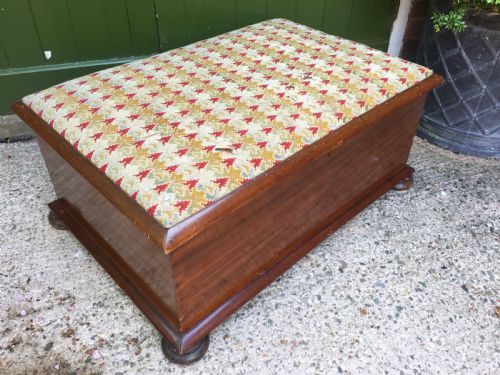


Victorian Tapestry Footrest
These Victorian tapestry footrest pieces combine needlework and timber frame construction, offering period character and practical fireside seating for the home.
Victorian Tapestry Footrest
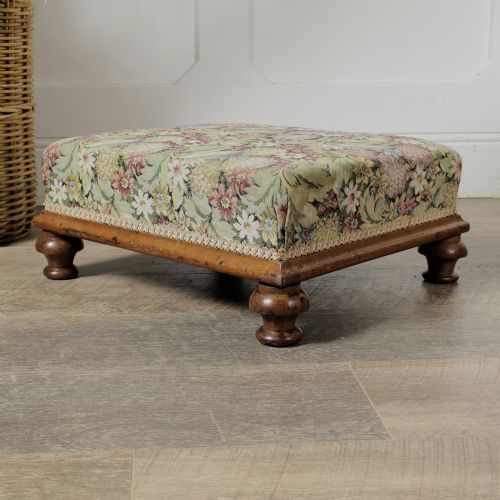
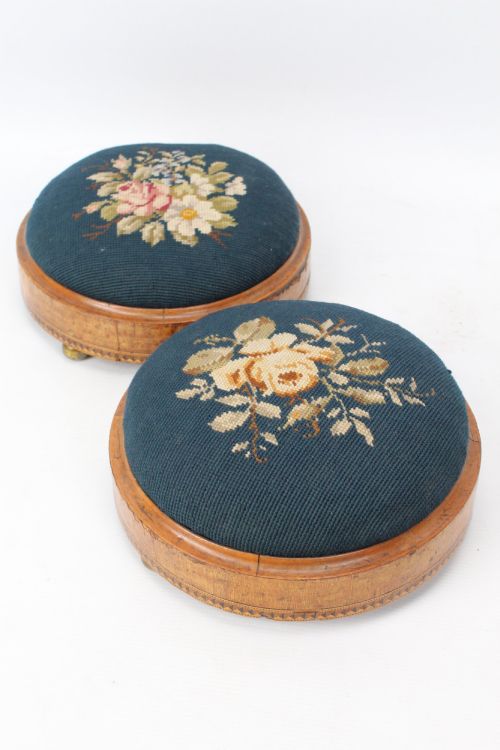
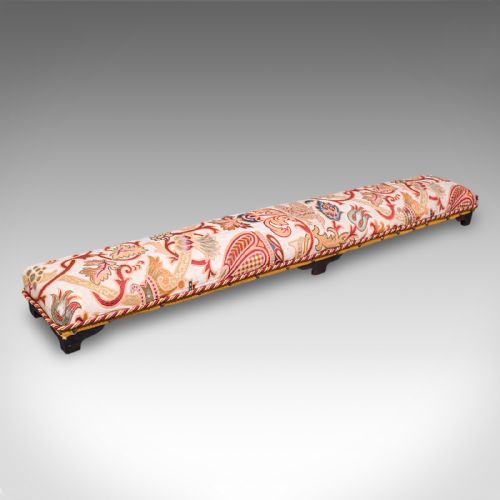
A victorian tapestry footrest takes several forms across this selection, ranging from small individual stools to long carriage stools and larger ottomans. The examples listed display classic shapes such as oval, rectangular, and shaped frames designed for fireside or dressing room use.
Most pieces date to the Victorian period, though earlier influences appear in Georgian style and Chippendale revival designs, alongside French Louis XV revival and English country interpretations. Buyers will frequently encounter walnut, mahogany, and rosewood frames supporting needlepoint, wool, and crewelwork textile tops.
Materials and construction
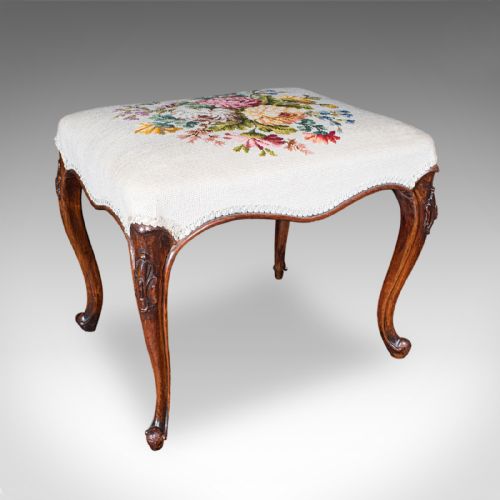
Timber frames form the structural base of a victorian tapestry footrest, utilising dense hardwoods like mahogany, walnut, and rosewood, alongside occasional ebonised or gilt finishes. Joinery varies from simple pegged construction to intricately carved details found in rococo revival and dressing stool examples.
The upper sections rely on textile artistry, incorporating wool needlepoint, gros-point needlework, and crewelwork stretched over padded foundations. Brass elements occasionally accent the frames, completing a construction method focused on both domestic utility and decorative display.
Victorian Tapestry Footrest Retail Price Guide 2026
Typical asking prices for victorian tapestry footrest among the pieces listed under this phrase on Sellingantiques today, from the lower quarter to the upper quarter. They describe what is for sale here now, not the wider market.
Design styles span from early Victorian and English country to French Louis XV revival and Chippendale revival.
Assessing quality in the collection
Quality in a victorian tapestry footrest rests heavily on the execution of the timber carving and the complexity of the needlework top. Dense hardwoods like rosewood and walnut, combined with finely detailed gros-point or needlepoint textile work, mark out the upper end of the range.
Proportion and frame integrity also distinguish the pieces. Substantial mahogany frames with original upholstery and refined turnings or carvings represent superior craftsmanship compared to plain or heavily altered utilitarian equivalents.
The Victorian Tapestry Footrest Glossary
- Needlepoint
- A type of canvas work embroidery executed with wool yarn, commonly seen on the upper surfaces of these stools.
- Gros-point
- A coarse-stitch needlepoint embroidery using wool on canvas, frequently utilised for durable historical footstool covers.
- Ottoman
- A low, upholstered seat or footstool without a back or arms, often built on a larger scale than a standard footrest.
- Crewelwork
- Embroidery using wool yarn on a plain-woven fabric ground, characteristic of some English fireside stools.
- Tunbridge Ware
- Small-scale decorative woodwork featuring intricate mosaic patterns created from tiny pieces of naturally coloured wood.
Victorian Tapestry Footrest: Frequently Asked Questions
What is a Victorian tapestry footrest used for?
These pieces served primarily as fireside foot rests or low dressing stools in nineteenth-century homes, designed to keep feet elevated away from cold drafty floors.
Today, they function as versatile decorative accents, occasional seats, or traditional footstools in living spaces and studies.
How do I identify a Victorian footstool?
Identification relies on examining the timber frame, upholstery style, and construction methods characteristic of the nineteenth century. Look for traditional hardwoods like walnut and mahogany paired with period needlework designs.
Details such as carved rococo revival flourishes or original gros-point tapestry tops further confirm the period origin.
Are the tapestry tops original?
Many pieces retain their original wool needlepoint or crewelwork covers, showing authentic wear consistent with age. Some examples may feature later reupholstery that respects the historical aesthetic of the frame.
Examining the underside and the attachment of the textile helps determine whether the needlework dates alongside the timber structure.
How do I care for antique upholstery?
Protect the textile tops from direct sunlight to prevent fading of the wool yarns and needlepoint threads. Gentle vacuuming through a mesh screen helps remove dust without damaging the historic fibres.
Keep the wooden frames conditioned with appropriate furniture wax and avoid placing them near excessive heat sources.