
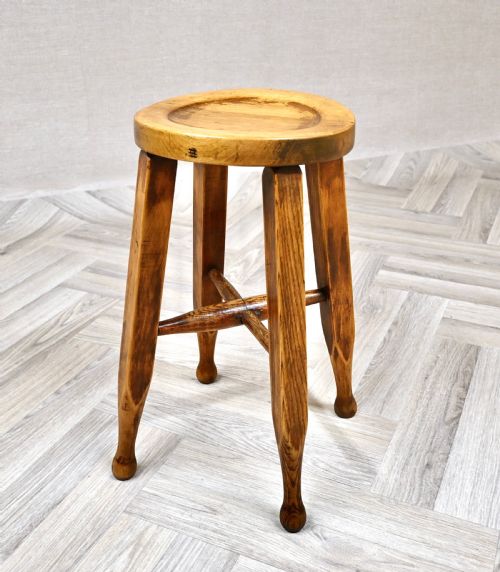


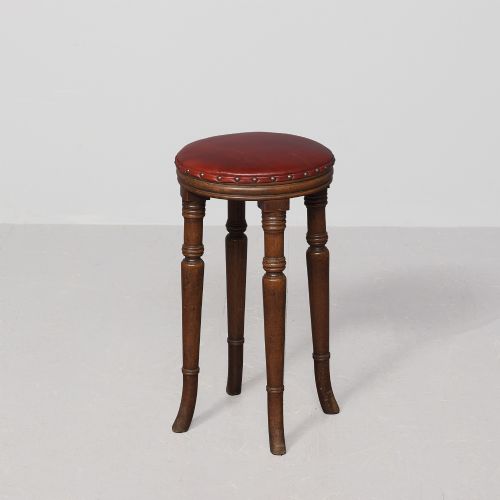


Round Footstool
These round footstool examples bring period character and practical charm to any room, offering versatile seating and footrests rooted in traditional craftsmanship.
Round Footstool
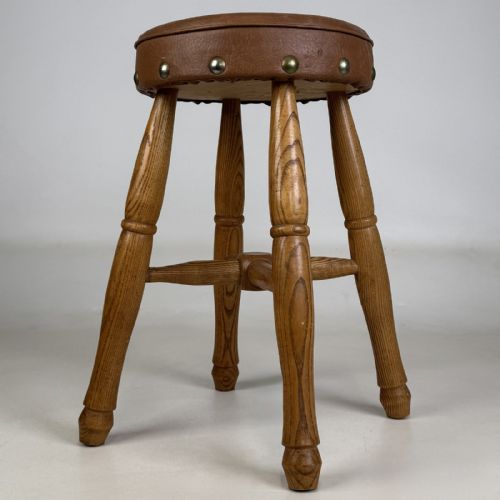
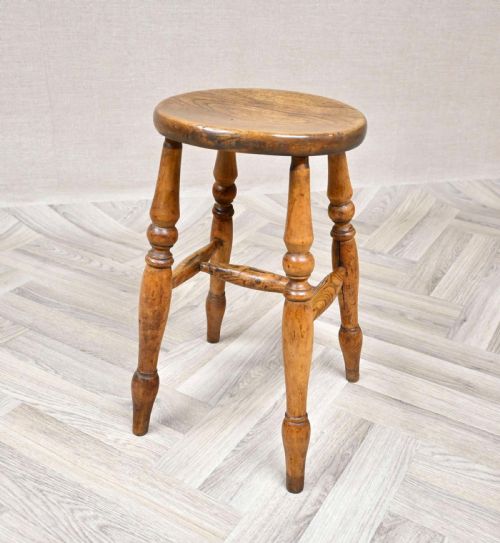
When you search for a round footstool, you encounter diverse items spanning the 19th Century and Victorian eras alongside Art Deco pieces. The forms range from simple Windsor designs to elaborate buttoned versions.
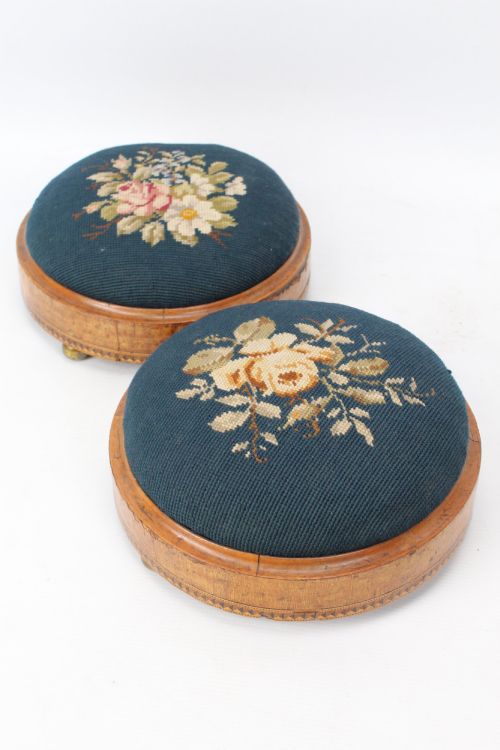
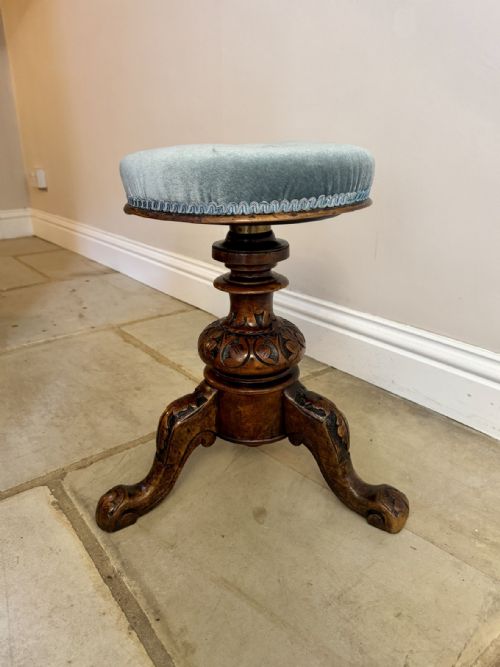
Most examples hail from Victorian and nineteenth-century English and French workshops. You frequently meet walnut and mahogany frames paired with needlepoint, kilim, velvet, calico, or leather upholstery.
These items serve equally as decorative accents and functional footrests by chairs or firesides. Their compact circular shapes allow them to fit easily into traditional and eclectic interiors alike.
Materials and construction methods
The timber frames utilise solid woods such as walnut, oak, mahogany, and elm, often shaped with carved details or turned supports. Joinery relies on traditional carpentry techniques appropriate to each period.
Upholstery involves textiles like wool needlepoint, geometric kilim tapestry, silk, velvet, and leather stretched over supportive padding. Decorative touches include deep buttoning and intricate Tunbridge Ware inlay work.
Listings feature items from the 1800s, 1850s, 1860s, 1870s, 1880s, and 1920s, employing brass, walnut, oak, wool, velvet, elm, and calico.
Distinctions in quality
Quality rests upon the crispness of the timber carving and the sophistication of structural joinery. Finer examples display meticulous grain selection in woods like walnut and mahogany.
The standard of the upholstery work and textile preservation dictates the upper tier of pieces. Expertly executed needlepoint, inlay, and deep buttoning elevate the overall execution.
The Round Footstool Glossary
- Tunbridge Ware
- Small decorative wooden objects decorated with mosaic woodwork patterns. This technique creates detailed geometric pictures using tiny pieces of naturally coloured wood.
- Windsor Stool
- A wooden seat constructed with turned legs and spindles fitted directly into a solid wooden seat. These pieces reflect traditional vernacular woodworking methods.
- Deep Button
- An upholstery method where buttons are pulled tight through the padding and secured to create a quilted diamond pattern. This technique adds both resilience and visual depth to the textile.
- Kilim Tapestry
- A flatwoven textile traditionally produced in parts of the former Ottoman Empire and Persia. These durable fabrics provide distinct geometric patterns when utilised for upholstery.
Round Footstool: Frequently Asked Questions
What periods do these round footstool items represent?
The pieces span from George III and early Victorian periods through the later nineteenth century into Art Deco designs. Victorian examples appear most frequently in the current selection.
Each era brings distinct timber choices and upholstery styles, ranging from plain mahogany to ornate inlaid walnut with needlepoint.
How were these round footstool designs used originally?
These items functioned primarily as footrests to keep feet elevated above cold draughty floors in period homes. They also served as low occasional seating around the parlour or fireside.
Their portable sizes allowed servants to move them easily between rooms depending on where warmth or extra seating was needed.
How do I care for antique upholstery?
Protect delicate textiles such as needlepoint, silk, and wool from direct sunlight to prevent fading and fibre degradation. Gentle surface cleaning with appropriate attachments preserves the historical fabric.
Condition the wooden frames occasionally with suitable wax to maintain the finish without harming the surrounding textile work.
How do I distinguish Victorian from Art Deco pieces?
Victorian items typically feature carved walnut or mahogany frames, turned legs, and elaborate upholstery like needlepoint, kilim, or deep buttoned silk. They emphasise traditional ornamentation and tactile materials.
Art Deco pieces display cleaner lines and simpler geometric forms reflective of twentieth-century design shifts. The aesthetic moves away from heavy nineteenth-century revival styles.