



Victorian Embroidered Footstool
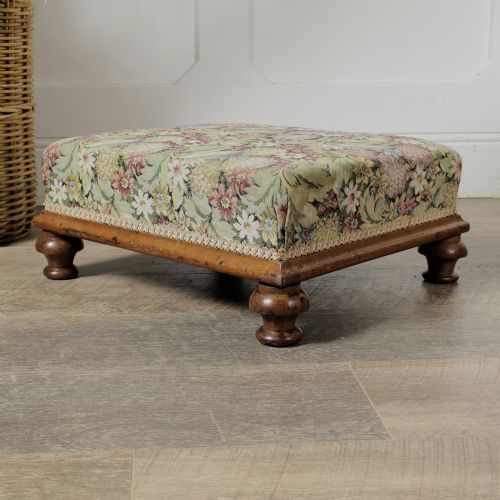
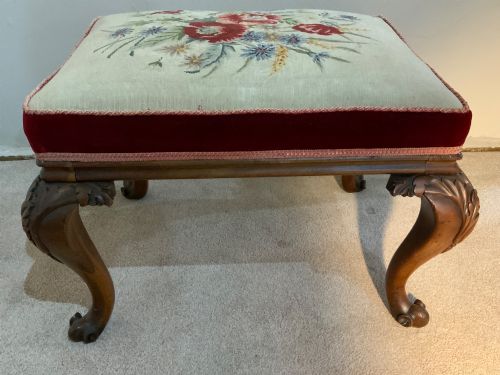
A victorian embroidered footstool brings heavy timber frames and rich needlework together to anchor a fireside or dressing room with period weight.
Victorian Embroidered Footstool
A victorian embroidered footstool is a low seat designed for resting the feet, typically combining a sturdy timber frame with a textile top. Buyers searching for a victorian embroidered footstool encounter pieces spanning the nineteenth century, including specific dates such as eighteen-fifty, eighteen-sixty, and eighteen-eighty.
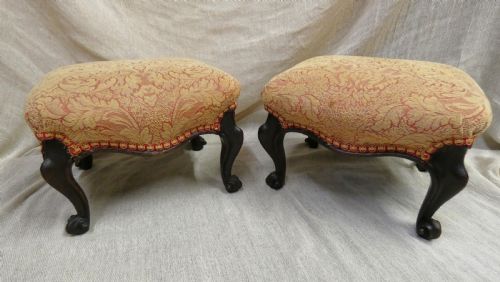
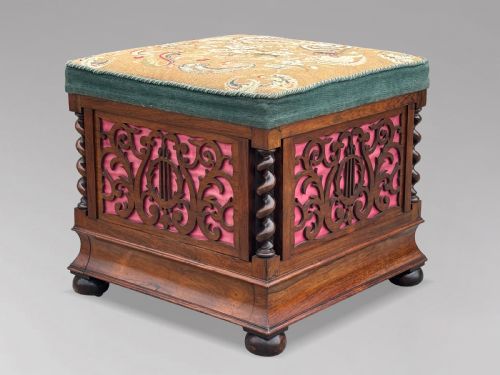
The forms on this page range from compact piano stools and dressing stools to larger ottomans and fireside footstools. Many examples take simple rectangular or oval shapes, while others utilise X-framed supports or revival stylistic influences.
Originating largely from English workshops, these items serve both functional and decorative purposes within period interiors. The upper surface almost invariably displays worked textiles, from floral needlework and tapestry to gros point needlepoint.
Materials and Construction
Makers built the structural frames of these stools using dense cabinet timbers, predominantly solid mahogany and rosewood, occasionally incorporating gilt brass accents. These hardwoods provided the substantial weight and structural integrity required for daily domestic use.
The upper upholstery relied on durable base fabrics including wool, velvet, damask, and fabric trim to secure the needlework panels. Skilled artisans stitched complex floral and geometric motifs using coloured wools and threads directly onto the canvas foundations.
Victorian Embroidered Footstool Retail Price Guide 2026
Typical asking prices for victorian embroidered footstool among the pieces listed under this phrase on Sellingantiques today, from the lower quarter to the upper quarter. They describe what is for sale here now, not the wider market.
Victorian feet clearly needed options, as makers produced everything from severe mahogany boxes to flamboyant X-framed perches.
Judging Quality and Craftsmanship
The distinction between standard domestic pieces and finer examples rests primarily on the crispness of the timber turning and the density of the needlework. Superior stools display tight, even stitches in the tapestry top alongside precisely shaped mahogany or rosewood frames that remain rigid and true.
Stylistic ambition also divides the range, moving from plain rectangular stools to more elaborate forms featuring X-frames, gilded brass mounts, or complex revival motifs. The best specimens maintain an original harmony between the upholstery and the underlying woodwork.
The Victorian Embroidered Footstool Glossary
- Needlepoint
- Canvas work embroidery stitched by hand using a tent stitch over a grid mesh. It forms the durable pictorial surface seen on many period stools.
- X-framed
- A structural furniture design where intersecting diagonal timbers form a cross support beneath the seat. This form appears frequently on nineteenth-century piano and dressing stools.
- Damask
- A reversible figured fabric traditionally woven on a jacquard loom with patterns formed by contrasting warp and weft threads. It provides a rich texture for stool upholstery.
- Gilt brass
- Metalwork treated with a thin layer of gold or gold-coloured wash to simulate solid ormolu. It appears on select decorative mounts and fittings.
- Tapestry
- A heavy hand-woven or needle-worked textile depicting figures, foliage, or floral arrangements. These panels define the decorative character of nineteenth-century seating.
Victorian Embroidered Footstool: Frequently Asked Questions
What are these stools used for?
These low seats were originally placed by firesides, pianos, or dressing tables to support the feet during long periods of sitting.
Today, they function well as decorative accents, low coffee tables, or fireside seating in traditional and mixed interiors.
How do I tell nineteenth century pieces apart?
Distinguishing the exact period relies on examining the timber species, turning styles, and upholstery techniques used in the construction.
Earlier nineteenth-century examples often favour dense rosewood and heavy mahogany, whereas later Victorian items lean towards varied revival styles and distinct fabric trims.
Are the needlework tops original?
Many stools retain their period hand-worked tapestry or needlepoint covers, stitched using wool threads on canvas foundations.
Because textiles wear out through heavy use, some pieces feature later historical re-upholstery that respects the original nineteenth-century aesthetic.
How do I care for antique upholstery?
Protect delicate wool needlework and velvet surfaces from direct sunlight to prevent the coloured threads from fading over time.
Gentle surface cleaning with a soft brush helps remove dust without disturbing the underlying canvas and traditional stuffing materials.