


Victorian Table Hollowware
Victorian table hollowware brings sculptural silver and glass to the dining room, offering practical service pieces that anchor a traditional table setting.
Victorian Table Hollowware
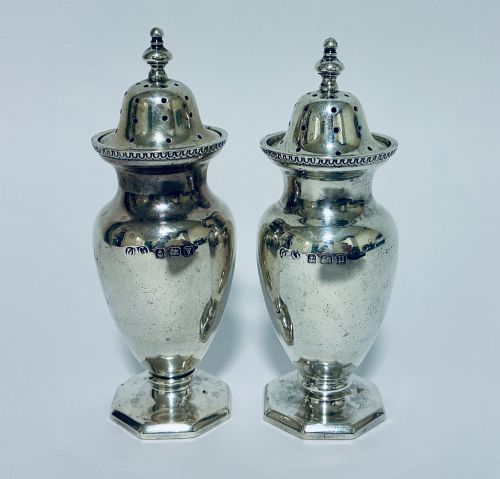
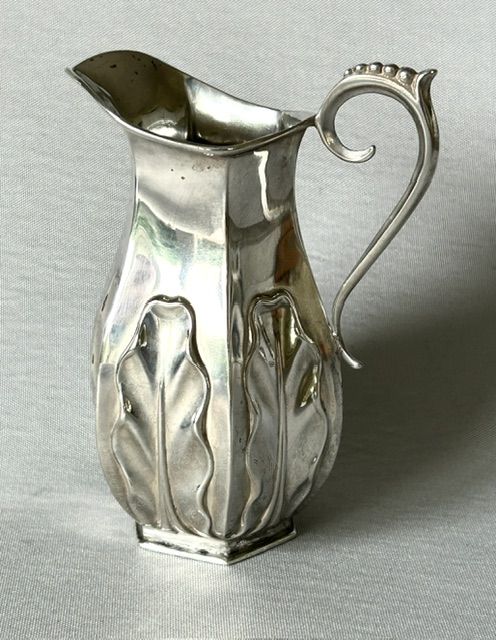
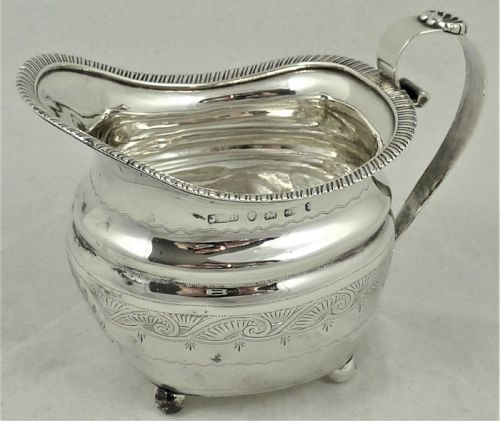
When you search for victorian table hollowware, you encounter vessels designed to hold liquids, condiments, and dry goods at the dining table. The selection includes cream jugs, sauce boats, pepper casters, biscuit barrels, mustard pots, salt cellars, bowls, and cruet stands.
The pieces on this page span the Victorian era alongside Edwardian and Georgian Revival examples. You will frequently find sterling silver and silver plate constructions, often paired with cobalt blue glass or cut glass liners.
How victorian table hollowware was made
Silversmiths utilised sterling silver and electroplated nickel silver as the primary foundations for these vessels. Manufacturers employed techniques such as casting, hammering, and plating to build substantial forms.
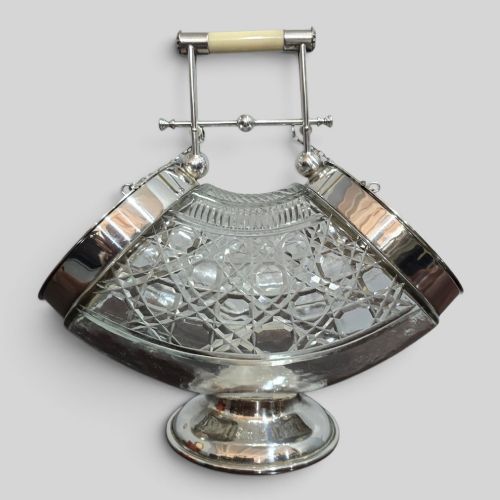
Makers integrated cut glass and cobalt blue glass inserts into metal frameworks, particularly for mustard pots, salt cellars, and biscuit barrels. Naturalistic motifs, including acorn designs and shell shapes, were worked directly into the metal surfaces.
What varies in quality in victorian table hollowware
The crispness of chased and cast ornamentation defines the upper tier of production. Pieces featuring detailed naturalistic work, such as distinct foliage and fruit motifs, demonstrate higher artisanal skill than plain or lightly stamped examples.
The integrity of the metal plating and the retention of original glass liners influence the standard of individual pieces. Heavy gauge sterling silver constructions maintain their structural form more securely than thinner plated counterparts.
Padley Parkin and Staniforth·Charles Stuart Harris·Elkington·William Hutton and Sons
The Victorian Table Hollowware Glossary
- Hollowware
- Table vessels that are hollow in construction, such as jugs, pots, bowls, and tureens. These items contrast with flatware like spoons and forks.
- Argyll
- A covered gravy warmer equipped with an inner chamber for hot water. This design kept sauces warm throughout a meal.
- Cruet stand
- A frame designed to hold multiple condiment bottles, mustard pots, and pepper casters together. They sat centrally on the dining table for easy access.
- Biscuit barrel
- A lidded container utilised for serving dry biscuits or crackers in the nineteenth century. They frequently feature ceramic or glass bodies encased in silver plate mounts.
- Electroplated nickel silver
- A base metal alloy coated with a layer of silver through an electrolytic process. This technique allowed manufacturers to produce affordable alternatives to solid sterling silver.
Victorian Table Hollowware: Frequently Asked Questions
What is victorian table hollowware?
Victorian table hollowware encompasses hollow vessels used for serving food and condiments during meals in the nineteenth and early twentieth centuries.
These items range from everyday cream jugs and sauce boats to specialised pieces like spoon warmers, biscuit barrels, and cruet stands.
How were salt cellars used?
Salt cellars held loose salt open on the dining table before individual salt shakers became standard practice.
Dinners used small spoons or pinched the salt directly from the glass-lined or solid metal vessels to season their food.
How do I care for silver plated hollowware?
Silver plated items require gentle cleaning with dedicated silver polish to remove tarnish without wearing away the thin metal plating.
Storing pieces in dry environments and washing them by hand preserves the surface finish and protects any glass liners.
How can I tell a mustard pot from a pepper caster?
Mustard pots feature hinged lids and often include a small cutout in the rim to accommodate a spoon, accompanied by a glass liner.
Pepper casters possess perforated tops designed for shaking dry seasoning rather than serving wet condiments with a spoon.