
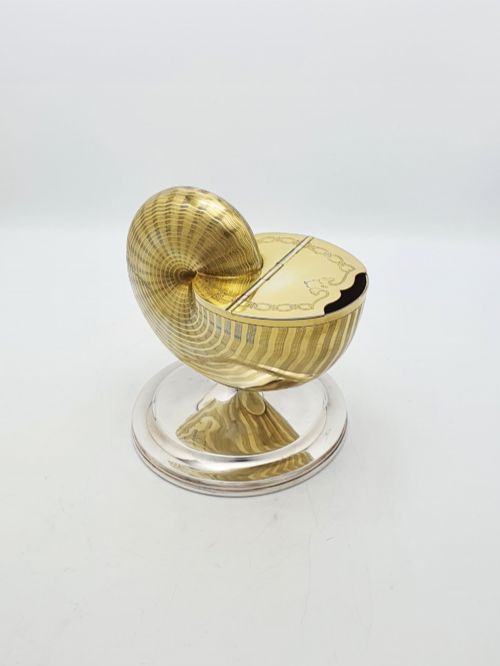
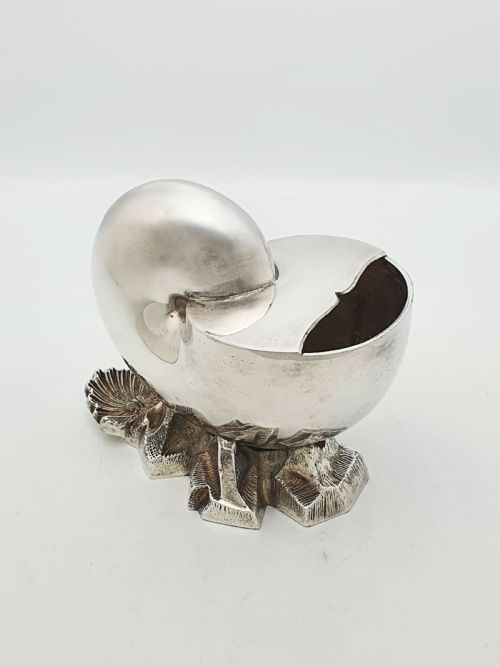


Victorian Spoon Warmer
A victorian spoon warmer is a specialised Victorian table accessory designed to keep ladle-served gravy or broth warm, highly sought after for its whimsical marine and novelty forms.
Victorian Spoon Warmer
When you search for a victorian spoon warmer, you encounter inventive tableware accessories produced primarily during the latter half of the nineteenth century. These vessels sat on the dining table to maintain the temperature of the spoons used for gravies and sauces.
The version you are most likely to meet on this page is moulded in silver plate, frequently adopting the shape of a nautilus, conch, or whelk shell. Marine motifs dominate the surviving examples, alongside occasional novelty shapes such as shoes or marine buoys.
The evidence spans several decades from the eighteen-sixties through the eighteen-nineties, capturing a period of immense creativity in Victorian dining traditions. Tableware from this era prioritised amusement alongside utility, resulting in sculptural forms that doubled as conversation pieces.
How they were made
Makers utilised silver plate and electroplated nickel silver, known as EPNS, to achieve a durable metallic sheen over a base metal alloy. Gilding frequently highlighted interior bowls and specific decorative accents, contrasting with the polished silver exterior.
Ceramic examples appeared alongside metal versions, utilising china bodies finished with glaze and detailed transfer printing or colour work. Burmantofts and Ridgways produced ceramic iterations that turned everyday vessels into sculptural grotesques or naturalistic ornaments.
Metalsmiths constructed hollow bodies to house hot water tanks, allowing heated water to be poured inside to warm the ladles resting upon them. Hinged lids and specialised openings facilitated the filling and operation of these intricate thermal tableware pieces.
Victorian Spoon Warmer Retail Price Guide 2026
Typical asking prices for victorian spoon warmer among the pieces listed under this phrase on Sellingantiques today, from the lower quarter to the upper quarter. They describe what is for sale here now, not the wider market.
Listings demonstrate that silver plate is the predominant material, complemented by occasional ceramic examples from factories like Burmantofts and Ridgways.
What varies in quality
The distinction between standard production and top-tier work rests on the sculptural crispness of the casting and the naturalism of the form. Finer pieces capture the delicate ridges of a seashell or the intricate anatomy of a marine buoy with convincing depth.
Attribution to documented silversmiths and makers elevates the standing of an individual piece above generic factory output. The integration of functional elements, such as securely fitted hot water tanks and balanced lions paw feet, demonstrates superior manufacturing standard.
Ridgways·Burmantofts·Christopher Dresser·Atkin Brothers·William Hutton and Son·Roberts and Belk·Henry Wilkinson and Co
The Victorian Spoon Warmer Glossary
- EPNS
- Electroplated Nickel Silver. This denotes a base metal alloy coated with a layer of silver through an electrolytic process, forming the primary metallic body for many Victorian items.
- Nautilus
- A marine mollusc whose spiral shell inspired the most common sculptural silhouette for these tableware accessories. Silversmiths rendered the ribbed contours of this shell in plated metal.
- Novelty
- A descriptor for objects fashioned into amusing, unexpected shapes detached from standard utilitarian geometry. Examples include footwear, marine buoys, and grotesque creatures.
- Hot water tank
- An internal reservoir integrated into the vessel body. Users filled this compartment with heated water to maintain the temperature of the cutlery resting above.
Victorian Spoon Warmer: Frequently Asked Questions
What was the purpose of a victorian spoon warmer?
These vessels were filled with hot water to keep serving spoons warm during formal Victorian meals. This prevented chilled metal ladles from cooling down the gravies and sauces they served.
They sat directly on the dining table as functional centerpieces that combined thermal engineering with whimsical design. Guests and servants used them to retrieve warm spoons throughout the course of a meal.
How do you use a victorian spoon warmer?
Hot water was poured into the internal tank through a concealed opening, and serving spoons were rested inside or hung against the warmed body. The water kept the metal at an elevated temperature until the sauce was served.
Modern owners generally display these pieces as decorative objects rather than filling them with water. Their sculptural shell and novelty forms suit sideboard or table decoration.
Why are so many shaped like shells?
Victorian naturalism heavily influenced dining accessories, celebrating the organic curves and textures found in the natural world. Shells provided a practical cavity shape that naturally accommodated the bowl of a spoon.
Marine motifs such as nautilus, whelk, and conch shells dominated silver plate production during the eighteen-seventies and eighties. These designs aligned with the Victorian fascination for marine biology and seaside exploration.
How can you tell the age of these pieces?
Dating relies on registration marks, maker stamps, and stylistic markers recorded across the Victorian period. Pieces from the eighteen-sixties and seventies often feature distinct registry diamonds or early electroplating stamps.
Later Victorian examples from the eighteen-nineties show shifts in manufacturing techniques and changing aesthetic preferences toward simpler or more stylised novelty forms. Comparing the base metal and plating style helps anchor the piece within the correct decade.