
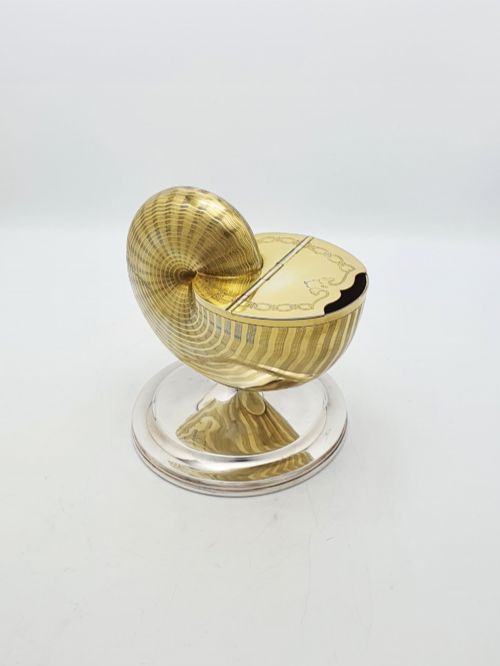
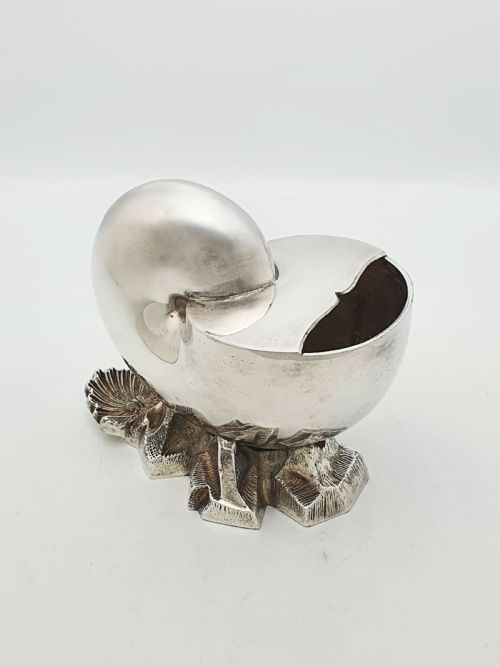


Silver Spoon Warmer
A silver spoon warmer is a distinct Victorian table accessory designed to keep gravy or soup spoons heated during formal dining.
Silver Spoon Warmer
A silver spoon warmer is an eccentric Victorian dining accessory designed to hold warm water and keep table spoons heated during meals. When exploring a silver spoon warmer, the most common form encountered is the naturalistic nautilus shell, alongside marine buoy, shoe, and sauce boat shapes.
The objects span the Victorian period, originating predominantly from English makers in the latter half of the nineteenth century. These pieces reflect the elaborate dining rituals of the era, where specialised tableware served both practical thermal functions and ornamental display roles on the sideboard.
Materials and construction methods
Makers utilised silver plate, EPNS, and electroplated nickel silver over metal alloys to shape these vessels, often incorporating internal hot water tanks. Gilt metal highlights frequently interior details or decorative shell mouths to contrast with the polished silver exterior.
Silversmiths employed casting and sheet metal working techniques to achieve realistic marine and novelty forms such as conch shells, clam shells, and marine buoys. The watertight compartments required soldered joints and hinged lids to contain the heated water safely.
Listings feature silver plate, EPNS, and gilt metal across Victorian naturalism styles.
Distinctions in manufacture and form
Quality rests in the sculptural fidelity of the novelty design and the crispness of naturalistic detailing, such as the ridges on a nautilus or whelk shell. Pieces by documented makers exhibit superior weight and sturdiness in their hinged lids and internal water reservoirs.
The degree of original silver plating retention and the subtlety of interior gilding distinguish finer examples from standard production items. Uncommon silhouettes, such as the marine buoy or shoe, demonstrate greater ambition in design than the standard shell shapes.
Christopher Dresser·Atkin Brothers·William Hutton and Son·Roberts and Belk·Henry Wilkinson and Co·Walker and Hall·Thomas Latham and Ernest Morton·Hukin and Heath
The Silver Spoon Warmer Glossary
- EPNS
- Electroplated Nickel Silver. A base metal alloy of copper, nickel and zinc coated with a layer of silver.
- Nautilus
- A marine mollusc whose spiral shell inspired the most popular figural shape for these vessels. Victorian designers favoured its natural symmetry for tableware.
- Novelty
- An object made in a whimsical or amusing shape detached from standard utilitarian geometry. Examples include shoes, marine buoys, and shells.
- Gilt
- Covered with a thin layer of gold on the interior or decorative highlights. This technique protected base metals from tarnishing in moist environments.
Silver Spoon Warmer: Frequently Asked Questions
How do you use a silver spoon warmer?
Hot water is poured into the internal reservoir through a dedicated opening, warming the metal walls. Spoons are then rested inside the vessel to ensure they are warm to the touch when guests use them during a meal.
Water is emptied after use via the same aperture or a plugged base depending on the specific maker's internal design. The lids remain closed during service to trap the heat within the shell or novelty compartment.
What periods do these pieces date from?
The recorded examples date primarily from the Victorian era, spanning the decades between eighteen-sixty and nineteen-hundred. A small number extend slightly into the early Edwardian period.
Stylistic shifts follow Victorian naturalism closely, moving from standard shell forms toward more imaginative novelty shapes toward the end of the nineteenth century.
How should I clean a silver spoon warmer?
Maintenance requires gentle cleaning with a non-abrasive silver polish to preserve the underlying plating and any interior gilding. Harsh chemical dips can strip the delicate highlights and vintage patina.
Internal water chambers should be dried thoroughly after handling to prevent mineral deposits from forming inside the sealed tank.