
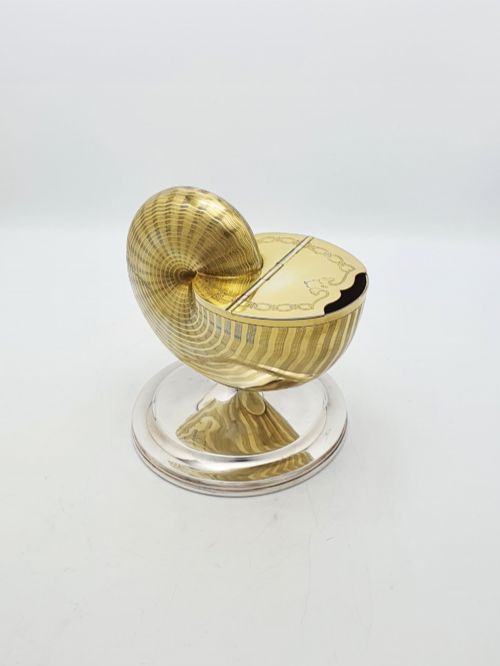
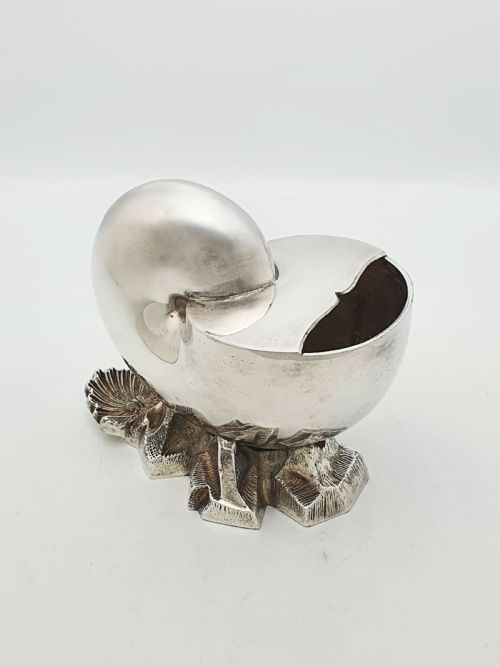


Silver Plated Spoon Warmer
These silver plated spoon warmer designs bring Victorian dining room character to the table while keeping service spoons warm.
Victorian Spoon Warmers
A silver plated spoon warmer provides a period dining accessory designed to keep silver tableware warm before use. The form dates primarily to the Victorian era, spanning decades from eighteen sixty to nineteen hundred.
The most common version met on this page is the nautilus shell design, appearing frequently in both current stock and archive sales. Other novelty marine shapes include conch shells, clam shells, and marine buoys.
Beyond marine themes, novelty forms shaped as shoes or boots emerge from the eighteen eighties. These unusual pieces reflect a Victorian taste for whimsical tableware that sparked conversation at the dining table.
Materials and Electroplating
Makers constructed these vessels from base metal alloys, predominantly electroplated nickel silver or standard metal, before applying a layer of silver plate. This electroplating technique allowed workshops to produce brilliant silver surfaces without the cost of solid silver.
Hollow bodies often incorporated internal hot water tanks or compartments designed to hold heated water. Craftsmen soldered individual metal components together, finishing the exterior with detailed shell fluting, coral texture, or smooth shoe contours.
Retail Price Guide 2026
Typical UK retail prices for silver plated spoon warmer, calculated from the Sellingantiques database of over a million retail prices indexed since 2003. This retail price guide relies exclusively on Sellingantiques data; no external sources or auction records are used, so the figures do not describe the wider market.
Craftsmanship and Form
Quality separates standard production wares from pieces bearing known maker marks and inventive novelty shapes. Finer examples display crisp shell texturing, sturdy hinged lids, and substantial metal weight rather than thin plating.
The degree of naturalism in marine and novelty forms dictates distinction. A marine buoy with a clear registration mark or a well-defined shoe model commands attention above plain shell bodies.
William Hutton and Son·Atkin Bros·Roberts and Belk·Walker and Hall·Thomas Latham and Ernest Morton·Hukin and Heath
The Silver Plated Spoon Warmer Glossary
- Electroplated Nickel Silver
- A base metal alloy of copper, nickel, and zinc coated with a thin layer of pure silver through electrolysis. This method became widespread during the Victorian period.
- Nautilus Shell
- A cephalopod shell form that inspired the most popular Victorian spoon warmer silhouette. Silversmiths rendered the ribbed spiral in plated metal.
- Registration Mark
- A diamond-shaped stamp used by the British Patent Office between eighteen forty-two and eighteen eighty-three to record the exact date a design was registered.
- Novelty
- An object shaped to resemble something unrelated to its practical function, such as a shoe, boot, or marine buoy. These playful items delighted Victorian diners.
- Hot Water Tank
- An internal chamber within the spoon warmer body designed to receive boiling water. This reservoir warmed the bowl of each resting spoon.
Frequently Asked Questions
How did a spoon warmer work?
Hot water was poured into an internal tank within the metal vessel to heat the body. Service spoons rested against or inside the warmed container before being used at the dining table.
This process ensured that cold spoons did not lower the temperature of hot soups or sauces when food was served to guests.
What periods do these pieces date from?
The pieces available here belong to the Victorian era and the late nineteenth century. Production dates span from eighteen sixty through to nineteen hundred.
Stylistic shifts occurred across these decades, moving from marine shell motifs toward varied novelty shoe and boot shapes.
How do I identify a novelty spoon warmer?
Novelty pieces depart from standard shell shapes to take the form of everyday objects or nautical items. Examples include miniature boots, shoes, and marine buoys.
These whimsical designs often feature hinged openings and registration marks stamped into the metal alloy base.
Can I use a vintage spoon warmer today?
These items serve as decorative accessories for modern dining rooms and sideboards. Many retain their original internal water compartments and hinged lids.
Collectors display them as examples of Victorian metalwork, table etiquette, and nineteenth-century silver plating techniques.