




Victorian Table Gong
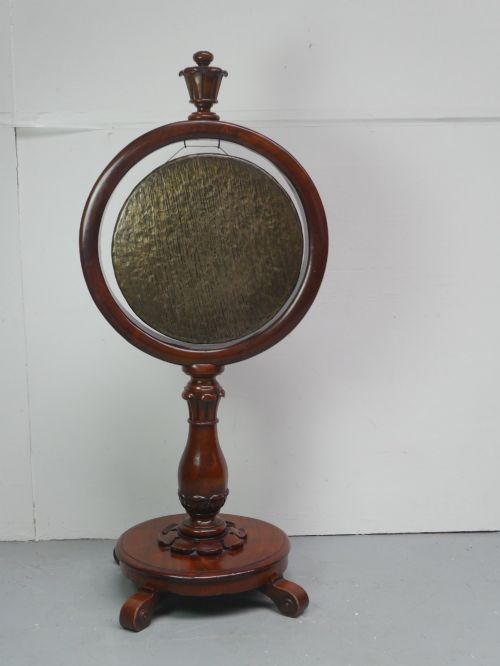
These Victorian table gong pieces bring an authentic nineteenth-century call to dinner into a modern home through resonant brass and fitted wooden frames.
Victorian Table Gong
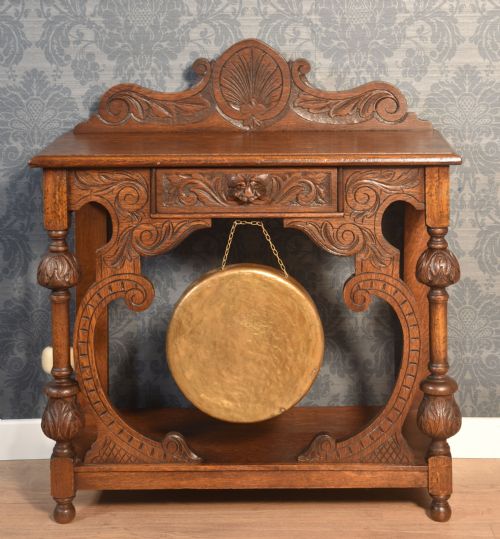
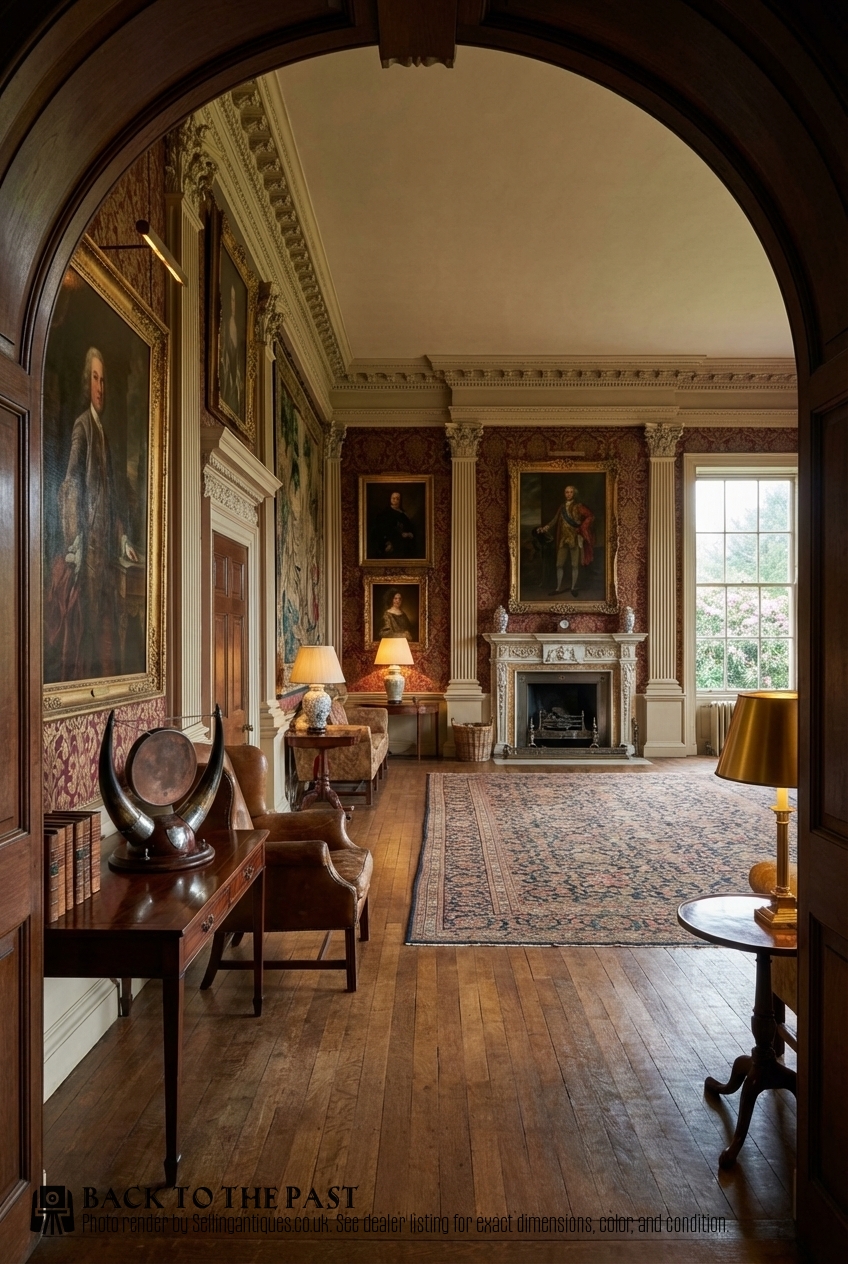
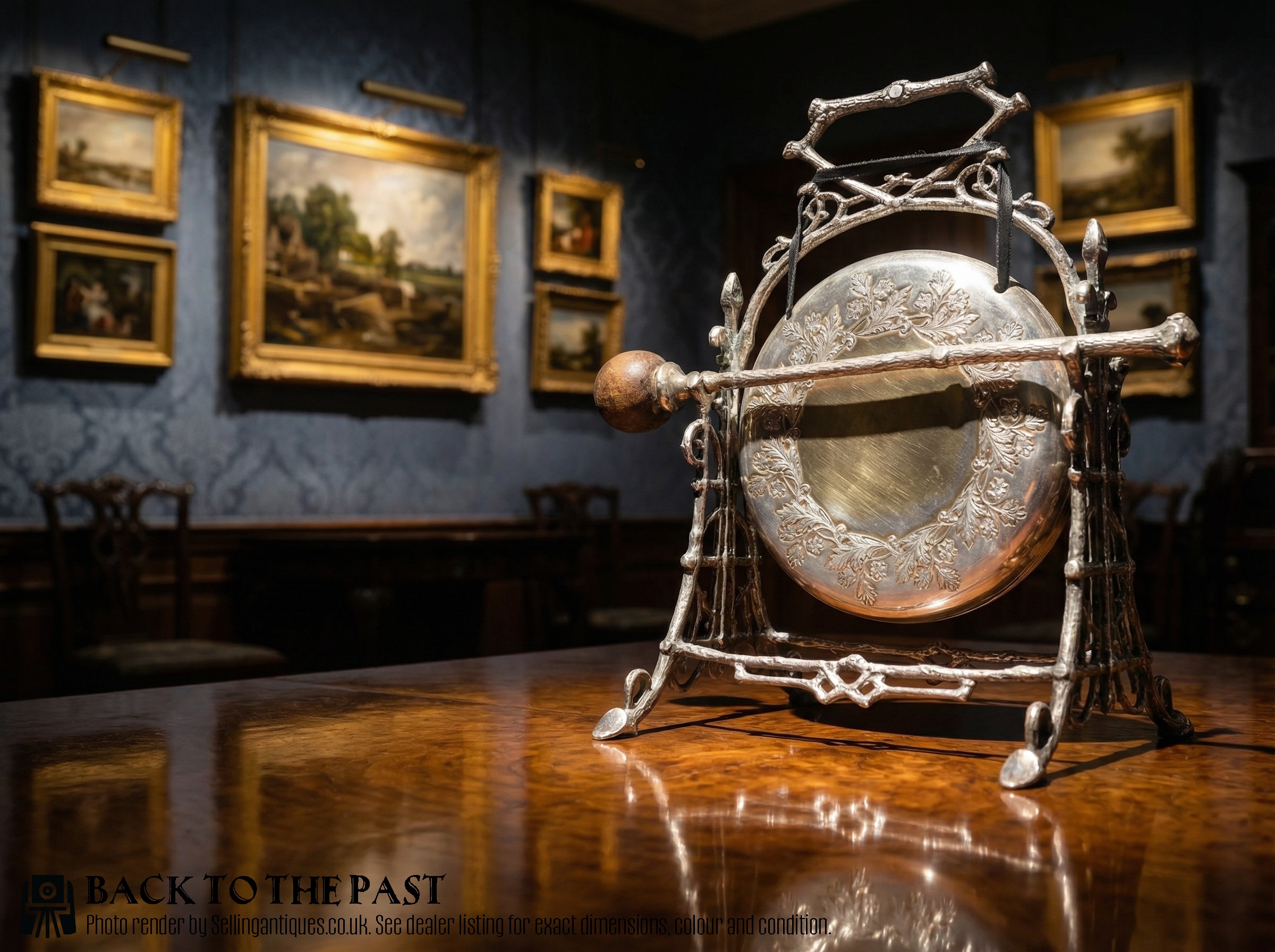
A victorian table gong serves primarily as a domestic summons, historically used in country houses and town residences to announce dinner. The pieces seen here encompass compact tabletop chimes alongside larger framed versions designed to sit on hall tables or sideboards.
The form typically pairs a suspended metal disc or bell with a matching striker. Oak, bamboo and carved walnut provide the structural frames, while brass, bronze and silver plate form the sound-producing elements.
Design influences range from straightforward British domestic styles to Japonisme and Aesthetic Movement interpretations. Animal horns, hoofs and novelty figural elements frequently appear in the framing to create distinct decorative objects.
Materials and construction
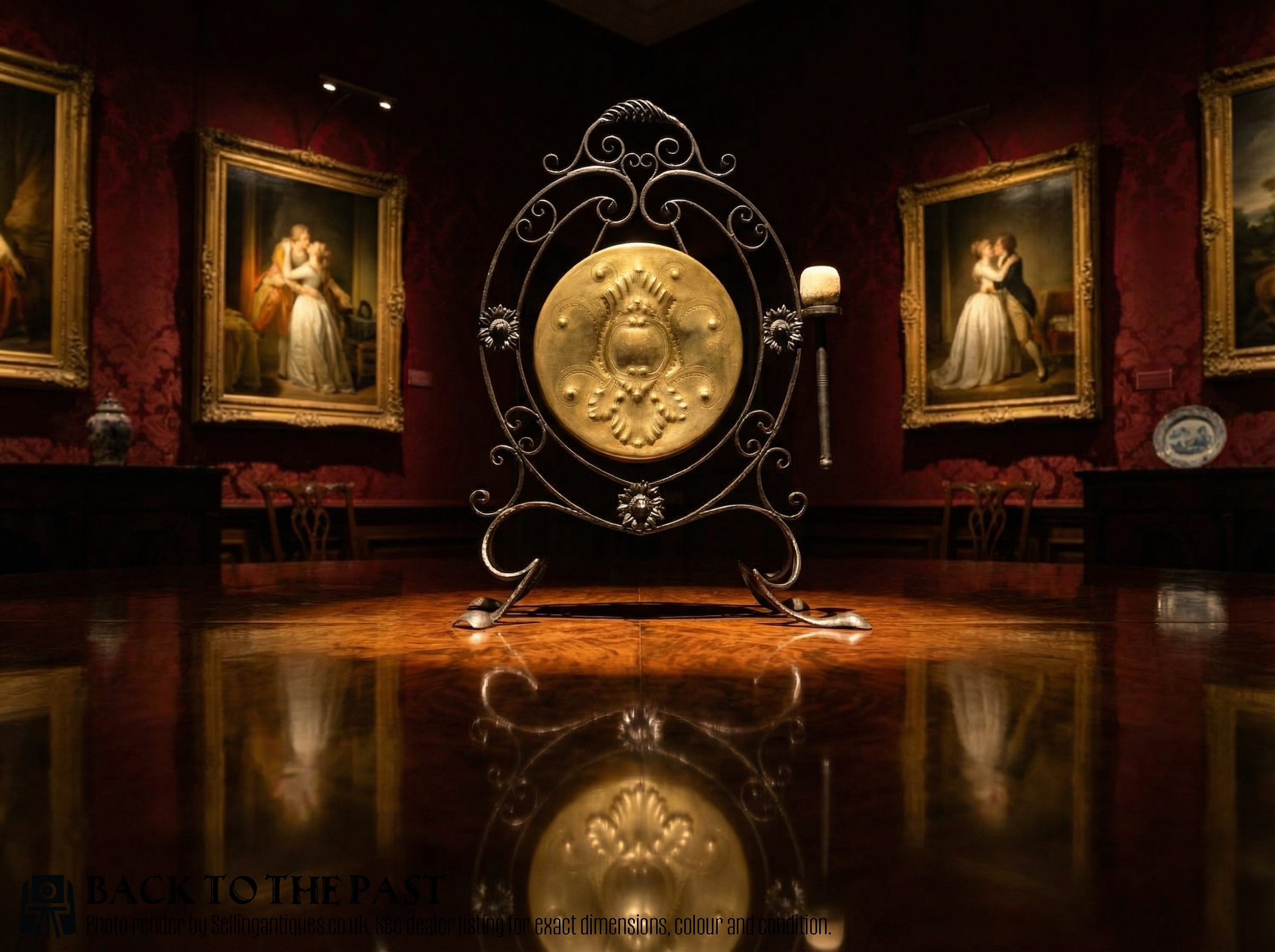
Makers utilised seasoned hardwoods including oak, mahogany and walnut for the supporting stands, often employing deep carving or turned bamboo elements. Metal components rely on cast brass, beaten bronze or silver plate to achieve the necessary resonance when struck.
Organic materials add texture to the construction, with cattle horn and hooves integrated into the frames of specific examples. Metal bells and gongs are hung securely from these stands using cord or metal loops to allow free vibration.
Victorian Table Gong Retail Price Guide 2026
Typical asking prices for victorian table gong among the pieces listed under this phrase on Sellingantiques today, from the lower quarter to the upper quarter. They describe what is for sale here now, not the wider market.
The documented examples span the nineteenth century into the early twentieth, showing influences from the Aesthetic Movement and Arts and Crafts design.
Assessing quality and craftsmanship
Superior examples distinguish themselves through the crispness of the wood carving and the stability of the frame joints. The alloy composition and thickness of the metal bell dictate the depth and duration of the tone produced.
The integration of unusual decorative elements, such as figural owls or novelty stirrup motifs, elevates the status of a piece beyond standard utilitarian production. Original strikers matching the wood or metal of the main assembly indicate a higher degree of preservation.
Winterhalder & Hofmeier
The Victorian Table Gong Glossary
- Dinner gong
- A suspended metal disc or bell struck with a mallet to announce meals. It sits on a dedicated stand for tabletop use.
- Aesthetic Movement
- A nineteenth-century design style emphasising visual beauty over narrative content. Pieces in this taste often incorporate Japanese motifs and simplified forms.
- Silver plate
- A thin layer of silver applied to a base metal such as copper or brass. This finish provides the bright appearance of solid silver at a different scale of production.
- Japonisme
- The influence of Japanese art on Western design during the late nineteenth century. It appears in the asymmetric framing and naturalistic motifs of certain pieces.
- Striker
- The small mallet or hammer used to hit the gong. These are often made of wood with a leather or metal head.
Victorian Table Gong: Frequently Asked Questions
How do I care for a brass table gong?
Dust the wooden frame gently with a dry cloth to preserve the finish and patina. Clean the metal surfaces only when necessary with a suitable polish, avoiding contact with the surrounding wood.
Keep the gong away from direct heat sources and damp environments to protect the structural integrity of the frame and prevent the suspension cord from degrading.
Are these gongs still suitable for daily use?
Most pieces remain fully functional and produce a clear, resonant tone when struck gently with the appropriate mallet. Regular use will not harm a well-maintained nineteenth-century piece.
Care should be taken with older suspension cords and delicate horn or carved elements when moving the gong between rooms.
How can I tell a late Victorian piece apart from earlier examples?
Earlier nineteenth-century pieces often display heavier cast brass and simpler mahogany or oak frames. Later examples from the final decades of the century frequently incorporate Aesthetic Movement styling, bamboo, or novelty animal horn elements.
Detailed carving and the introduction of silver-plated finishes also tend to increase in frequency towards the end of the Victorian period.
What rooms suit a table gong today?
These pieces fit naturally onto sideboards in dining rooms, entrance hall tables, or studies as decorative conversation items. Their compact tabletop footprint allows them to occupy small ledges or mantelpieces.
The sculptural quality of the wooden frames and metal gongs complements both traditional interiors and mixed antique displays.