




Victorian Table Centrepiece Dish
A victorian table centrepiece dish anchors a dining table with silver, glass, or porcelain built for display.
Victorian Table Centrepiece Dish
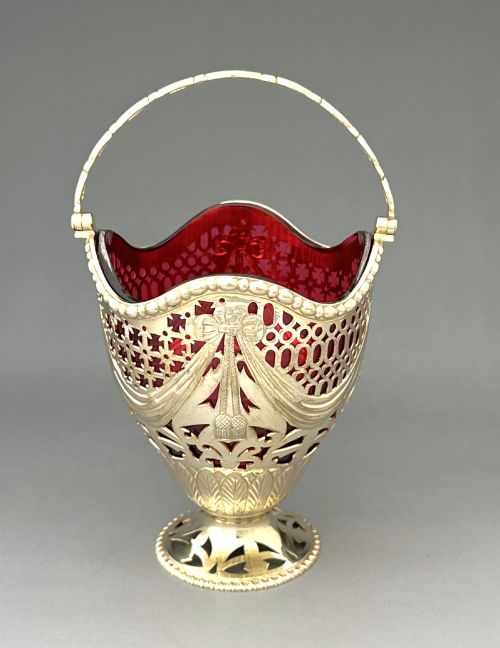
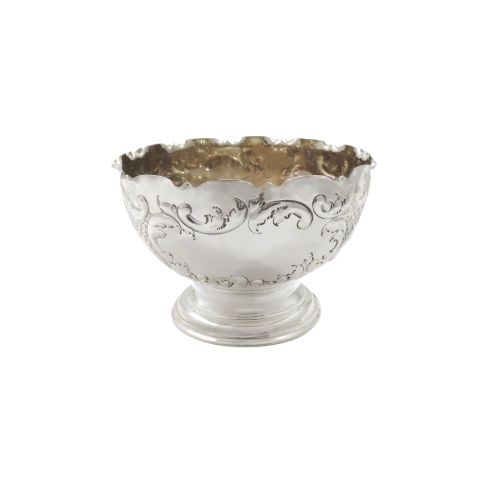
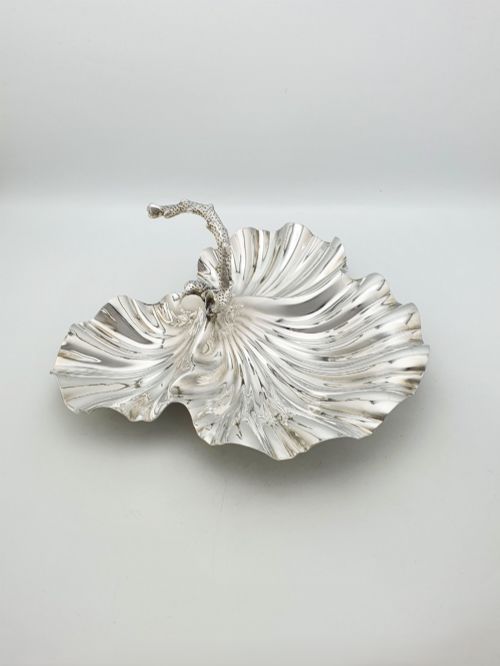
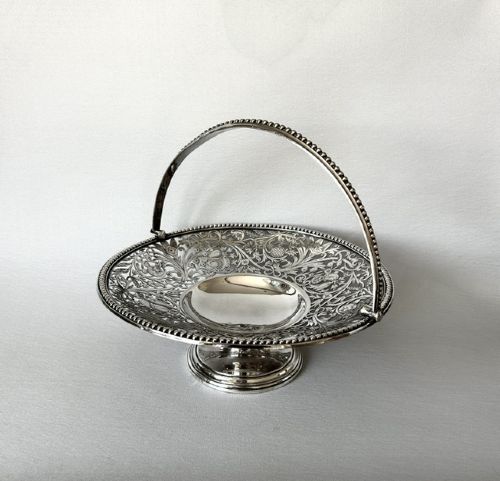
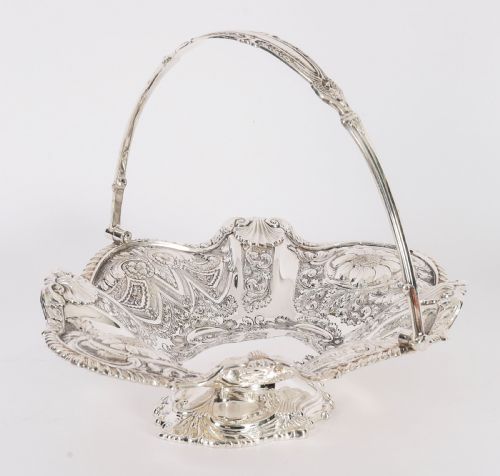
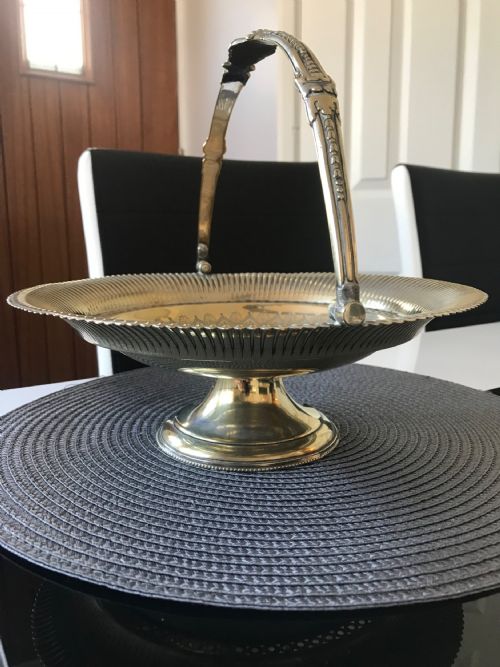
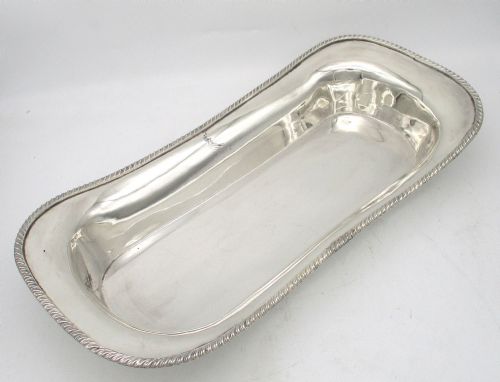
A victorian table centrepiece dish serves as the focal point for dining tables, encompassing open bowls, baskets with handles, and footed dishes meant to hold fruit, sweets, or flowers. These pieces anchor the formal dining arrangements of the nineteenth century through substantial forms and decorative presence.
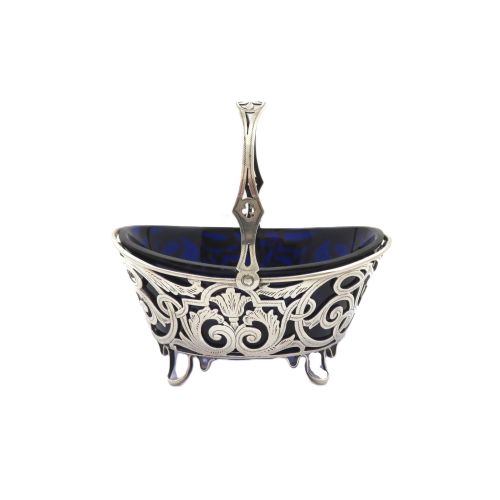
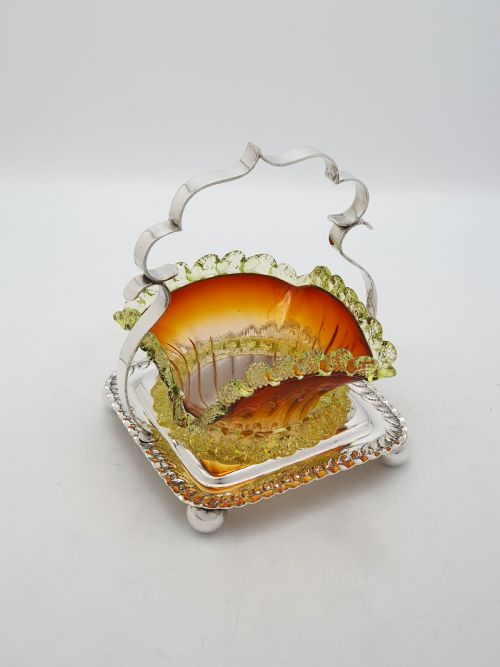
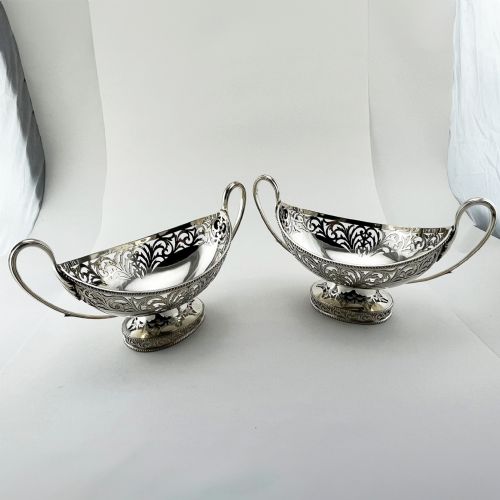
The versions most commonly met on this page include silver plated fruit baskets, sterling silver sugar baskets, and glass liners paired with metal stands. Pierced metalwork, swinging handles, and elevated pedestals recur frequently across the available objects.
Makers and manufacturers ranging from local silversmiths to continental porcelain factories produced these items for domestic display. The forms draw on historical revivals and naturalistic motifs typical of the period.
How They Were Made
Metals form the core of these items, utilising sterling silver and silver plate over copper or electroplated nickel silver. Silversmiths employed piercing, chasing, and casting techniques to shape handles, borders, and feet.
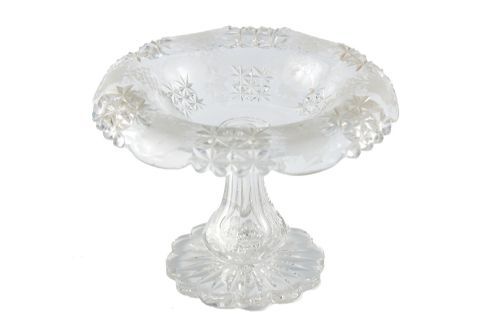
Glass elements combine with metal frames, featuring cut glass, amber glass, cranberry glass, and green vaseline glass blown or moulded into liners and bowls. Porcelain pieces incorporate hand-painted details and gilt highlights on ceramic bodies.
Ormolu mounts, champleve enamel, and onyx appear on continental pieces, combining metal casting with stonework and decorative surface application.
Materials across these listings span sterling silver, silver plate, porcelain, cut glass, enamel, and onyx.
What Varies in Quality
Weight and gauge of metal separate heavier cast and hallmarked sterling pieces from lighter plated items. The crispness of piercing and the depth of chased detail reveal the skill involved in manufacturing the metalwork.
The integration of materials determines structural success, particularly how glass liners fit their metal baskets or how mounts secure porcelain and stone components. Hand-cut facets on glass and hand-painted work on ceramics show individual craftsmanship rather than mass production.
George W. Scott & Sons Ltd·Thomas Bradbury·William Comyns·Daniel and Arter·Elkington & Co·George Fox·Walker and Hall·Doulton Burslem
The Victorian Table Centrepiece Dish Glossary
- Centrepiece
- A large decorative object placed in the middle of a table for display. These items often hold fruit, flowers, or sweetmeats during formal meals.
- Tazza
- A shallow bowl or dish raised on a stem and foot. This form is used for serving fruit or sweets.
- Silver Plate
- A thin layer of silver applied to a base metal such as copper or nickel silver. This technique offered the appearance of solid silver at a lower cost.
- Vaseline Glass
- Glass containing uranium dioxide that produces a yellow-green colour and fluoresces under ultraviolet light. It was popular for decorative table glass.
- Sugar Basket
- A small footed or handled vessel designed to hold lump sugar on the tea table. These often include coloured glass liners.
- Ormolu
- Gilded bronze used for decorative mounts and decorative objects. It provides a bright gold-coloured finish.
Victorian Table Centrepiece Dish: Frequently Asked Questions
How were these dishes used on the table?
These dishes held fruit, sweetmeats, sugar, or floral arrangements as part of formal table service. They sat in the middle of the table to anchor the setting.
Larger bowls and baskets accommodated fruit or punch, while smaller sugar baskets and sweet stands served specific courses during dining or tea.
What metals are these pieces made from?
The pieces utilise sterling silver, silver plate, electroplated nickel silver, and copper. Hallmarked solid silver indicates higher metal value.
Silver plating over base metal provided an accessible alternative for larger forms like tazzas and fruit baskets.
How do I identify glass types like vaseline or cranberry?
Cranberry glass shows a distinct pinkish-red tone created by gold chloride in the glass batch. Vaseline glass displays a translucent yellow-green shade.
These coloured glasses were blown or moulded to fit inside pierced metal baskets and stands.
Can I use these antiques for everyday dining?
These items function well for holding fruit or display on sideboards and dining tables. Care should be taken with silver plated surfaces and glass liners during cleaning.
Hand washing without harsh detergents preserves the original finish and plating on metalwork.