
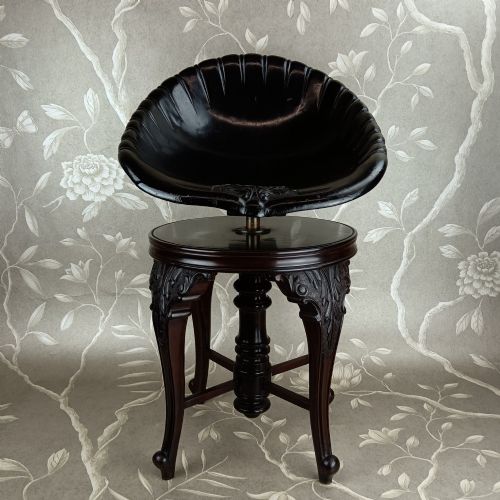
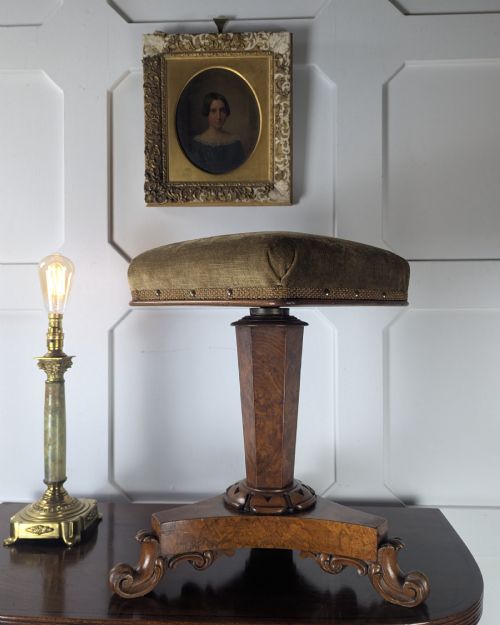
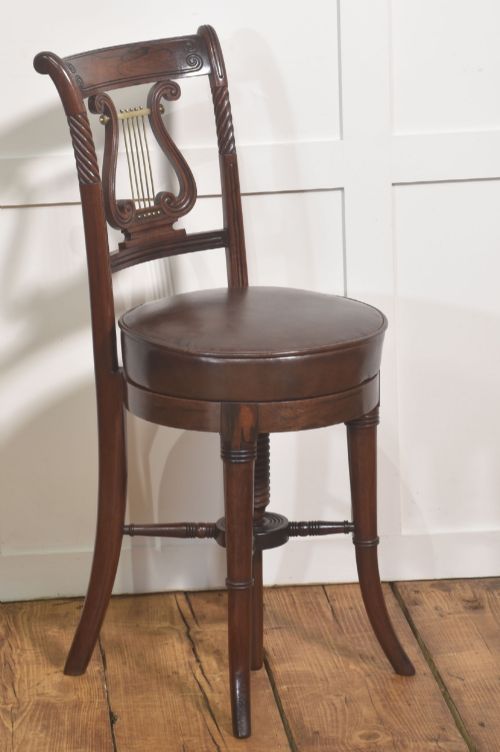
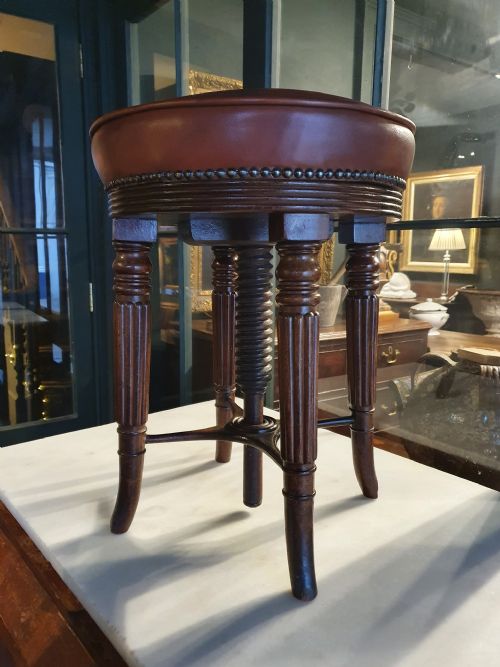



Victorian Swivel Music Stool
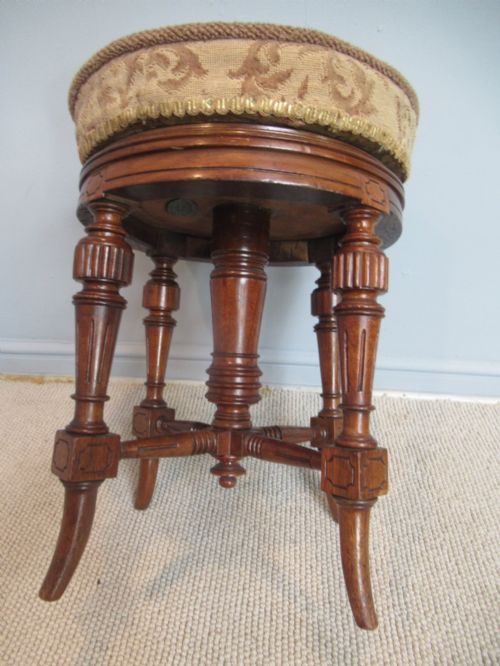
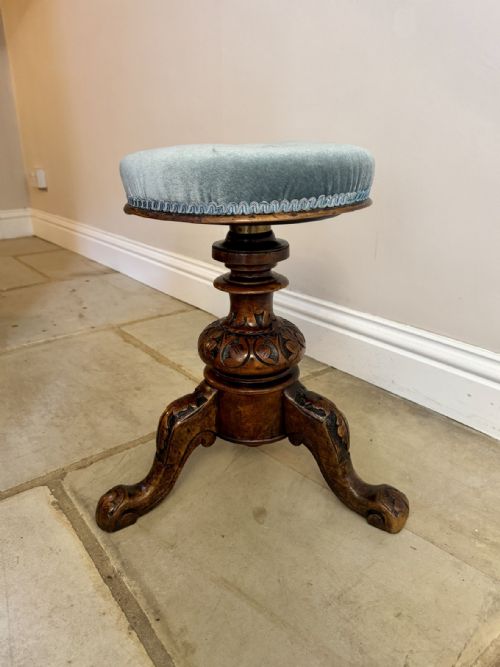
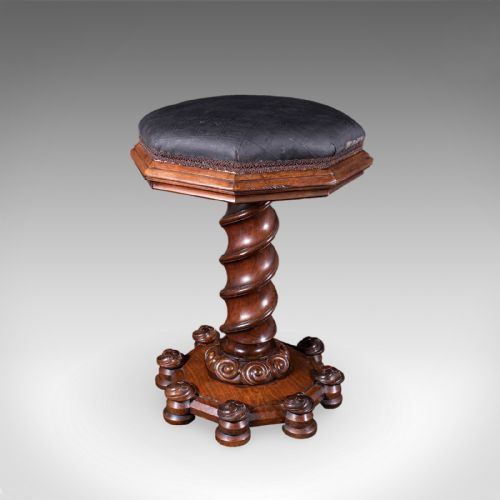
A victorian swivel music stool is a functional seat designed for keyboard players, combining height adjustment with a revolving top.
Victorian Swivel Music Stool
A victorian swivel music stool is primarily found in mahogany and walnut, engineered to provide musicians with a stable yet adjustable seat at the piano or harp. The form typically incorporates a circular or square top that rotates on a threaded wooden or brass spindle, allowing the player to adjust the height to their preference.
Most examples date from the nineteenth century, ranging from the William IV period through to late Victorian and Edwardian iterations. Alongside standard piano stools, variations include music chairs with backs, harpist chairs, and dressing table stools sharing the same revolving mechanism.
Judging Quality and Craftsmanship
Quality in a victorian swivel music stool is determined by the weight and selection of the timber, as well as the precision of the turning and carving. Superior pieces exhibit crisp detail in the woodwork and a smooth, stable action in the revolving screw without excessive play in the thread.
The joinery of the legs and the structural integrity of the central column dictate longevity. Finer workshops invested greater labour into the stability of the base and the quality of the secondary timbers beneath the polish.
The documented periods stretch from the Regency era through William IV and Victorian times into the early twentieth century.
Jennens & Bettridge·Gillows·James Shoolbred
The Victorian Swivel Music Stool Glossary
- Revolving
- A seat mechanism that turns full circle on a central axis. This allows the player to pivot easily while seated at an instrument.
- Rise and fall
- An alternative description for an adjustable height mechanism. It refers to the vertical movement of the seat via a screw action.
- Spindle
- The central vertical rod, often threaded in wood or metal, that controls the height adjustment. It forms the core of the swivel action.
- Papier-mâché
- A moulded composite material used for decorative panels on select Victorian pieces. It is often finished with dark lacquer and inlay.
- Padouk
- A heavy, durable tropical hardwood occasionally utilised in colonial and export furniture. It provides a dense structure with a reddish hue.
Victorian Swivel Music Stool: Frequently Asked Questions
How do I adjust the height?
You simply rotate the top of the stool clockwise or anticlockwise to raise or lower the seating platform along the internal screw thread.
Ensure the mechanism is free of obstruction and clean of debris to maintain a smooth adjustment without straining the wood.
Were these only used for pianos?
While primarily designed for keyboard players, many examples served harpists, organists, or functioned as dressing table chairs.
Their adjustable nature made them versatile seating options in domestic parlours and music rooms across the nineteenth century.
How do I tell a Victorian one from later copies?
Examine the construction methods, secondary timbers, and the wear on the wooden screw thread. Nineteenth-century pieces typically show hand-cut joinery and period-appropriate wood ageing.
Hardware components and the character of the upholstery base also offer clear indications of nineteenth-century manufacture.
Can I use one as daily seating?
These pieces were built to withstand regular domestic use by musicians, making them durable enough for contemporary sitting rooms.
However, care should be taken with the central screw mechanism to avoid placing excessive lateral strain on the extended column.