



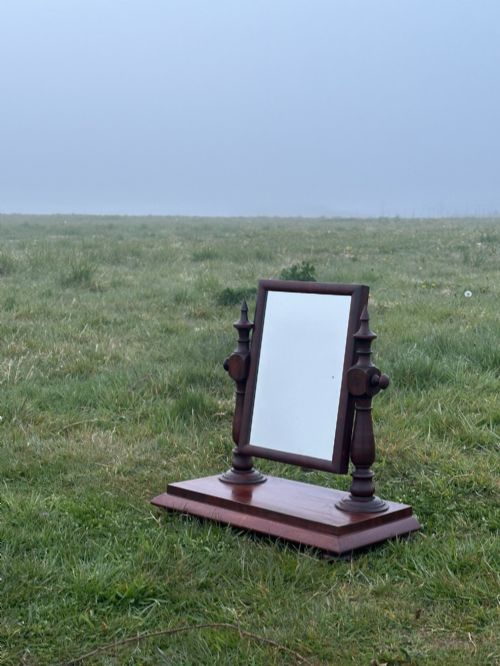
Victorian Swing Toilet Mirror
A victorian swing toilet mirror sits upon a chest or table, tilting to catch the light for daily grooming.
Victorian Swing Toilet Mirror
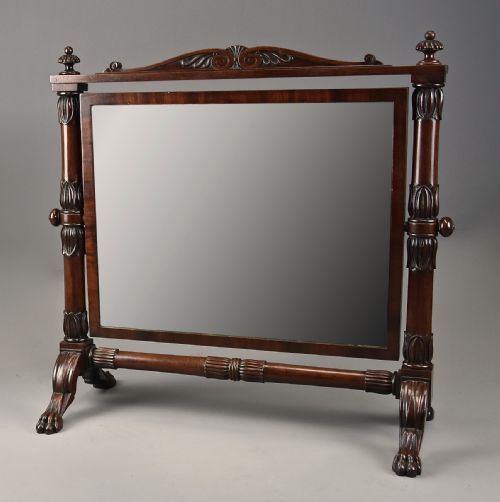
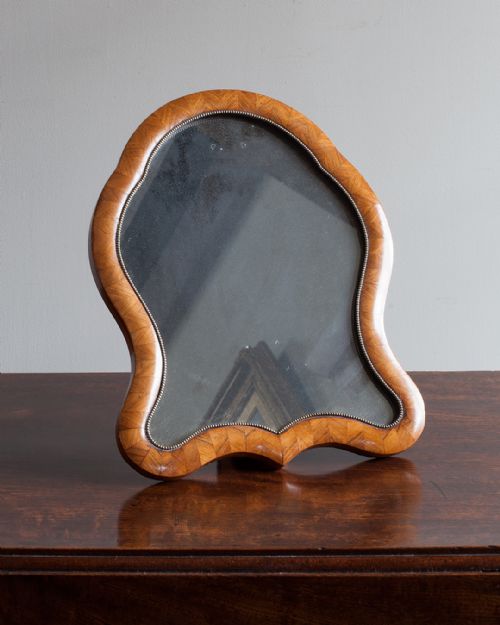
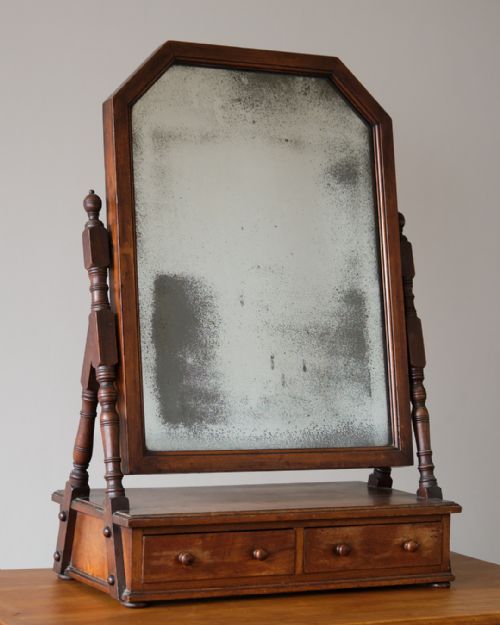
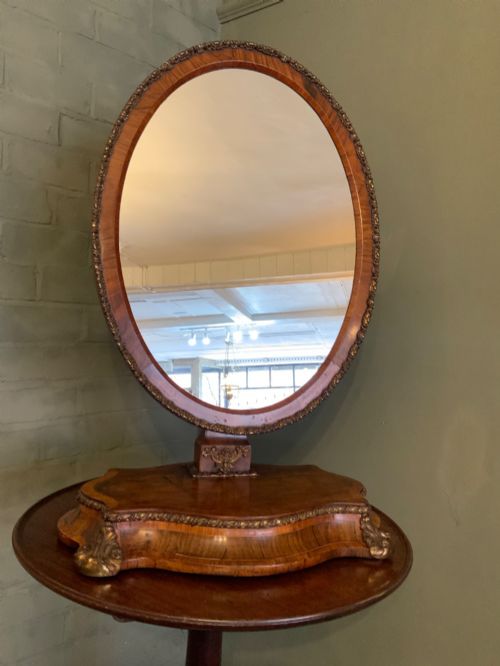
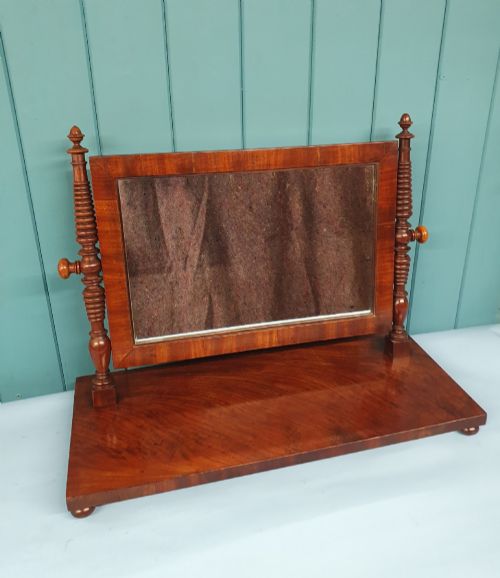
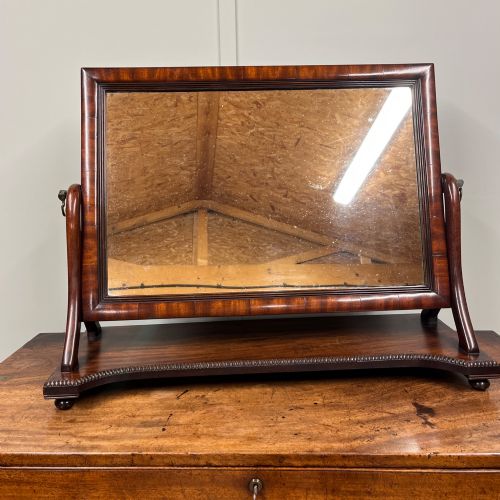
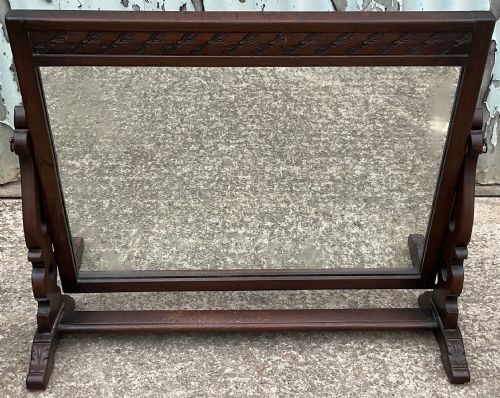
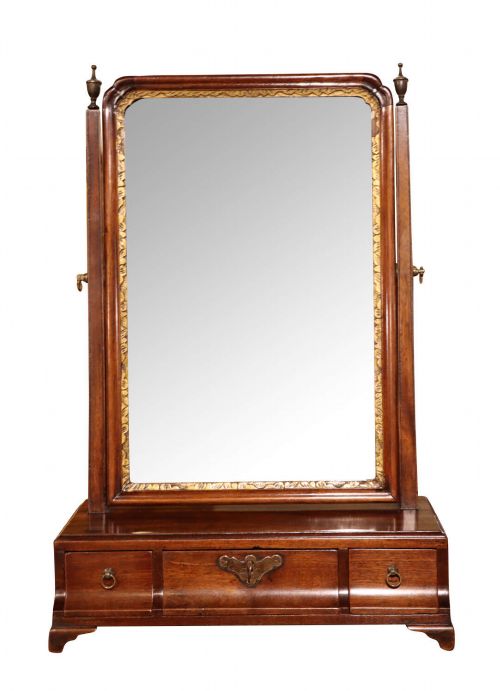
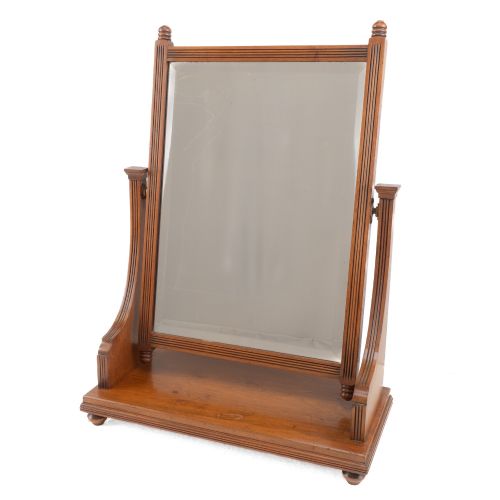
A victorian swing toilet mirror is a table-standing glass plate set within a rotating frame, mounted on upright supports above a small base or box. These pieces range from simple upright frames to larger constructions incorporating storage drawers or bureau fitments beneath the glass.
Most examples found here date from the nineteenth century, produced in mahogany, walnut or oak, and styled across Victorian, Regency, and William IV periods. The form serves as both a practical dressing accessory and a decorative tabletop furniture item.
How they were made
Cabinet makers constructed the frames and stands primarily in solid timbers such as mahogany, walnut, and oak, often highlighting figured grain patterns. Brass fittings, including pivot screws and candle holders, allow the mirror plate to tilt securely within its upright arms.
Glass plates are held within rebated wooden frames, sometimes accompanied by secondary woods and delicate wood inlay or ormolu mounts on more ornate nineteenth-century variants.
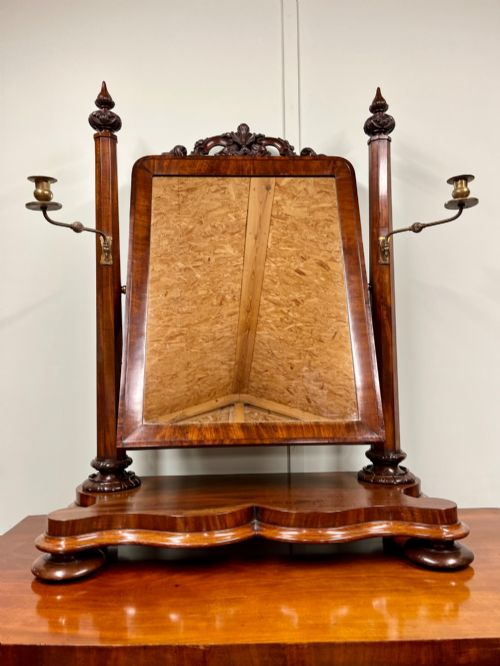
Some nineteenth-century mirrors arrived equipped with brass articulated candle holders, ensuring proper illumination for evening routines long before electric light.
What varies in quality
The distinction between standard utility items and finer pieces lies in the choice of timber, such as flame grain mahogany or figured walnut, and the crispness of the turned supports. Superior examples feature well-fitted drawer boxes with neat dovetail joints and substantial brass hardware that holds the swing mechanism firm.
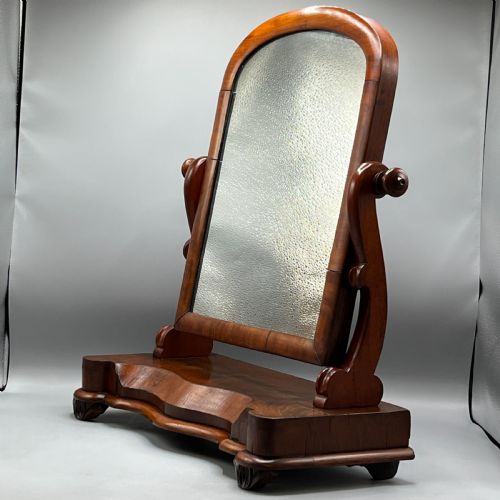
Proportion and execution dictate overall merit, where harmonious curves on serpentine bases or carved mahogany details elevate a functional dressing glass into a considered piece of period furniture.
Heal & Sons·Jean Gille
The Victorian Swing Toilet Mirror Glossary
- Swing mirror
- A glass plate suspended on pivots between two upright posts, allowing it to tilt back and forth. This mechanism forms the defining feature of dressing table mirrors.
- Cheval mirror
- A full-length dressing glass supported on a freestanding floor frame with four legs. These larger pieces contrast with the smaller table-top toilet mirrors.
- Flame grain
- A decorative wood veneer pattern resembling flickering flames, commonly found on high-grade nineteenth-century mahogany pieces. Cabinet makers selected this timber for prominent display surfaces.
- Bureau fitment
- A small desk or storage interior built into the base beneath the mirror plate. This addition turns a simple toilet mirror into a dual-purpose writing and grooming station.
- Ormolu
- Gilded bronze mounts applied to furniture for decorative effect. It appears on select nineteenth-century mirrors alongside walnut and mahogany.
Victorian Swing Toilet Mirror: Frequently Asked Questions
Where do you place a swing mirror?
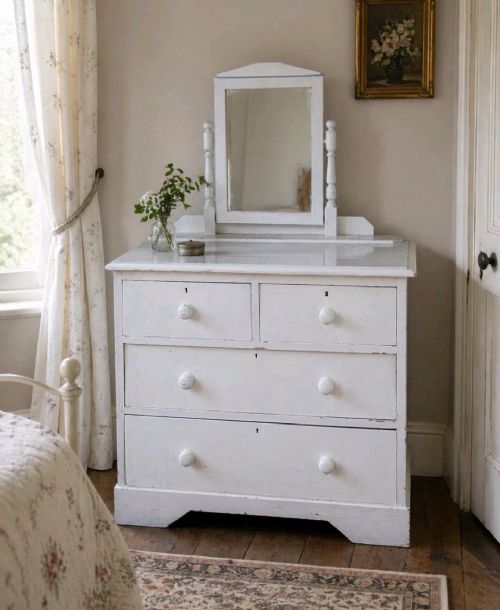
These mirrors rest upon dressing tables, chests of drawers, or sideboards where the height suits seated grooming. They require a stable surface with enough depth to accommodate the supporting base and the swing arc of the frame.
Positioning them near a window catches natural light, which the tilting glass reflects onto the user.
How do the pivot screws work?
The glass frame hangs between two upright arms on threaded brass pins or pivot screws. Tightening these screws increases friction against the frame so the mirror stays at the chosen angle.
Over time, adjusting these fittings allows maintenance of the proper tension for smooth tilting.
What is the difference between a toilet mirror and a cheval mirror?
A toilet mirror sits on top of a piece of furniture like a dressing table or chest, featuring a compact base that often includes small drawers. A cheval mirror stands directly on the floor as a full-length piece supported by its own legs.
Both utilise swing mechanisms, but their scale and placement in a room differ entirely.
Can I store items in the base?
Many nineteenth-century examples incorporate one, two, or three small drawers directly beneath the mirror frame. These compartments were originally used for jewellery, cosmetics, and personal items.
Some unusual variations even include bureau interiors with small compartments for writing materials.