



Victorian Striking Desk Clock
A victorian striking desk clock brings acoustic timekeeping to a study, housing complex mechanical movements in brass, marble or mahogany cases.
Victorian Striking Desk Clock
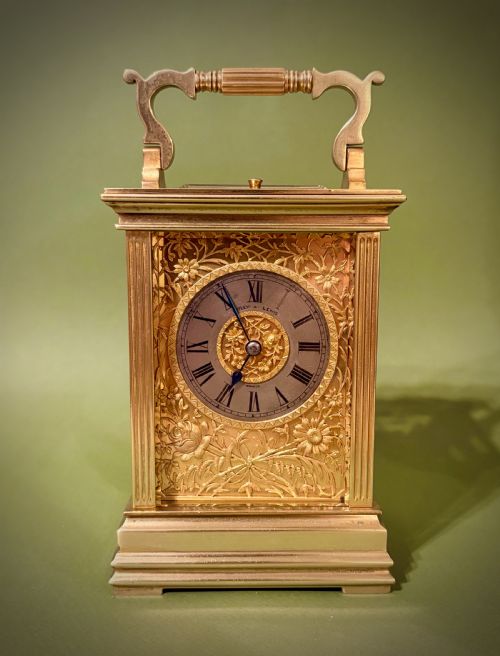
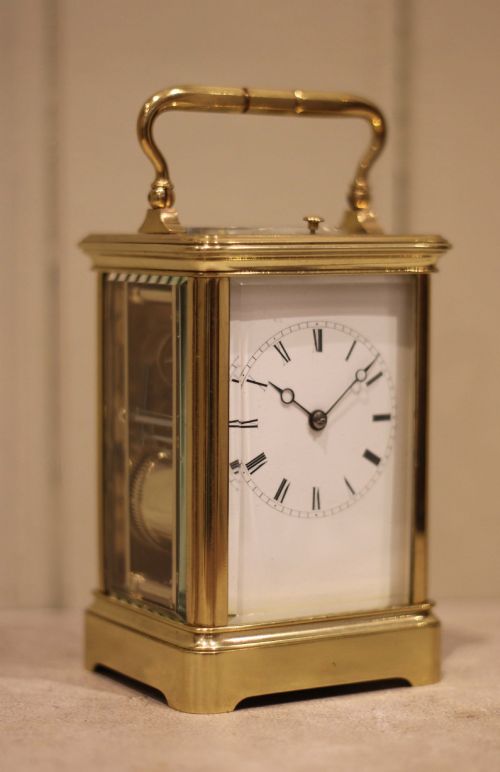
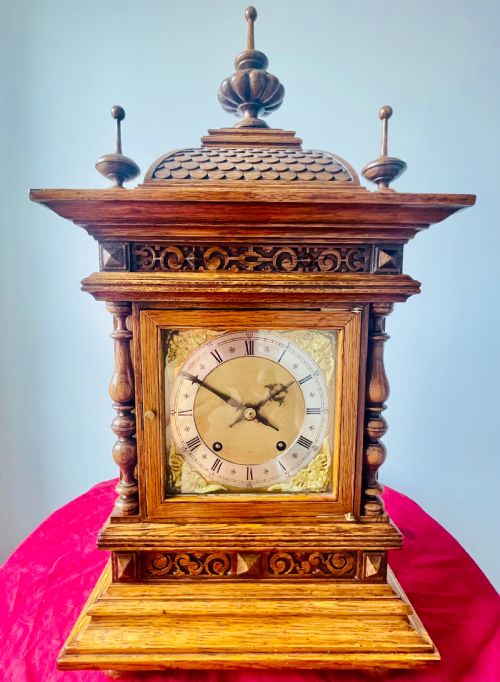
When you search for a victorian striking desk clock, you encounter carriage clocks, bracket clocks, and library mantel clocks spanning the mid to late nineteenth century. These timepieces combine portable brass-framed designs with stationary marble and wood cabinet forms.
The carriage clock version dominates the selection, featuring glazed panels and swinging handles designed for travel and domestic use. Mantel and bracket variants provide heavier architectural presence on desks and tables, employing twin fusee movements or platform escapements.
Materials and Construction
The fabrication relies on heavy brass and gilt bronze casings fitted with bevelled glass panels to expose the internal wheel trains and escapements. Cases incorporate natural materials including black slate, white marble, walnut, rosewood, and inlaid mahogany.
Enamel dials display roman numerals alongside delicate steel hands, while specialised striking mechanisms utilise steel bells or gongs to sound the hours and quarters. Ormolu mounts and cast Corinthian columns provide decorative structure to the French and English chassis.
Some carriage clocks include folding leather travelling cases, proving that Victorian travellers refused to leave their hourly chimes behind.
Judging Quality
Quality rests in the complexity of the movement, distinguishing standard hour-sttriking models from sophisticated grande sonnerie, repeating, and alarm complications. Heavy mercury pendulum suspensions, platform escapements, and fully jewelled lever platforms elevate a mechanism.
Cabinet execution separates standard production from exceptional workshops, seen in fire-gilt ormolu cast work, heavy one-piece glass cases, and hand-painted porcelain panels. Crisp dial lettering and signed backplates by makers confirm workshop standards.
Winterhalder·Henry Jacob·Dwerrihouse and Bell·J. F. Bautte Et Cie·Mathias Bauerle·J.W.Benson·E White Of Manchester·Alfred Drocourt·Henry Marc
The Victorian Striking Desk Clock Glossary
- Striking clock
- A timepiece that sounds the hours on a bell or gong automatically using a separate gear train. This acoustic feature distinguishes it from silent timepieces.
- Repeating movement
- A mechanism that chimes the last hour or quarter upon pressing a button on the case. This allows time checks in the dark.
- Fusee
- A conical pulley used with a cord or chain to maintain equal force on the clock movement as the mainspring unwinds. It ensures consistent timekeeping accuracy.
- Platform escapement
- A small, self-contained escapement unit mounted on a bridge that allows portable clocks to keep time in any position without a pendulum.
- Grande sonnerie
- A striking system that chimes both the hours and the passing quarters automatically on every quarter hour. It represents the pinnacle of horological complexity.
Victorian Striking Desk Clock: Frequently Asked Questions
What is the difference between a carriage clock and a mantel clock?
Carriage clocks feature rectangular brass cases with glass sides and folding top handles, originally built for travel. Mantel clocks sit heavier and wider on wooden plinths or marble bases.
Carriage models utilise platform escapements instead of pendulums, making them less sensitive to being moved.
Why does my clock strike the wrong hour?
The striking count wheel or rack mechanism can fall out of synchronization if the hands are moved backward or if the clock runs down while striking. Let the striking train finish its sequence completely.
Advance the minute hand slowly clockwise past the hour to reset the count sequence naturally without forcing the levers.
How do I date a Victorian desk clock?
Examine the style of the escapement, the shape of the brass case, and any signatures etched onto the movement backplate. French makers often stamped serial numbers and maker marks directly onto the brass.
stylistic shifts from architectural slate cases toward gilt-brass carriage designs help narrow the manufacturing decade.