
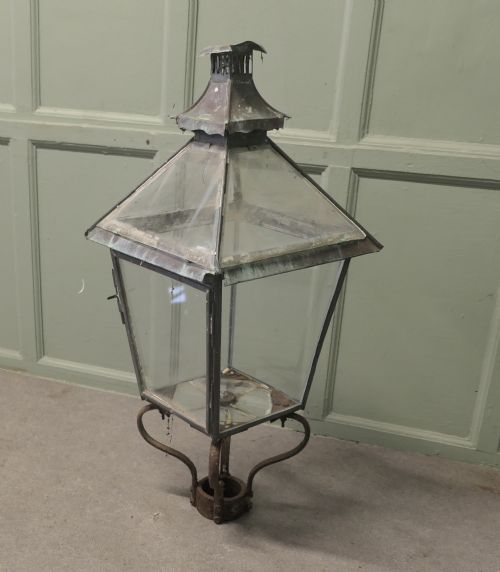
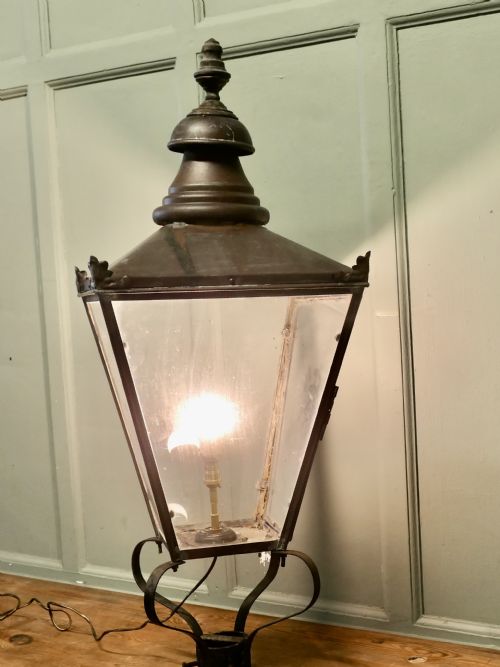
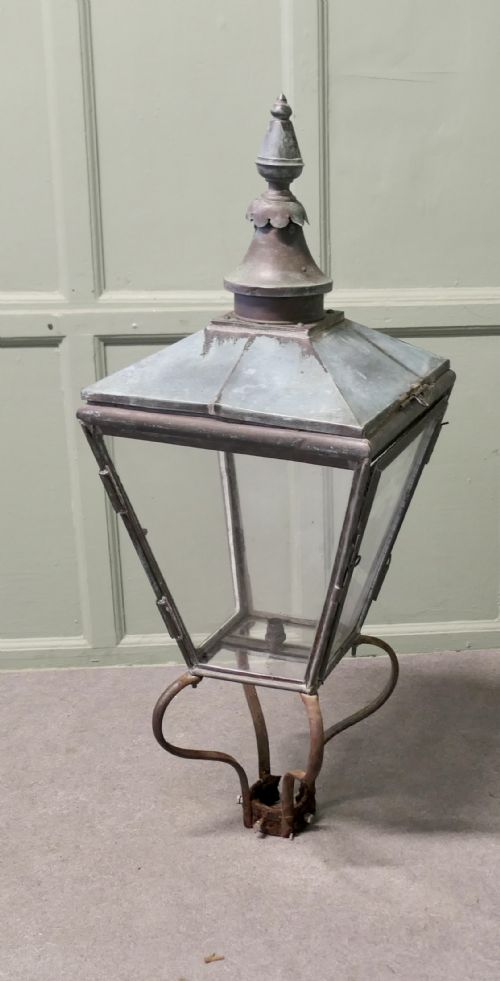
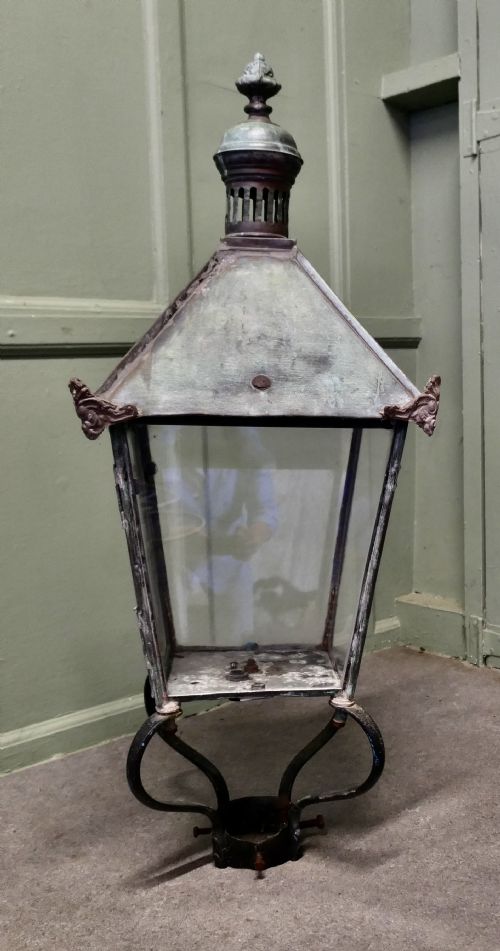


Victorian Street Light
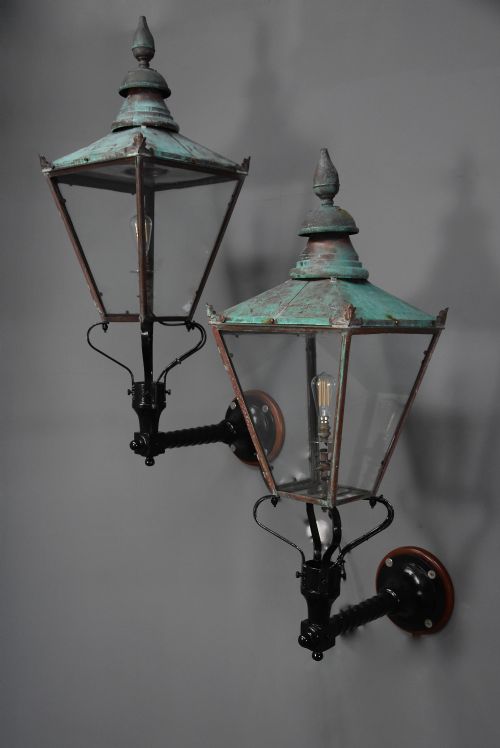
These robust victorian street light fixtures bring genuine industrial weight and historic illumination to an exterior wall, gateway, or garden.
Victorian Street Light
A victorian street light typically takes the form of a substantial copper or painted metal lantern designed to house early gas burners before later conversion to electricity. The examples found here span the nineteenth century and early decades of the twentieth, encompassing both wall-mounted brackets and freestanding lamp posts.
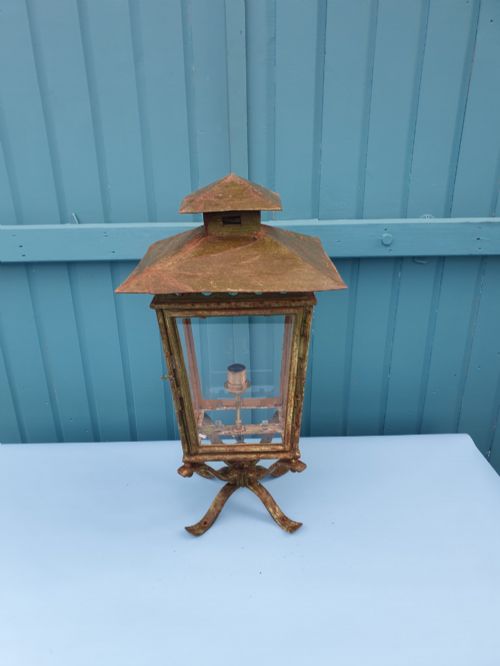
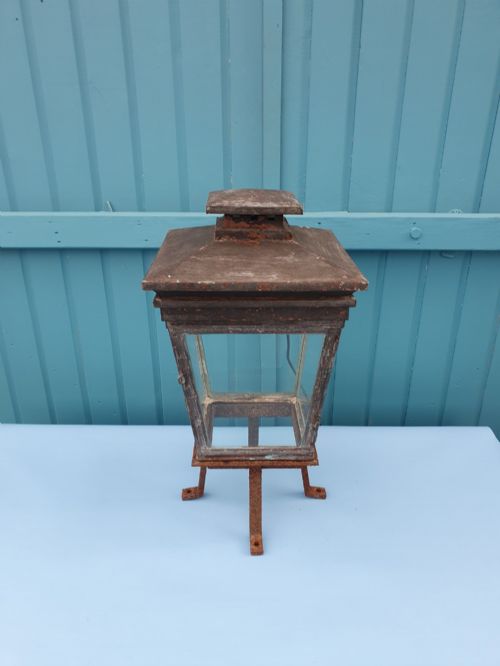
Most pieces combine glazed glass panels with robust metallic frames made from copper, iron, or steel. Forms range from simple square garden lanterns to large architectural street lamps complete with original or sympathetic mounting brackets.
How They Were Made
Manufacture relied heavily on sheet copper and cast iron, joined to form rigid weatherproof housings for outdoor use. Glazing panels were fitted directly into metallic frames, often secured with putty or metal glazing bars designed to withstand wind and rain.
Many lanterns began life as gas lighting units before later adaptation for modern electrical wiring. Structural elements frequently include wrought iron brackets or cast metal bases, sometimes featuring decorative twists or painted finishes.
One cheerful green garden lantern still bears the unmistakable structural evidence of its former life illuminating Victorian gas routes.
What Varies in Quality
Quality rests primarily on the integrity of the original metalwork and the scale of the lantern. Heavy-gauge copper bodies and sophisticated bracket designs, such as spiral twist supports, distinguish superior architectural examples from simpler utility pieces.
The degree of original survival matters greatly, particularly where early paint finishes, maker markings, or untouched conversion details remain intact. Substantial proportions and well-balanced proportions elevate certain lanterns above standard street furniture.
A Foster And Pullen Bradford·Revo Tipton
The Victorian Street Light Glossary
- Gas conversion
- The process of adapting an antique gas-burning lantern to accept modern electrical fittings. This usually involves running cable through the original burner assembly.
- Swan neck
- A curved mounting arm resembling the neck of a swan, commonly used to project street lamps outward from a wall or pole.
- Glazing bar
- A narrow strip of metal or wood holding panes of glass in place within the lantern frame. These form the geometric pattern of the windows.
- Post top
- A mounting configuration where the lantern sits directly on top of a vertical lamp post rather than hanging from a bracket.
Victorian Street Light: Frequently Asked Questions
Can these outdoor lanterns be wired for modern gardens?
Most pieces have already undergone conversion from gas to electricity during their long working lives. An electrician can readily adapt the internal wiring for contemporary exterior use.
Care should be taken to ensure exterior connections remain weatherproof when positioning them on garden walls or gate posts.
How do I mount a heavy copper street lantern?
Due to the substantial weight of copper and iron components, secure structural fixings are essential. Wall-mounted versions require solid masonry anchors to support the leverage exerted by extended brackets.
Freestanding lamp posts need stable ground anchoring to remain upright against strong winds.
Are these lights suitable for exposed coastal locations?
Copper and painted iron develop protective weathering over decades outdoors. Salt air can accelerate corrosion on steel or iron parts, so regular inspection helps preserve the original metal.
Selecting sheltered positions prolongs the lifespan of historic glass and metallic frames.
How do I clean historic glass and copper?
Warm soapy water and a soft cloth suffice for removing atmospheric grime from glass panels. Harsh chemical cleaners should be avoided to prevent stripping the natural aged patina from the copper.
Leaving the metallic surfaces largely untouched maintains the historical character accrued over a century or more.