


Large Outdoor Lantern
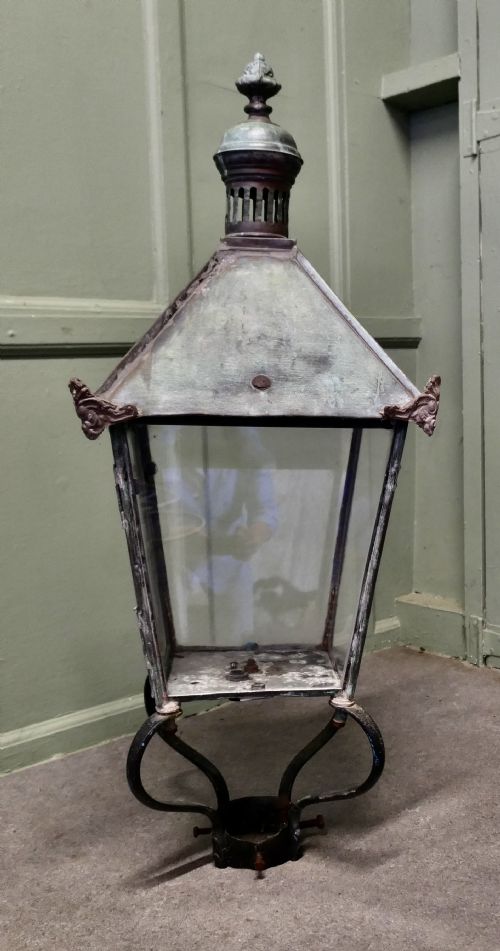
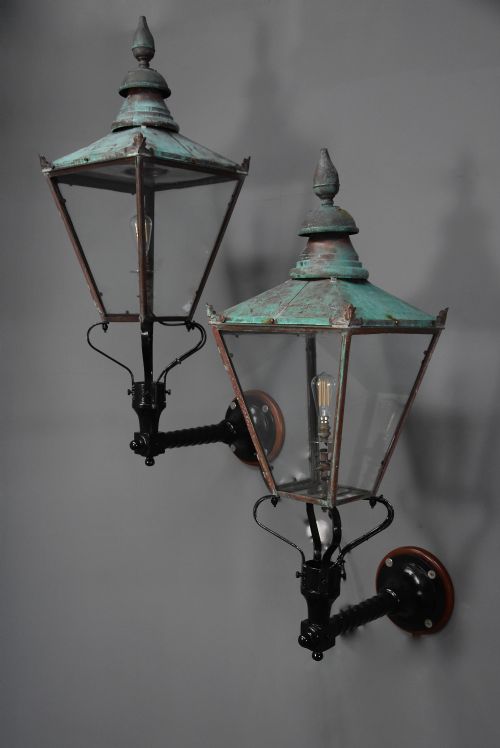
A large outdoor lantern brings architectural weight and authentic illumination to an exterior wall, porch or gateway.
Large Outdoor Lantern
When you search for a large outdoor lantern, you encounter robust exterior lighting shaped by decades of municipal and domestic design. The pieces available span the nineteenth and twentieth centuries, taking the form of street lights, porch fixtures, wall lanterns, and hanging styles. Victorian and Edwardian examples sit alongside later industrial interpretations.
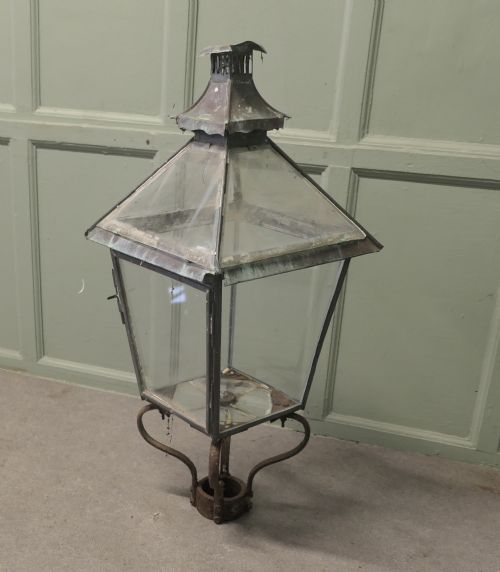
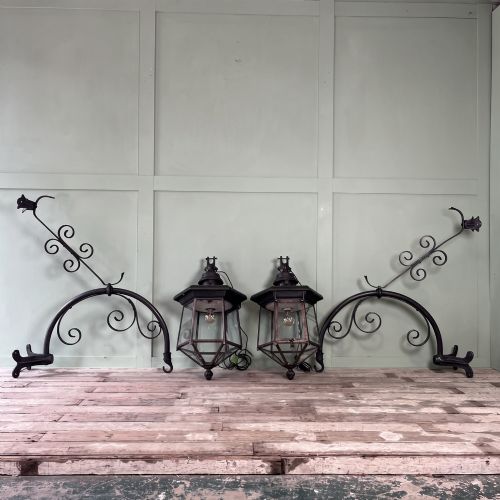
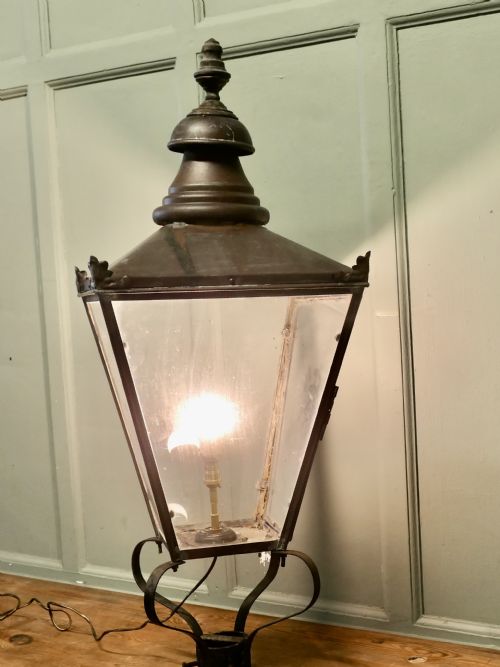
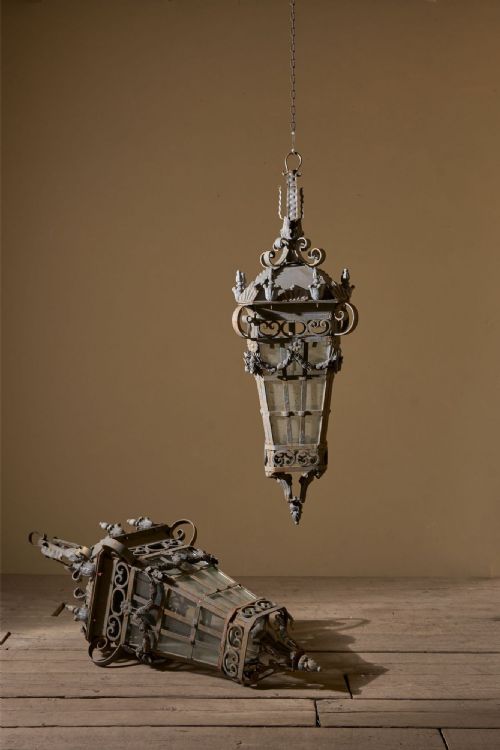
You are most likely to meet substantial copper or iron lanterns designed for high placement on walls, gates, or brackets. These range from octagonal wall lanterns to hanging lanterns and elaborate street lamps with original iron support arms. Their origins stretch from British workshops to French ateliers, showing regional variations in proportion and hardware.
How they were made
Makers constructed these lanterns using heavy-duty metals capable of withstanding prolonged exposure to the weather. Copper, wrought iron, cast iron, zinc, and steel form the structural carcasses, joined with rivets or seams to house protective glass panels.
The glazing relies on thick panes of clear or textured glass secured within metal frameworks. Decorative elements such as shamrocks or spiral twist brackets demonstrate how functional street and porch lighting incorporated ornamental detail.
One late nineteenth-century porch light incorporates cast shamrocks into its ironwork, offering a touch of botanical luck to visitors.
What varies in quality
The distinction between standard utility lighting and superior examples lies in the heaviness of the gauge metal and the sophistication of the metalwork. Heavy copper bodies and intricate cast iron brackets indicate higher grade manufacture intended for prominent civic or estate placement.
Proportion and the integrity of the original hardware also divide the range. Matching pairs and lanterns retaining their specialised mounting brackets or maker plates command greater interest than solitary, stripped utility fixtures.
REVO Leicester·A Foster and Pullen Bradford
The Large Outdoor Lantern Glossary
- Bracket
- A supporting arm of iron or metal affixed to a wall to hold a hanging or projecting lantern. These structural mounts often feature spiral twists or decorative forging.
- Porch light
- An exterior lighting fixture mounted directly beside an entrance or underneath a covered porch. These domestic versions are typically smaller than municipal street lamps.
- Street light
- A large public thoroughfare lantern designed for high elevation on a post, gate, or substantial wall bracket. They provide expansive illumination through multiple glass panels.
- Zinc
- A durable, corrosion-resistant bluish-white metal frequently utilised alongside iron in French exterior hanging lanterns. It provides a lightweight yet weather-tough framework for glass.
- Gothic Revival
- An architectural and decorative style drawing on medieval forms, frequently seen in lanterns featuring pointed arches and ecclesiastical window tracery.
Large Outdoor Lantern: Frequently Asked Questions
How do I install a vintage lantern?
Consult a qualified electrician to integrate modern wiring safely inside the historic metal housing. Ensure the mounting surface can support the substantial weight of copper, iron, and glass.
Position the lantern at a height appropriate for its scale, typically beside main entrance doors or mounted high on exterior gate posts.
Are these lanterns weatherproof?
These exterior fixtures were originally engineered to endure rain, wind, and decades of outdoor exposure. The robust metals and sealed glass panels naturally resist harsh elements.
Check that existing seals or putty holding the glass remain sound to keep interior electrical components protected from moisture.
Can I use these indoors?
Large outdoor lanterns adapt successfully to interior spaces with high ceilings, such as grand entrance halls, stairwells, or large kitchens. Their substantial proportions create a striking focal point.
Ensure the room has adequate clearance to accommodate the physical drop and width of a hanging or wall-mounted street light.
How do I date a lantern?
Examine the manufacturing materials, construction techniques, and stylistic clues within the metalwork. Nineteenth-century examples often employ heavy copper and hand-riveted joints, while twentieth-century pieces introduce steel or specific industrial forms.
Maker stamps, patent plates, or associated bracket designs provide definitive chronological markers for firm attribution.