
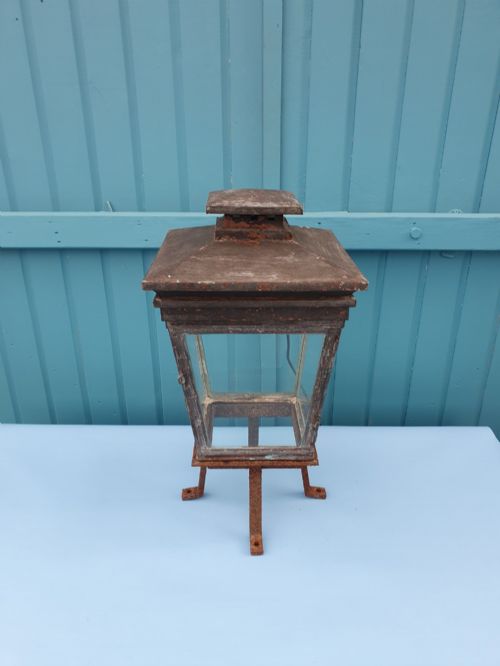


Copper Gas Lantern
These copper gas lanterns are robust survivors of municipal and domestic lighting, offering authentic period character for gates and porches.
Copper Gas Lantern
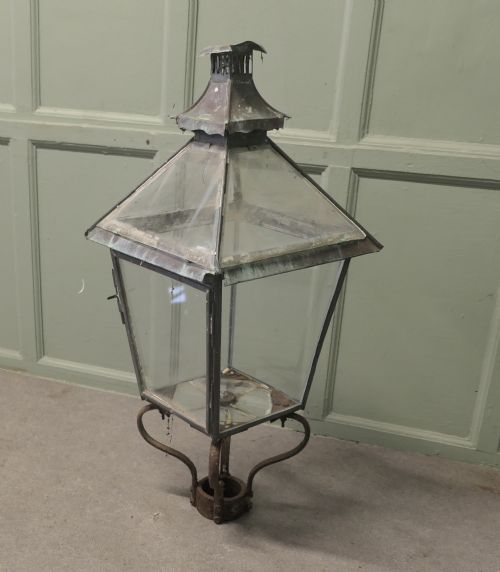
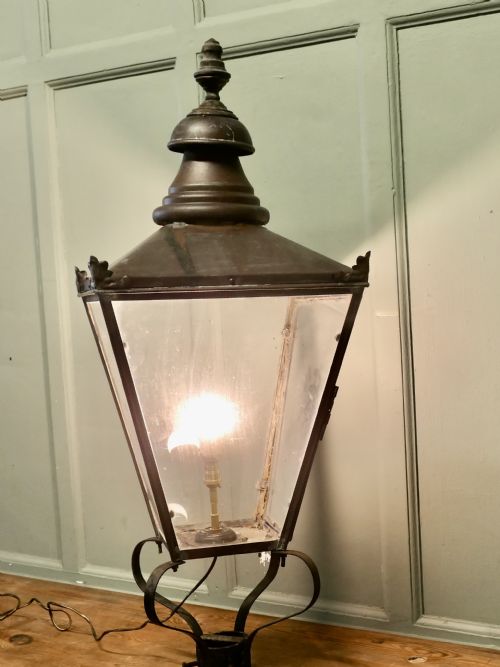
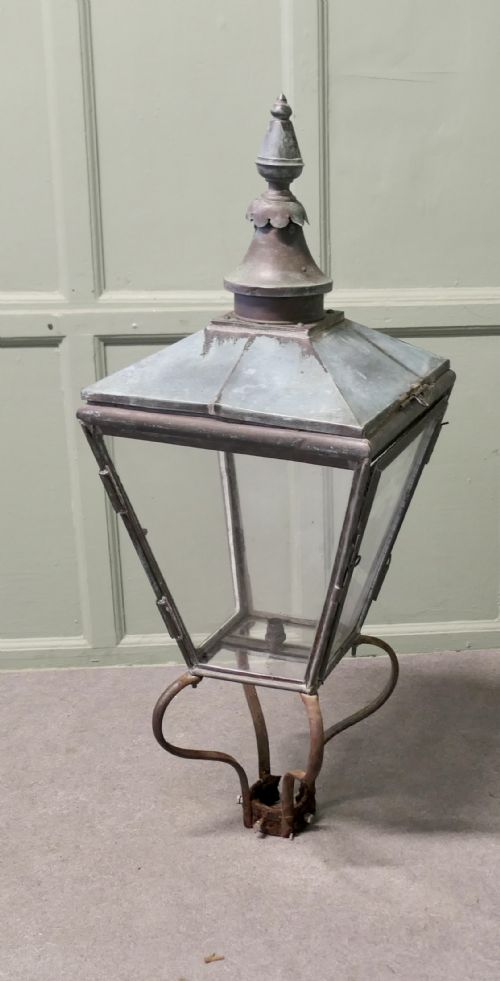
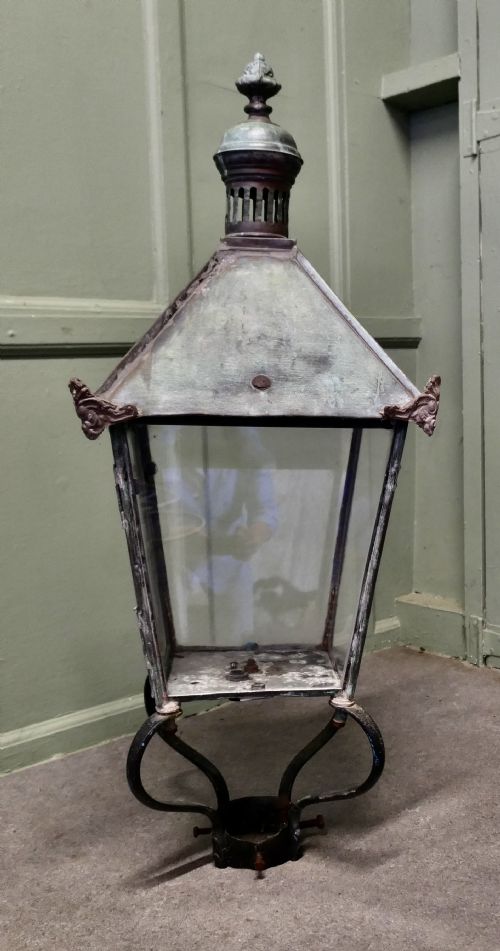
A copper gas lantern is a durable lighting fixture designed for municipal streets or large gate posts, constructed to withstand outdoor exposure. The examples found here span the nineteenth and early twentieth centuries, capturing the Victorian and Edwardian eras.
Most pieces on this page take the form of street lights or gate post lanterns, frequently converted from gas to modern electrical fittings. Visitors will encounter substantial single lanterns alongside paired street lamps originating from locations such as Edinburgh and Bradford.
The designs range from plain utilitarian street fixtures to large glass-topped variants featuring iron and steel support brackets. Their primary role was illumination, but today they serve as architectural statements for exterior walls and carriage entrances.
How they were made
Makers utilised sheet copper folded and joined to form the main body of the lantern, allowing the metal to weather into a distinct patina. This copper housing was combined with structural elements in iron, wrought iron, and cast iron to provide necessary rigidity for outdoor placement.
Panels of glass were fitted into the metal framework to protect the flame from wind while distributing light evenly across streets and pathways. Some versions incorporated steel components alongside painted finishes for added durability against damp conditions.
The chronological scope spans the Victorian era through to the nineteen-twenties, incorporating street lights and gate post designs.
What varies in quality
The standard of a copper gas lantern rests on the substantial nature of its metal frame and the integrity of its original joints. Heavier gauges of copper and robust cast iron mounts indicate a higher grade of manufacture intended for civic installation rather than domestic use.
Proportion and scale distinguish finer examples, particularly where large glass panes meet well-proportioned copper hoods and architectural bases. The presence of maker details or specific regional provenance adds a layer of distinction to the construction.
A FOSTER & PULLEN BRADFORD
The Copper Gas Lantern Glossary
- Copper
- A malleable reddish-brown metal chosen for lanterns due to its resistance to rust in wet weather. It develops a green or dark brown oxidation over decades of exposure.
- Wrought iron
- A tough, fibrous iron variant hammered into shape for brackets and scrolls. It provides strong support for heavy glass and copper lanterns.
- Cast iron
- Molten iron poured into moulds to create rigid structural bases and decorative brackets. It offers high compressive strength for exterior street furniture.
- Gas lantern
- A lighting fixture originally fueled by coal gas piped through municipal lines. Many surviving examples have subsequently been adapted for electrical wiring.
- Gate post light
- An outdoor lantern designed to sit atop stone piers or entrance gates. These fixtures mark property boundaries while providing functional illumination.
Copper Gas Lantern: Frequently Asked Questions
What are copper gas lanterns?
These pieces are large outdoor lighting fixtures originally built to burn gas for street or pathway illumination. They combine sheet copper bodies with glass panels and iron mounts.
Surviving examples date mainly from the Victorian and Edwardian periods, reflecting utilitarian municipal design.
How were these lanterns used?
Municipal authorities and estate owners mounted them on street corners, gate posts, and exterior walls to guide travellers after dark. The enclosed glass protected the open flame from wind and rain.
Today, they are typically repurposed as architectural garden or entrance lighting.
Can they be wired for electricity?
Many period lanterns have already been converted from gas to run on standard electrical circuits. Electric lamp holders are fitted inside the copper housing while preserving the exterior historic appearance.
Qualified electricians can adapt most antique fixtures for modern outdoor use.
How do I date a copper gas lantern?
Dating relies on construction methods, material combinations, and distinct style markers from the nineteenth and early twentieth centuries. Structural hardware in cast iron and wrought iron often points towards specific manufacturing decades.
Maker stamps or city names provide definitive chronological and geographical evidence.