


Copper Street Lantern
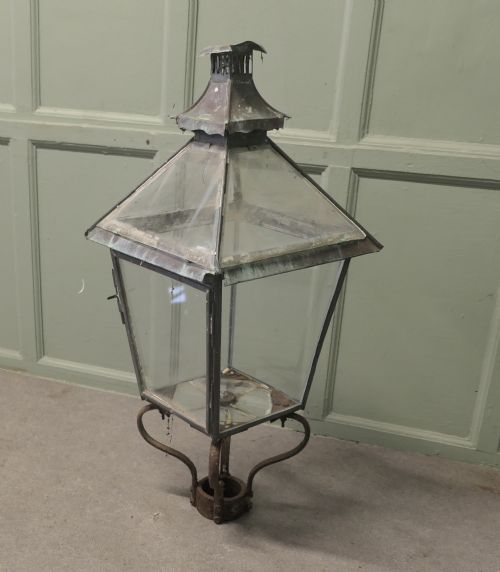
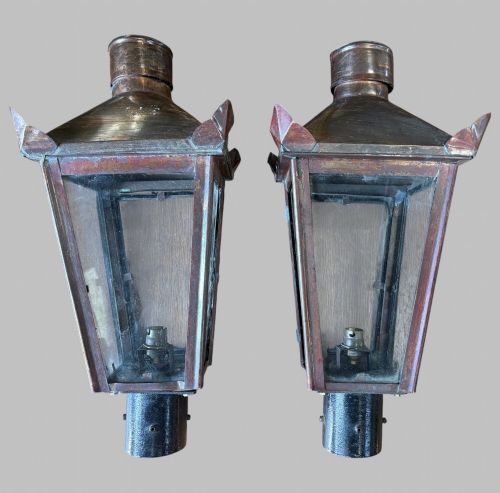
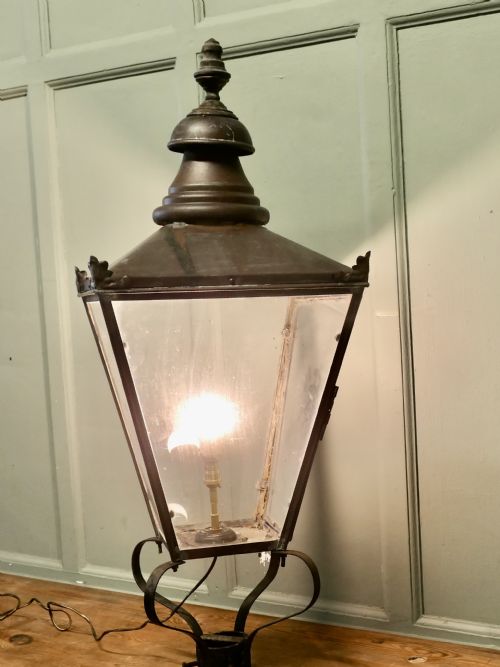
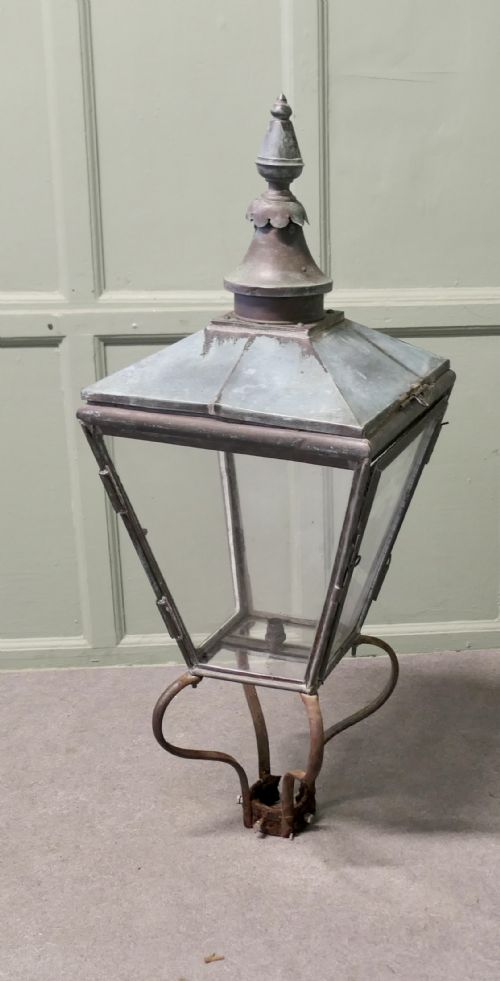
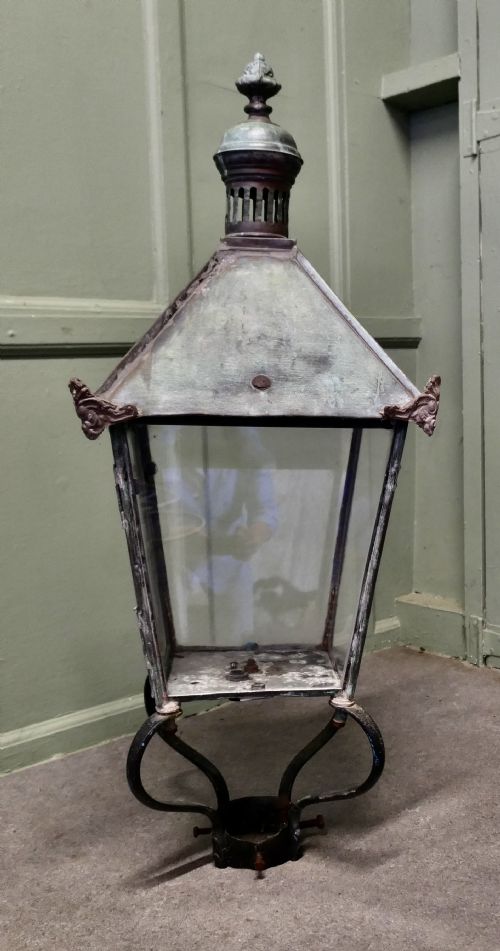
A copper street lantern brings robust period character to an exterior wall or gateway.
Copper Street Lantern
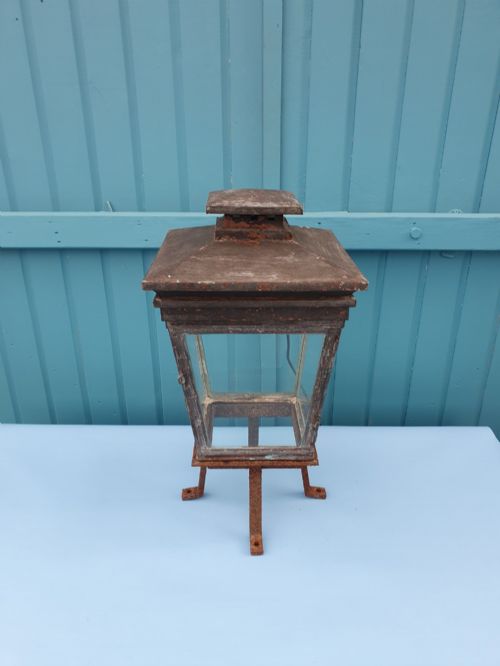
When you search for a copper street lantern, you are looking at substantial exterior lighting built to withstand the elements while making a distinct architectural statement. These pieces range from Victorian gas conversions to early twentieth-century post and wall mountings.
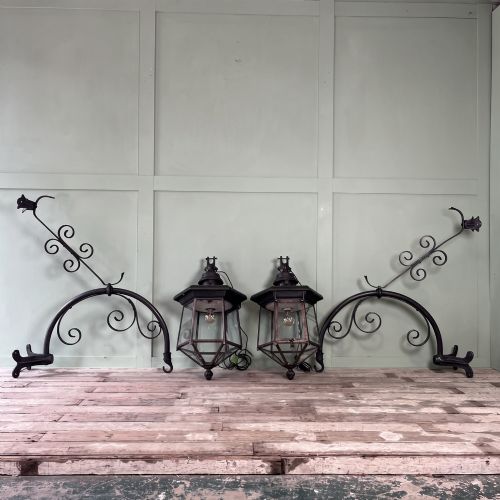
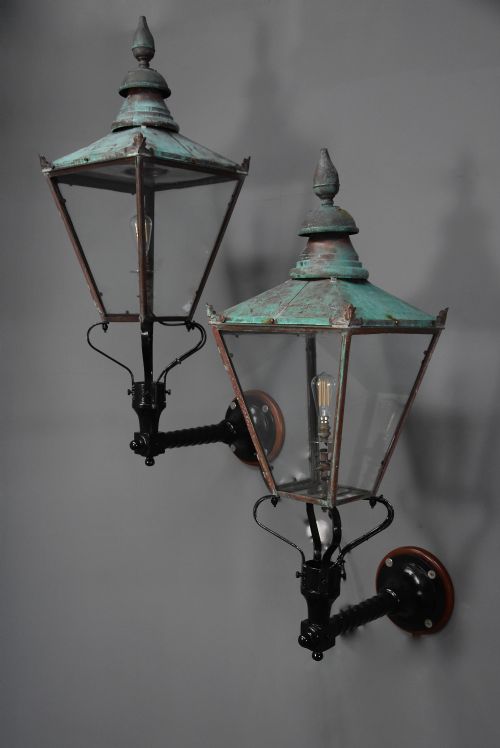
You are most likely to meet large Victorian and Edwardian examples on this page, often fashioned with glass panels and heavy metal brackets. They appear as wall lights, gate post fixtures, or hanging street lamps salvaged from urban and rural thoroughfares.
Materials and construction
Workshop makers constructed these lanterns primarily from sheet copper combined with iron for structural brackets and frames. Glass panels, frequently held by metal glazing bars, protected the internal flame or bulb from wind and rain.
Manufacturing techniques relied on soldered or riveted copper joints designed for exterior resilience. Iron components often received a coat of paint to prevent corrosion, whilst specialised brackets utilised cast or wrought iron for decorative spiral twists.
Copper Street Lantern Retail Price Guide 2026
Typical asking prices for copper street lantern among the pieces listed under this phrase on Sellingantiques today, from the lower quarter to the upper quarter. They describe what is for sale here now, not the wider market.
Markers of quality
Quality in a street lantern rests on the gauge of the copper and the complexity of the bracket work. Finer examples display substantial hand-beaten metalwork and sophisticated framing rather than simple folded sheet construction.
The integrity of the original glazing bars and the presence of maker details or specific regional foundry stamps elevate a piece. Sophisticated mounting brackets, such as spiral twist ironwork, distinguish superior installations from utilitarian municipal stock.
REVO Leicester·A Foster and Pullen Bradford
The Copper Street Lantern Glossary
- Post lantern
- A light fixture designed to mount vertically on top of a gate pier or architectural column.
- Gas conversion
- An antique lamp originally fitted with a gas burner that has been adapted to house modern electrical wiring.
- Bracket
- The supporting arm or framework fixed to a wall to hold an exterior lantern away from the masonry.
- Glazing bar
- A slender wooden or metal strip holding the panes of glass in position within the lantern frame.
Copper Street Lantern: Frequently Asked Questions
How do I mount a heavy copper lantern safely?
Heavy lanterns require substantial structural support, typically fastening directly into masonry using heavy-duty fixings. Ensure the weight of both the copper body and the iron bracket is distributed securely.
For gate posts or exterior walls, professional installation guarantees the fixture withstands wind loads and weathering over decades.
Can these antique lanterns be used outdoors today?
Most of these pieces were originally built for exterior municipal use, making them naturally suited to outdoor installation. Many have already undergone conversion from gas to standard electrical fittings.
An electrician should inspect the internal wiring and bulb housing to ensure current safety standards and weatherproofing before final placement.
How do I clean antique copper?
Allowing copper to retain its dark atmospheric patina preserves the historical character accumulated over a century or more. Aggressive polishing removes this stable oxidation layer and strips the surface of its age.
Gentle washing with warm soapy water removes accumulated surface grime without damaging the underlying metal or fragile soldered joints.
How are Victorian lanterns dated?
Dating relies on construction methods, such as the style of riveted joints, the thickness of the copper sheet, and the design of the iron brackets. Municipal records and foundry stamps occasionally provide precise manufacturer dates.
Stylistic cues like Victorian gas cocks or Edwardian proportioning help narrow the period of manufacture when maker marks are absent.