


Copper Post Light
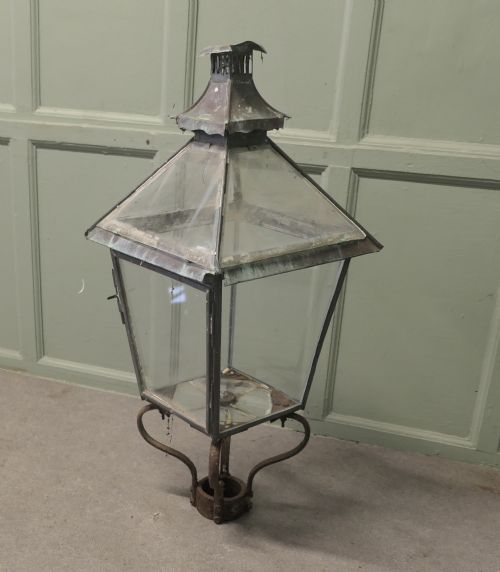
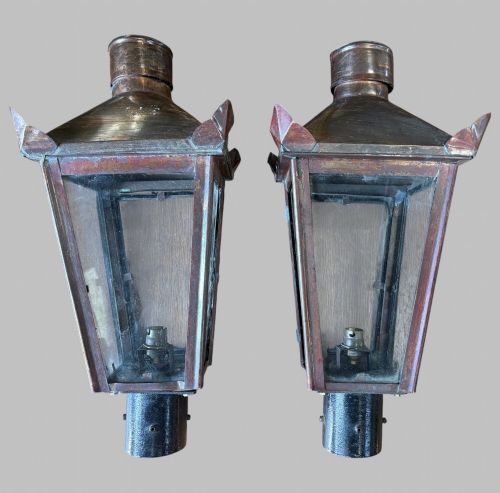
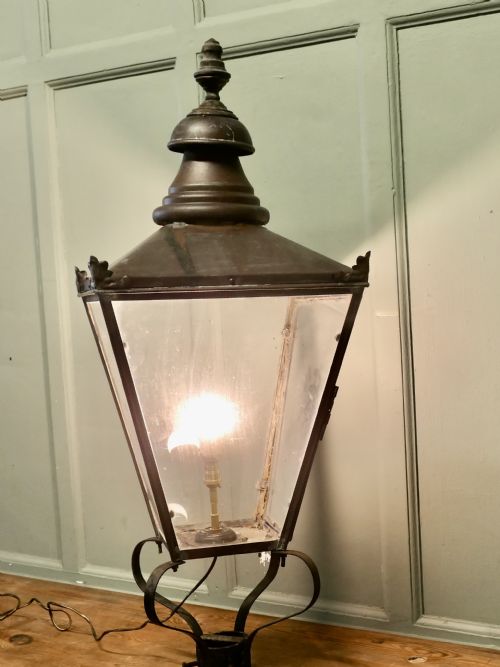
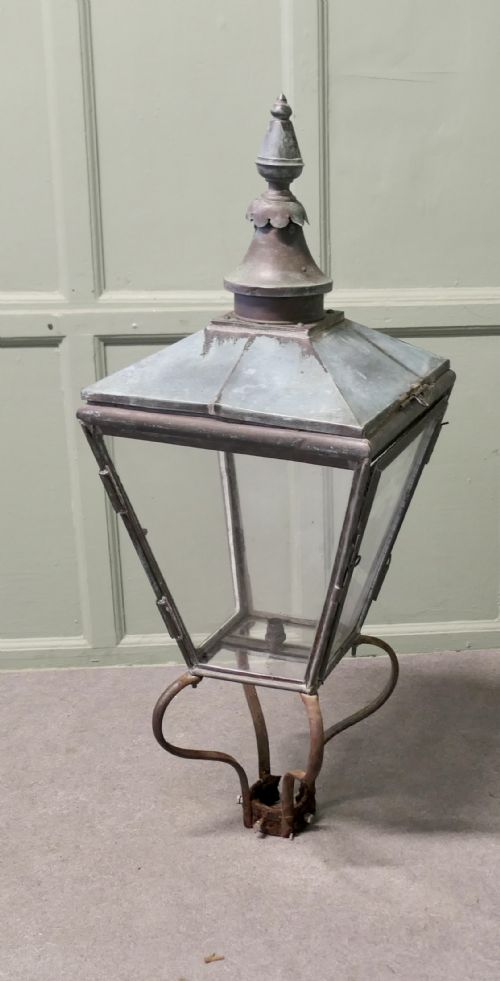
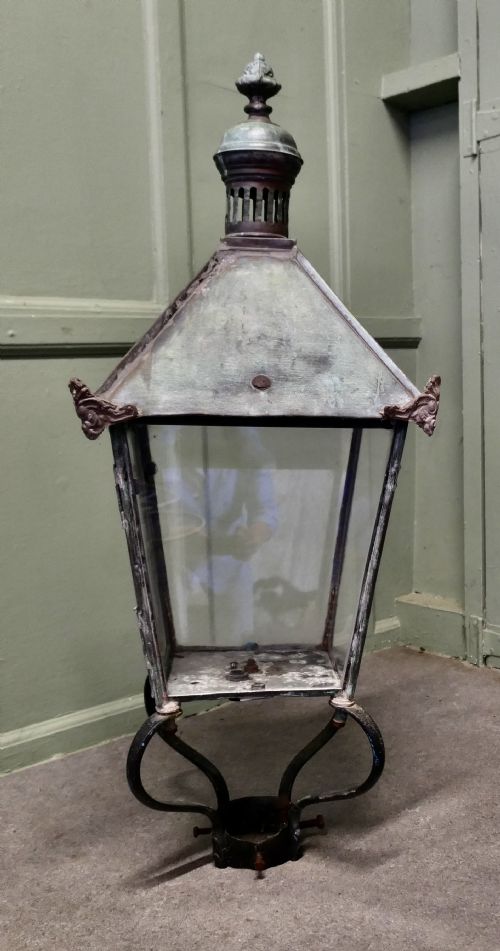
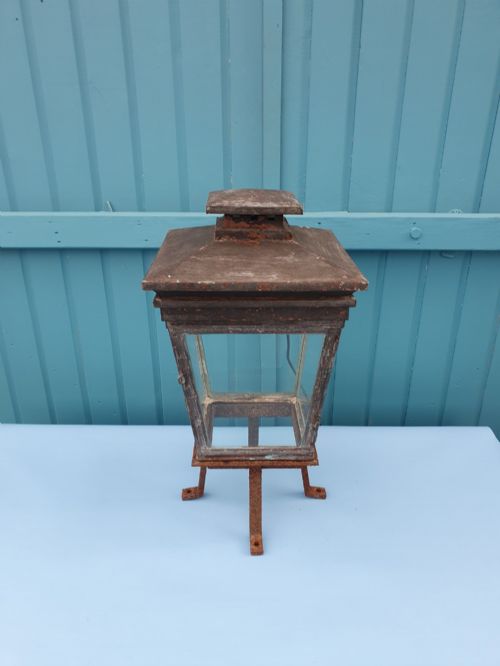
These copper post light examples bring genuine period character to a garden or driveway.
Copper Post Light
A copper post light is a robust exterior fitting designed to illuminate gates, pathways, and outdoor spaces using durable metalwork and glass panels. These pieces often originate as functional street lamps or gate fixtures from the nineteenth and early twentieth centuries.
The versions most commonly met on this page date from the Victorian and Edwardian periods up to the nineteen-thirties. Many examples show their utilitarian origins, having been converted from gas operation to modern electrical wiring.
Forms range from large street lanterns mounted on iron bases to paired post lights suited for driveway entrances. Edinburgh and regional workshops produced these lamps using sturdy metals built to withstand weather.
How they were made
Construction relies on sheet copper formed into lantern bodies, paired with structural iron, cast iron, or wrought iron brackets and bases. Glass panes are fitted within the metal framework to protect the flame or bulb from wind and rain.
Makers utilised steel components alongside copper and glass to ensure rigidity in exposed outdoor settings. Riveted and soldered joints held the metal panels together, while conversions often adapted existing gas fittings for later electrical use.
Listings feature copper and iron lanterns dating from the nineteenth century through to nineteen thirty.
What varies in quality
Quality rests in the substance of the metalwork and the integrity of the original construction rather than decorative flourishes. Heavier gauge copper and substantial cast iron bases indicate a higher grade of manufacture intended for municipal or grand estate installation.
The proportion of the glass panels to the metal frame and the survival of original mounting brackets distinguish superior examples. Pieces retaining untouched patina and maker attribution show greater craftsmanship than standard utility lights.
A Foster & Pullen Bradford
The Copper Post Light Glossary
- Gas conversion
- The adaptation of an antique lamp originally built for town gas to house modern electrical components. This process preserves the exterior metalwork while allowing practical domestic use.
- Wrought iron
- Iron beaten and worked by hand into structural brackets and scrollwork. This material provides sturdy support for heavy copper lanterns.
- Cast iron
- Iron poured into a mould to create rigid bases and decorative mounts. It offers durability and weight for outdoor post lights.
- Street lamp
- A large utilitarian lantern designed for public thoroughfares and municipal lighting. These fixtures were built to endure harsh outdoor conditions.
Copper Post Light: Frequently Asked Questions
How do I mount a copper post light?
These lanterns require a secure mounting base or post matching the weight of the iron and copper structure. Professional installation ensures the fixture remains stable in exposed outdoor locations.
Wiring must be adapted to handle modern electrical connections safely while preserving the exterior housing of the lamp.
Were these lights always electrical?
Most nineteenth-century and early twentieth-century examples started life as gas street lamps or estate lights. They were subsequently converted to electricity during later modernisation.
This conversion history is a standard feature of antique outdoor lighting rather than a later alteration of purpose.
How do I care for antique copper?
Outdoor copper naturally develops a dark patina when exposed to weather and atmospheric conditions. This oxide layer protects the underlying metal from further corrosion.
Many collectors prefer to leave the surface untouched rather than polishing the copper back to a bright finish.
Can I use these lights outdoors?
These pieces were originally built for exterior use on streets, gates, and pathways. Their robust metal and glass construction suits them to garden environments.
Check the weatherproofing of the internal electrical fittings to ensure safe operation in open spaces.