


Outdoor Copper Lamp
These outdoor copper lamp fixtures bring genuine period character to exterior walls, porches, and gate posts.
Outdoor Copper Lamp
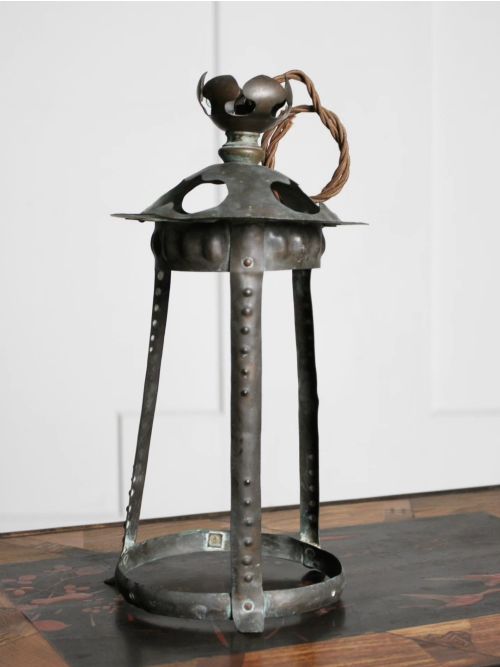
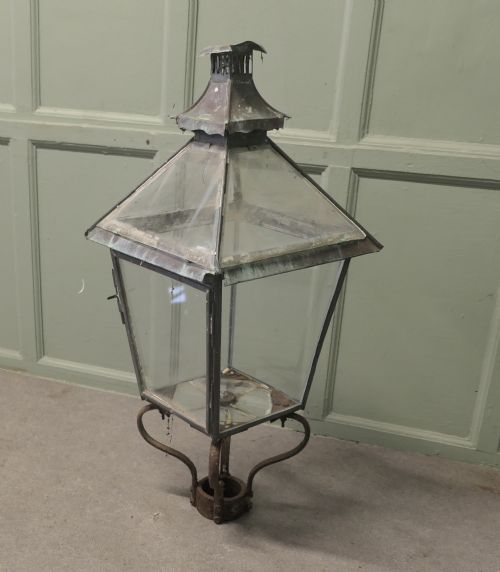
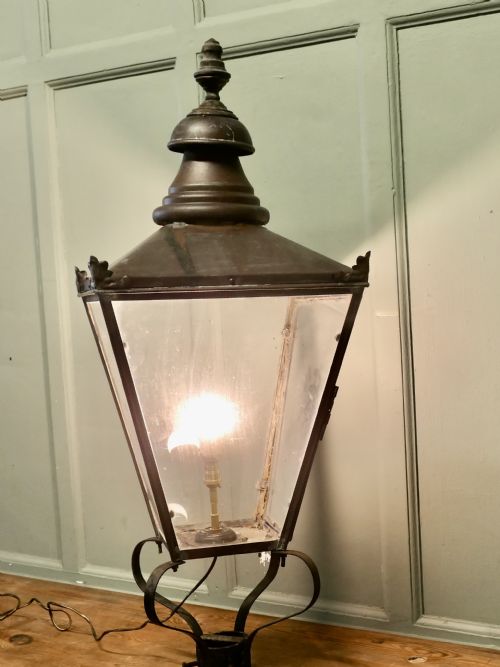
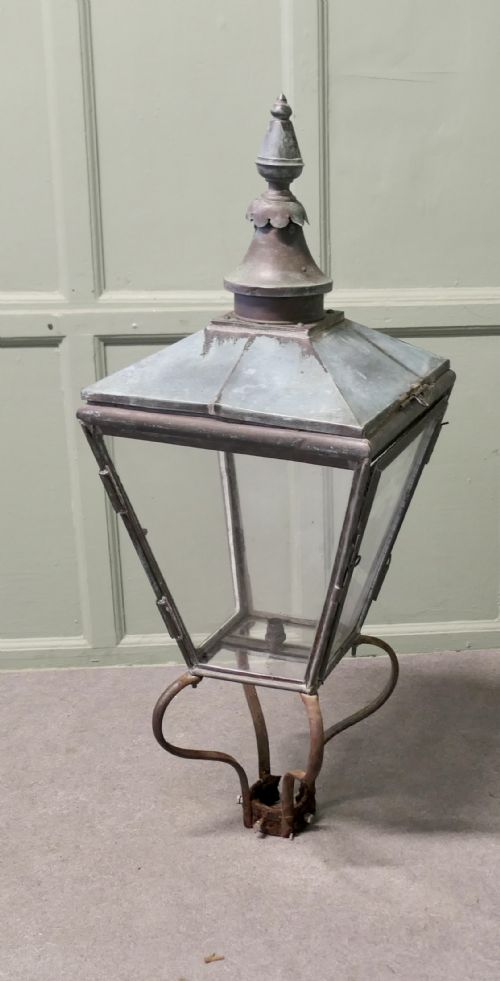
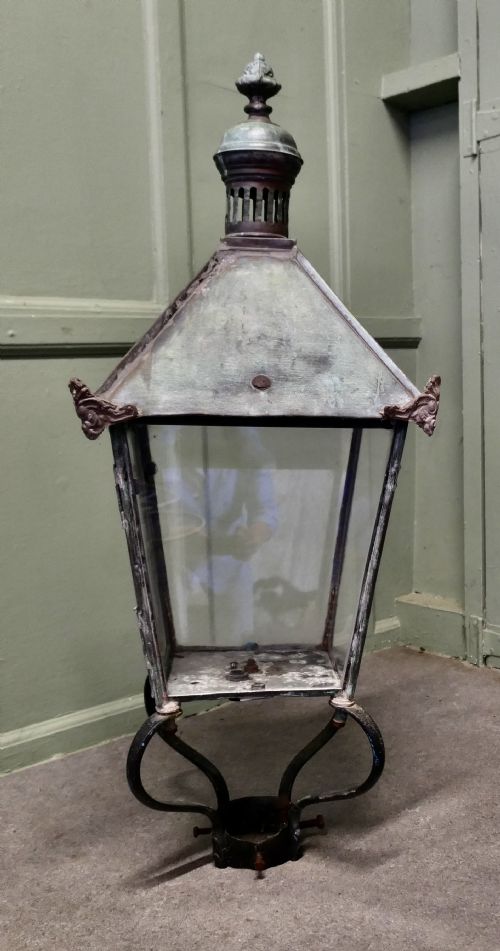
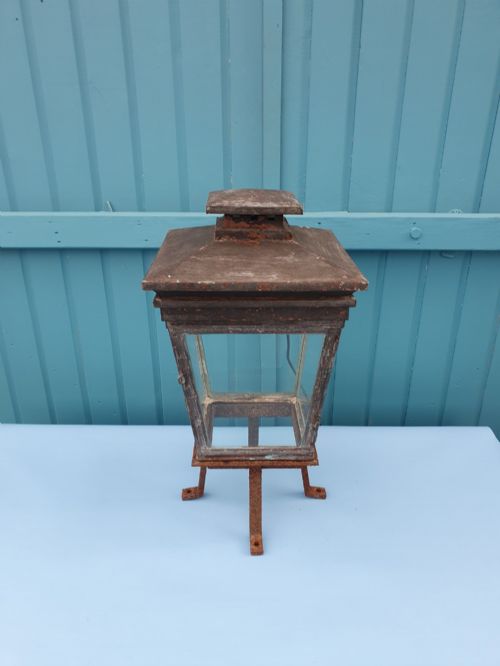
When you search for an outdoor copper lamp, you find robust exterior illumination dating from the Victorian and Edwardian eras through to the early twentieth century. These pieces encompass street lights, porch lanterns, post lights, and wall sconces designed to withstand the elements.
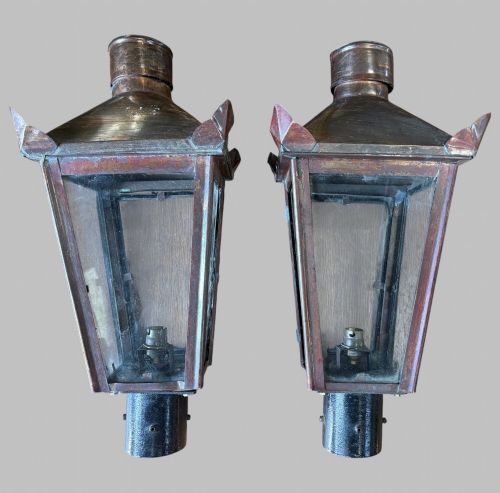
The versions you are most likely to meet on this page include large street lanterns, half lanterns, and porch lights. Many originate from conversions of earlier gas systems, retaining their utilitarian heritage and solid proportions.
Makers span the late nineteenth century and the decades leading up to the mid-twentieth century, utilising durable metals and glass. Styles range from simple industrial designs to Arts and Crafts interpretations and French chateau influences.
Materials and construction
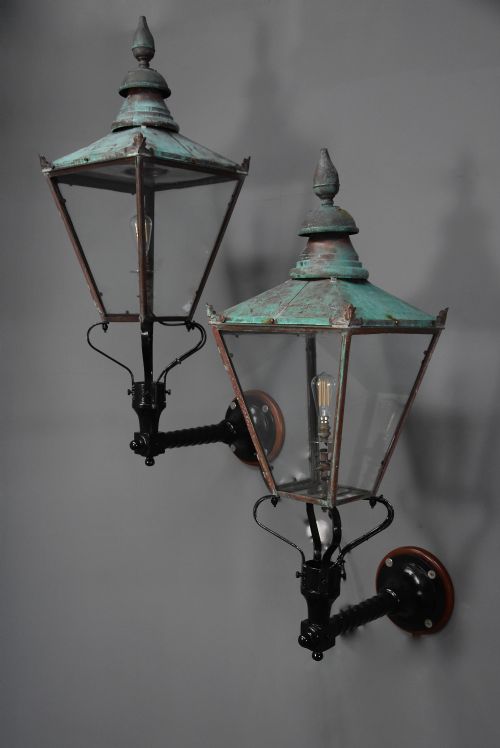
Construction relies heavily on sheet copper combined with iron, wrought iron, and brass for structural support and brackets. Glass panes protect the flame or bulb, secured within metal framing designed to resist wind and rain.
Workshops utilised soldering and riveting techniques to join copper panels, often mounting the completed lanterns onto cast iron or steel wall brackets and posts. Many examples show evidence of gas piping and conversion fittings from the period of transition to electric lighting.
Object forms span wall sconces, pendant lights, and post lanterns adapted from gas.
Assessing quality and authenticity
Quality rests on the gauge of the copper and the integrity of the structural brackets, such as sophisticated spiral twist wall supports. Thicker metal and robust soldering indicate higher grade utilitarian manufacture.
Proportion and scale separate standard domestic porch lights from substantial street and gate post lanterns. Original glass panes and intact period conversion fittings also elevate an example above later altered pieces.
Foster And Pullen Bradford
The Outdoor Copper Lamp Glossary
- Porch light
- A smaller exterior wall-mounted fixture designed to illuminate entryways and doorsteps. These typically sit closer to the building facade than large post lanterns.
- Street light
- A substantial exterior lantern originally engineered for public thoroughfares and mounted high on posts or brackets. They feature generous proportions and robust glazing.
- Half lantern
- A wall light flattened on one side to sit flush against an exterior brick or stone wall. This form saves space while providing directional illumination.
- Post lantern
- An outdoor light designed to mount vertically on top of gate pillars, garden walls, or dedicated posts. They offer all-around visibility.
- Gas conversion
- The process of adapting an antique lamp originally built for gas supply to house modern electrical wiring. This retains the original exterior housing while meeting contemporary utility needs.
Outdoor Copper Lamp: Frequently Asked Questions
Can these outdoor lamps withstand modern weather?
These lanterns were originally built for exterior municipal and domestic use, employing heavy gauge copper and iron. They remain well suited to modern outdoor placement when properly installed.
Buyers should ensure that any electrical components meet current safety standards before mounting them outside.
How do I mount a heavy copper street lantern?
Due to the substantial weight of copper and glass construction, secure mounting requires solid structural backing. Wall brackets often need fixing directly into masonry rather than timber cladding.
Using appropriate fixings guarantees the bracket can support the leverage exerted by large post or wall lanterns.
Are these lamps converted from gas?
Many period exterior lanterns began as gas-lit street or porch fixtures before being adapted for electricity. Traces of internal piping or burner assemblies often remain visible inside.
This conversion history is a standard feature of antique outdoor lighting from the nineteenth and early twentieth centuries.
How do I date an antique copper lantern?
Dating relies on observable design characteristics, construction methods, and materials such as wrought iron or brass accents. Victorian and Edwardian examples often feature distinct proportions and heavier gauge metalwork.
Comparing bracket styles and ventilation cowls helps narrow the manufacturing period between the nineteenth and mid-twentieth centuries.