
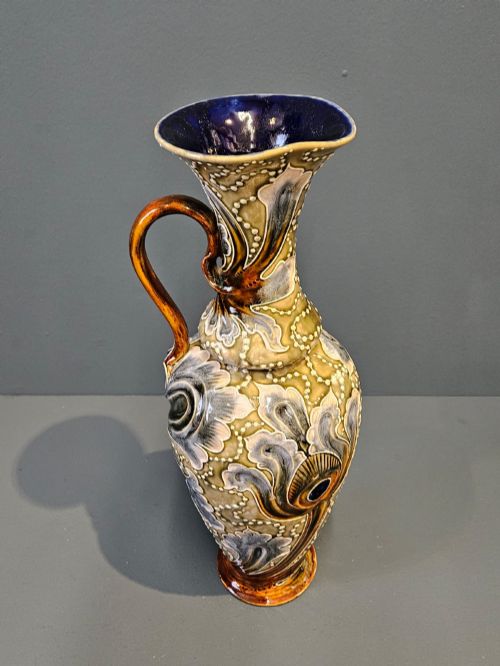


Victorian Stoneware Vessel
A victorian stoneware vessel brings robust utility and intricate ornamentation together through durable ceramic bodies.
Victorian Stoneware Vessel
A victorian stoneware vessel encompasses a diverse array of utilitarian and decorative objects, including jugs, pitchers, vases, jardinieres, storage jars, and water filters. These pieces originate predominantly from the nineteenth century, reflecting the manufacturing output of English potteries during the Victorian and Edwardian eras.
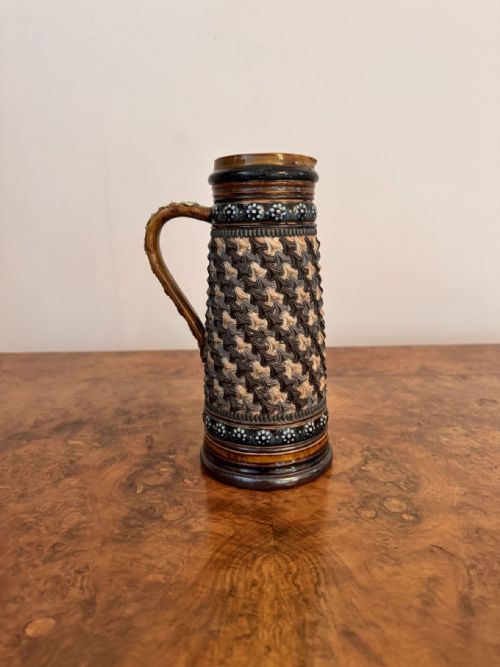
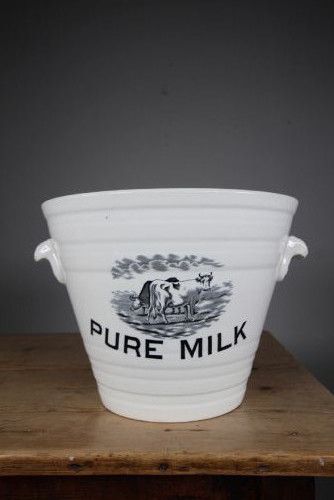
The most frequent form encountered on this page is the Doulton Lambeth jug or vase, alongside larger utility items such as dairy pails, tavern jugs, and stick stands. Creators utilised durable ceramic materials suited to both domestic tasks and ornamental display in parlours and halls.
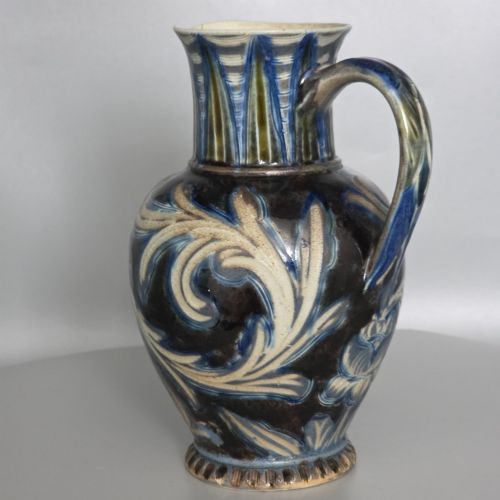
Objects span several stylistic movements, moving from utilitarian industrial salt glaze pieces to highly decorated Art Nouveau and Arts & Crafts designs. Collectors encounter everything from plain apothecary jars to exhibition-quality ewers embellished with intricate incised motifs and applied ornamentation.
Materials and Technique
Potters built these items using dense stoneware and ceramic bodies, frequently finished with salt glaze treatments that produced a characteristic textured surface during firing. Salt thrown into the kiln vapourised and bonded with the silica in the clay, creating a durable sheen.
Makers applied surface decoration through incising, relief-moulding, and the addition of enamel colours, silver mounts, or slip. Certain vessels feature specialised patent systems for water filtration or incorporate hand-painted artist panels into the hard stoneware fabric.
Turtle soup jars remind us that Victorian dining habits involved ingredients we would find rather surprising today.
Assessing Excellence
Quality in a victorian stoneware vessel rests upon the crispness of the relief moulding, the precision of hand-incised detailing, and the reputation of the specific studio or named artist involved. Pieces bearing signatures or monogram marks from notable decorators command greater interest than standard factory output.
The presence of precious metal additions, such as silver rim mounts, elevates the standing of an individual piece. Furthermore, the complexity of the glaze application and the ambition of the vessel form separate standard utilitarian items from exhibition-scale works.
Doulton Lambeth·Florence E. Barlow·Eliza Simmance·Charles Meigh·Emily Stormer·William Adams & Sons
The Victorian Stoneware Vessel Glossary
- Salt glaze
- A vitreous coating formed by throwing common salt into the kiln at the peak temperature. This chemical reaction creates an orange-peel texture across the stoneware body.
- Tyg
- A large drinking vessel featuring multiple handles designed for communal passing around a table. These pieces often appear with detailed slip decoration or silver mounts.
- Jardiniere
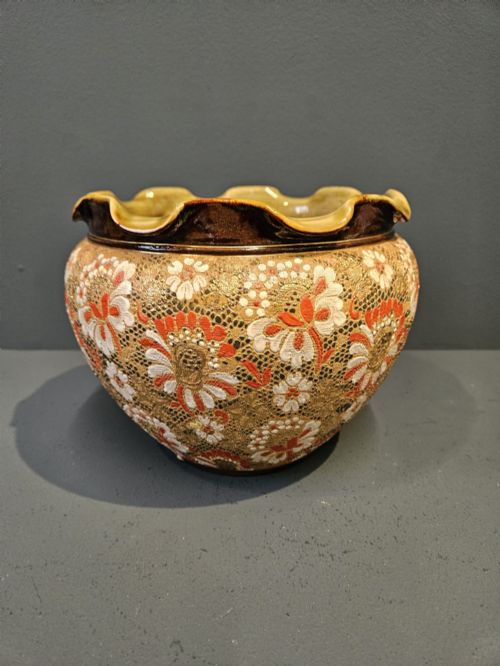
- An ornamental ceramic pot intended to hold a live plant or floral display. They frequently match the decorative schemes of contemporary interior spaces.
- Ewer
- A large jug with a wide spout and flared base, traditionally utilised for pouring water. Victorian examples often adopt classical or medieval revival forms.
- Slaters patent
- A decorative technique involving the pressing of lace or coarse fabric into damp clay to create textured background patterns. Potters combined this method with floral hand-painting.
Victorian Stoneware Vessel: Frequently Asked Questions
How were these vessels used originally?
These items served a multitude of practical and decorative functions in nineteenth-century life, ranging from storing liquids and filtering drinking water to holding cut flowers and decorating parlours.
Larger vessels operated in dairies, taverns, and apothecary shops for daily trade, while smaller jugs and vases remained inside domestic homes for display.
Are these pieces waterproof for daily use?
The dense stoneware and ceramic bodies are naturally impervious to liquids due to high-temperature firing and glazing techniques.
Many historic jugs and water vessels remain entirely capable of holding liquids safely in a modern household setting.
How do I identify a salt glaze?
Salt glaze surfaces feature a distinctive pitted texture that resembles the skin of an orange, created when salt vapour reacts with the hot clay body.
This finish is extremely durable and resists acids, making the surface resilient over centuries of handling.
Who decorated these ceramic pieces?
Numerous items carry the monograms or full signatures of notable artists who worked within prominent pottery studios during the late nineteenth century.
Decorators specialised in specific techniques, including fine incising, bird painting, and applied pate-sur-pate ornamentation.