
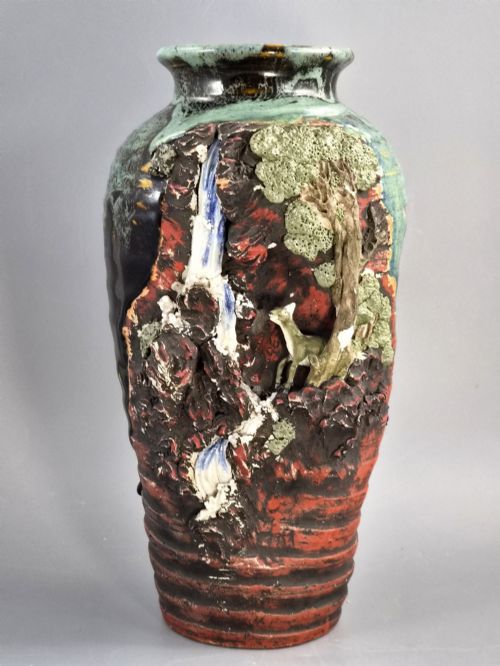


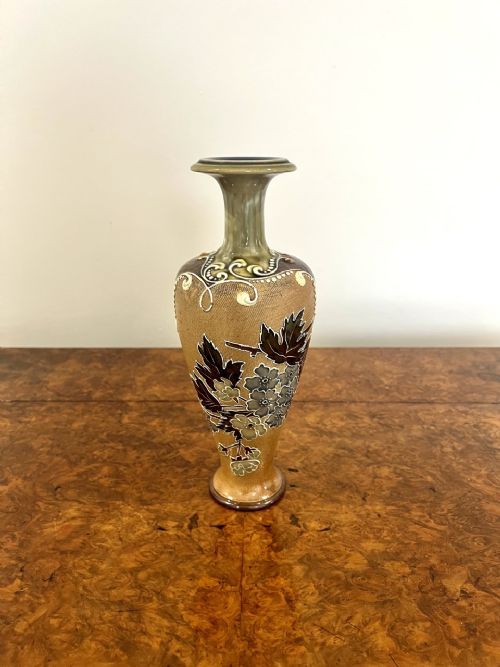


Green Stoneware Vase
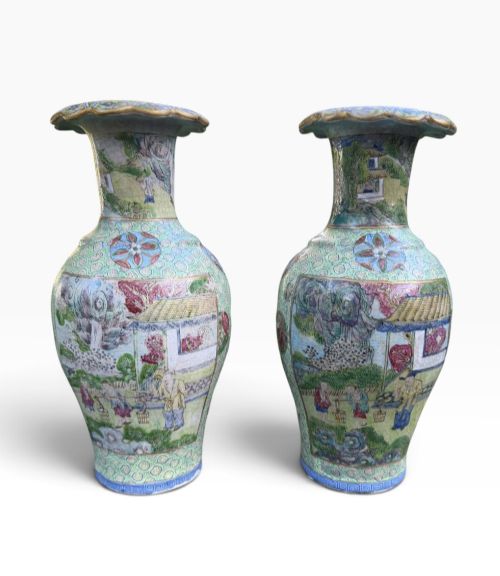
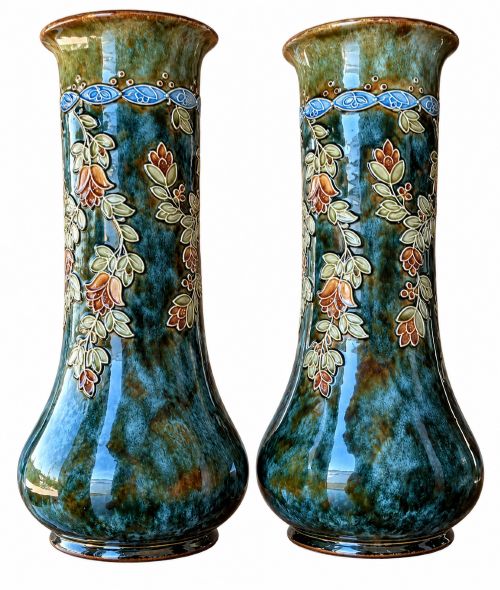
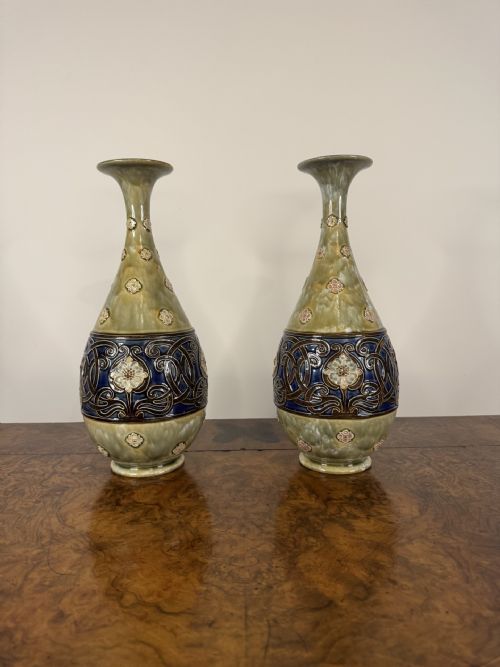
These green stoneware vase pieces offer robust ceramic presence and rich coloured glazes, drawing collectors of nineteenth century and arts and crafts pottery.
Green Stoneware Vase
A green stoneware vase brings together dense, vitrified ceramic bodies and deep, often mottled or lustrous green glazes that range from subtle celadon hues to vibrant art nouveau tones. When searching for a green stoneware vase, buyers encounter forms spanning English studio output, French country storage vessels, and Asian historic ceramics.
The pieces listed on this page run from the nineteenth century into the twentieth century, encompassing Victorian, Edwardian, and earlier eras. Makers such as Royal Doulton and Royal Lancastrian feature prominently alongside Chinese Qing and Song dynasty works and Japanese Meiji period sculptural ceramics.
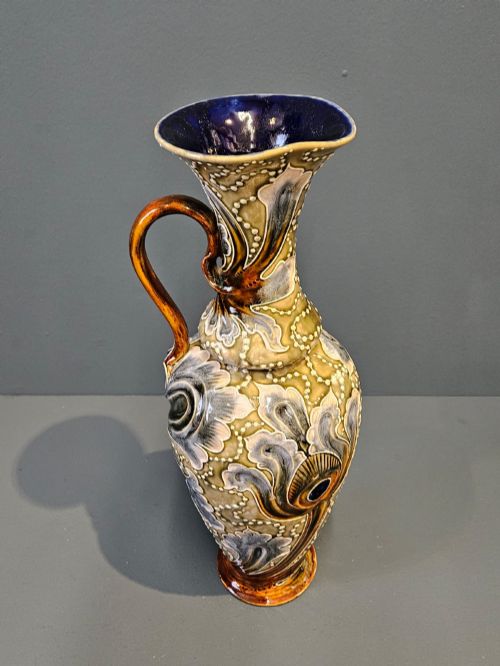
Forms vary from tall baluster vases and matched pairs to ewers, confit pots, and globular jars. Collectors find both domestic decorative items from European potteries and traditional Asian vessels utilising tea dust or celadon glaze techniques.
Materials and Techniques
Stoneware and earthenware bodies form the structural foundation of these vessels, shaped by hand or on the potter's wheel before undergoing high temperature kiln firing. This firing process vitrifies the clay body, making the ceramic impervious to liquids and highly durable.
Glaze application defines the surface character, utilising enamel, lustres, and specialised mineral glazes such as tea dust and celadon to achieve varied green coloration. Artists working in English potteries applied slip decoration, incised patterns, and sculptural elements directly onto the damp clay before glazing.
Listings for this phrase include nineteenth century British studio pottery, Chinese Qing dynasty monochrome jars, and Japanese Meiji period sculptural vessels.
Qualities of Distinction
The distinction between standard production and top tier examples rests upon the precision of the throw, the artistry of the hand decoration, and the depth of the glaze. Works bearing the specific signatures or monograms of renowned studio artists demonstrate superior individual craftsmanship compared to unmarked factory pieces.
Glaze consistency and the successful interaction of chemical components during kiln firing separate exceptional pieces from ordinary ones. Controlled pooling, rich tonal variation, and crisp incised or sculpted detailing elevate the aesthetic impact of the ceramic.
Royal Doulton Lambeth·Royal Lancastrian·Louisa Wakely·Eliza Simmance·Richard Joyce
The Green Stoneware Vase Glossary
- Stoneware
- A type of pottery fired at high temperatures until the clay body vitrifies and becomes non porous. It provides a heavy, durable base for rich coloured glazes.
- Celadon
- A term for ceramics denoting a pale green or grey green glaze originating in East Asia. The subtle hue results from iron oxide reacting within a reduction kiln atmosphere.
- Baluster
- A bottle or vase shape characterised by a rounded body that tapers toward the top with a flared neck. This classic silhouette appears frequently in nineteenth century British pottery.
- Ewer
- A large jug or pitcher with a wide spout and handled body, often produced for decorative display. Many historical examples feature elaborate moulded or incised surface patterns.
- Confit pot
- A traditional French earthenware or terracotta storage vessel coated in glaze, typically featuring lug handles. These utilitarian pots were originally used for preserving meats.
Green Stoneware Vase: Frequently Asked Questions
How do I identify a Doulton Lambeth vase?
Doulton Lambeth pieces typically display impressed factory marks and the specific monograms of individual artists on the unglazed base. The style often combines naturalistic incised foliage with rich salt glaze or coloured stoneware finishes.
Looking closer at the decoration reveals hand-tooled details executed by prominent studio ceramicists active during the late nineteenth and early twentieth centuries.
What is the difference between stoneware and earthenware?
Stoneware is fired at significantly higher temperatures than earthenware, causing the clay body to vitrify and become completely impermeable to water without needing a glaze. Earthenware remains porous after initial firing and relies entirely on surface glazes for water resistance.
In practical terms, stoneware offers greater structural weight and durability, which explains its widespread use for large decorative vases and utilitarian storage jars.
How should I display a heavy ceramic vase safely?
Display heavy ceramic and stoneware vessels on stable, level surfaces capable of supporting substantial downward weight. Avoid placing tall baluster forms near the edge of tables or in high traffic household zones.
Ensure that direct sunlight does not hit delicate enamel or lustre glazes for extended hours to preserve the original surface coloration over time.
What does tea dust glaze mean?
Tea dust glaze is a crystalline matte finish containing iron crystals that creates a speckled, variegated surface resembling powdered green tea. This sophisticated Chinese ceramic technique requires precise kiln temperature control to achieve its characteristic texture.
Pieces featuring this glaze show subtle metallic sheens and complex tonal depths under changing light conditions.
Are antique confit pots waterproof?
French confit pots feature internal glazes designed for food preservation, but their porous terracotta or earthenware bodies can absorb moisture over long periods. Using a dedicated glass or plastic liner inside the pot protects the historic ceramic fabric when holding fresh flowers.
Displaying them dry preserves the original interior glaze and prevents mineral salts from migrating through the clay walls.