


Floral Stoneware Urn
A floral stoneware urn brings tactile weight and botanical decoration to a room, drawing the eye with robust clay and enduring glaze.
Floral Stoneware Urn
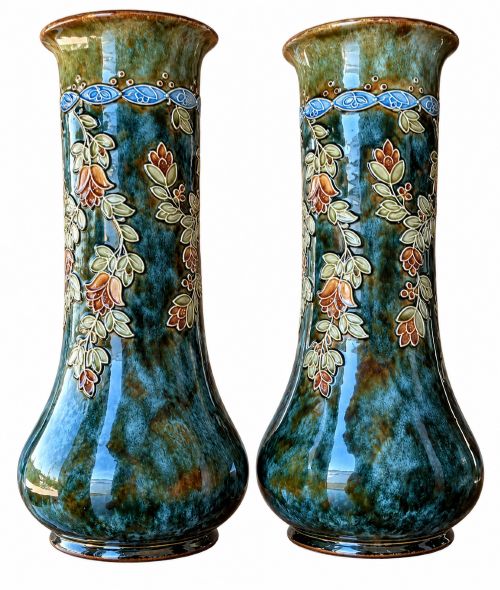
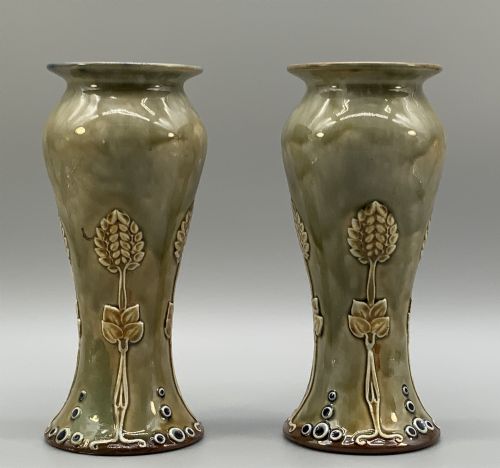
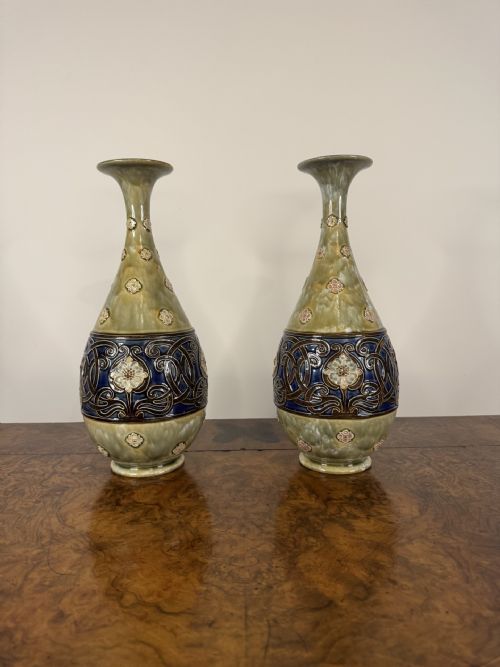
When searching for a floral stoneware urn, a buyer encounters robust ceramic vessels shaped primarily as vases and loving cups. These pieces span from the late nineteenth century through to the early twentieth century, taking in Victorian, Edwardian, and Art Nouveau periods.
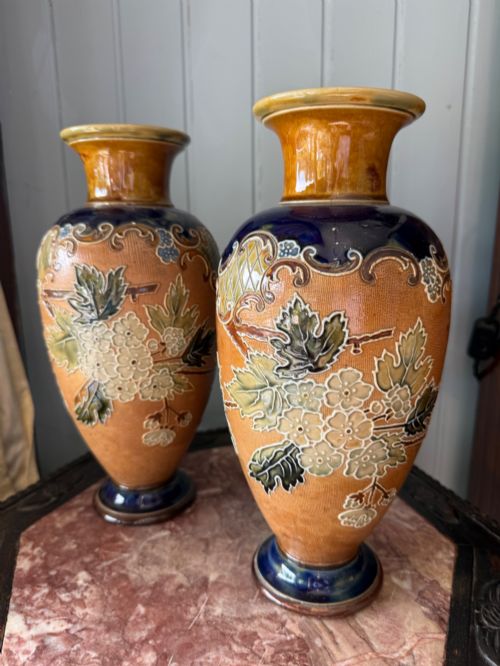
The version most commonly met on this page is the robust stoneware vase originating from the workshops of Doulton in Lambeth. These pieces frequently display botanical or floral decoration rendered through incised patterns, enamel, and applied glaze.
Beyond the predominant Victorian and Edwardian productions, examples extend to German Mettlach pottery and Carter Stabler Adams Poole pottery. The forms range from small cabinet pieces to large baluster shapes designed to hold substantial floral arrangements.
How They Were Made
The makers utilised dense stoneware clay, shaped either on the potter's wheel or within moulds to achieve baluster and urn profiles. This vitrified material required high kiln temperatures, resulting in a durable, non-porous body capable of retaining liquid.
Surface decoration relied heavily on salt-glazing, coloured enamel, and specialised techniques such as Slaters Patent, where lace or patterned textiles were pressed into the damp clay. Hand-painted floral motifs and raised slip details were then applied before a final protective glaze firing.
Listings on this site feature stoneware pieces spanning from the sixteenth century to the twentieth century, with a strong concentration in the Victorian and Edwardian eras.
What Varies in Quality
Quality rests in the crispness of the incised botanical carving and the complexity of the hand-applied enamel work. Pieces featuring named artists show superior dexterity in the floral detailing compared to standard factory output.
The balance of the form and the richness of the glaze finish dictate the upper tier of the range. Uniformity in pairs and the preservation of delicate surface ornamentation distinguish the finer examples from simpler production pieces.
Royal Doulton Lambeth·Louisa Wakely·Mettlach Pottery·Eliza Simmance·Carter Stabler Adams
The Floral Stoneware Urn Glossary
- Stoneware
- A heavy, dense ceramic fired at high temperatures until semi-vitrified. It provides a durable, waterproof body well suited for decorative urns and vases.
- Baluster
- A vertical architectural form featuring a rounded lower body tapering to a narrower neck. This silhouette is common among the larger vases on this page.
- Slaters Patent
- A decorative technique involving the impression of lace or woven fabric into damp clay. This created textured backgrounds for subsequent floral enamel painting.
- Slip
- Liquid clay applied to the surface of a vessel before firing to build up raised patterns. It adds a tactile dimension to the botanical designs.
- Enamel
- Opaque vitreous material fused to the ceramic surface during firing. It provides vibrant colour to the floral motifs found across the pieces.
Floral Stoneware Urn: Frequently Asked Questions
How do I clean my stoneware urn?
Dust the surface regularly with a soft, dry cloth to prevent dirt settling into the incised ceramic details. Avoid harsh chemical cleaners that might damage the delicate enamel and glaze layers.
If the interior requires washing due to floral use, rinse gently with lukewarm water and mild soap. Dry thoroughly with a lint-free cloth before returning the piece to display.
Can these urns hold water?
Most stoneware pieces possess a vitrified, non-porous body designed to hold water safely for fresh flowers. The high firing temperatures ensure the ceramic material remains watertight.
However, older vessels with hairline fractures or historic repairs require caution. Placing a small glass container inside the neck protects vulnerable interiors from moisture damage.
How do I distinguish Victorian from Art Nouveau pieces?
Victorian examples tend towards formal symmetry, traditional ornamentation, and heavier historicist motifs. The glazes often favour rich, darker tones characteristic of nineteenth-century production.
Art Nouveau pieces introduce organic, flowing lines inspired by natural plant forms. The floral patterns become more stylised, accompanied by whiplash curves and lighter pastel or metallic palettes.
Where should I display a large floral urn?
Position large baluster urns on sturdy sideboards, pedestals, or low tables where their weight and height receive proper support. Ensure the location avoids direct, harsh sunlight to protect any surface enamel from fading.
Because these pieces carry significant visual presence, placing them away from heavy foot traffic prevents accidental knocks while allowing the botanical details to catch natural light.