
Victorian Still Life Art
When you search for victorian still life art, you encounter carefully observed fruit, game, and flowers rendered in oil and watercolour.
Victorian Still Life Art
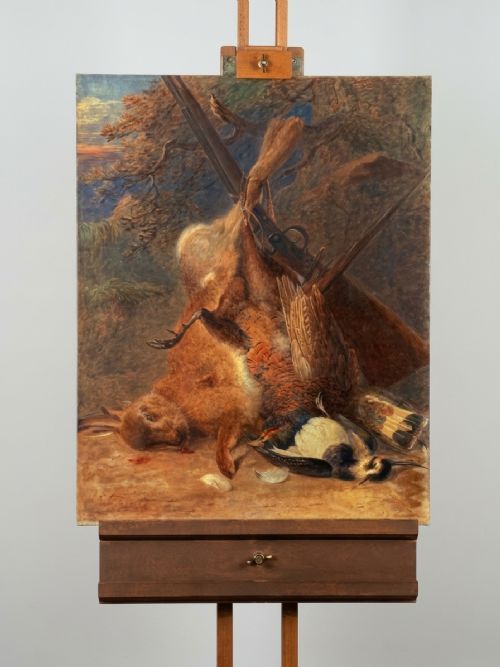
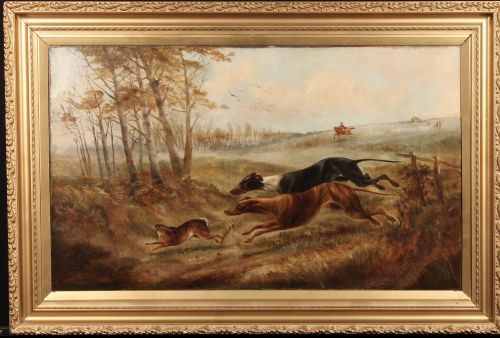
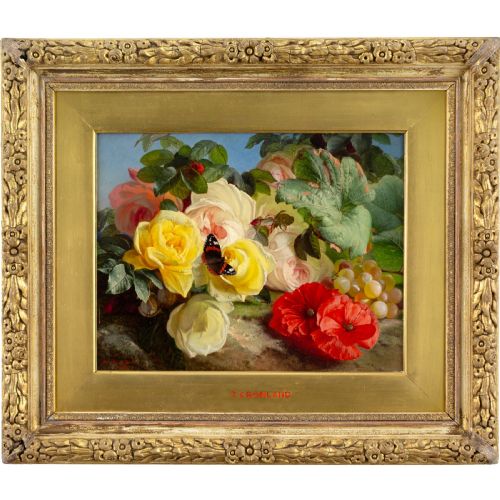
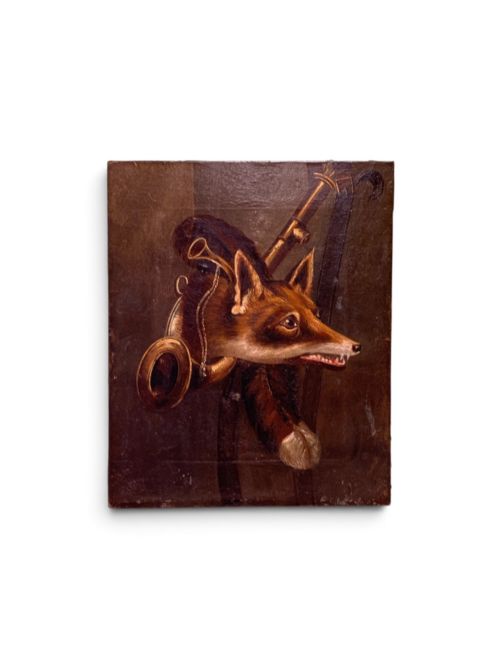
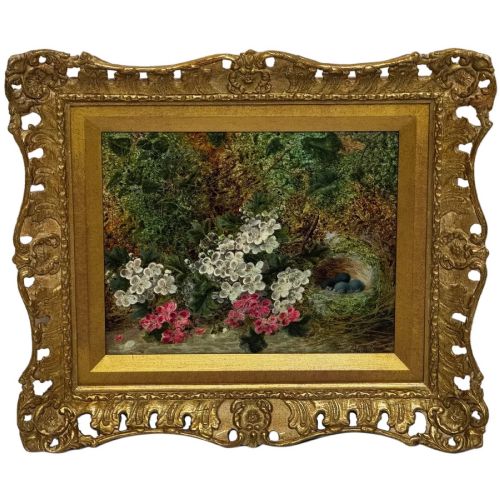
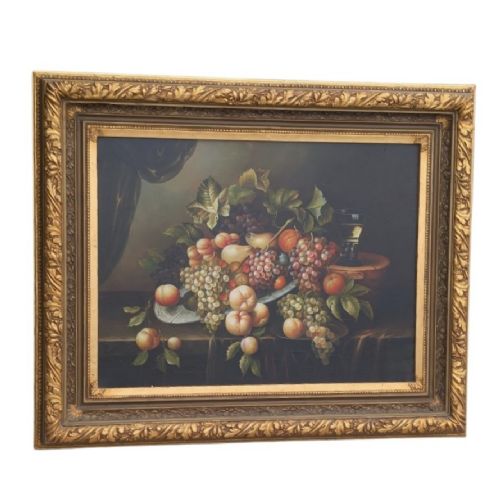
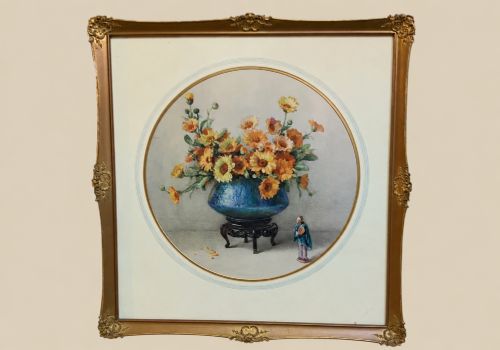
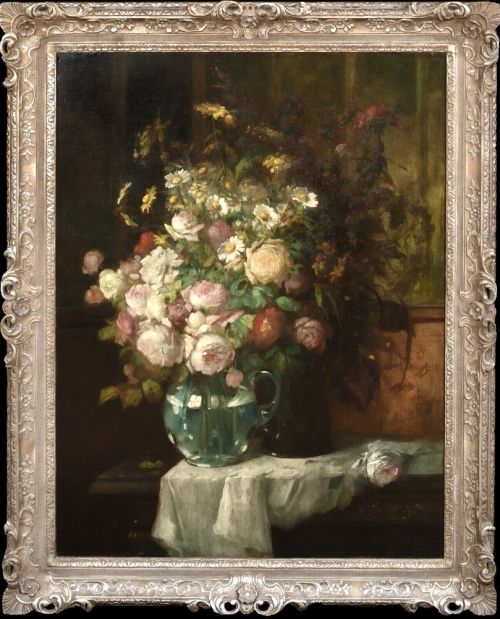
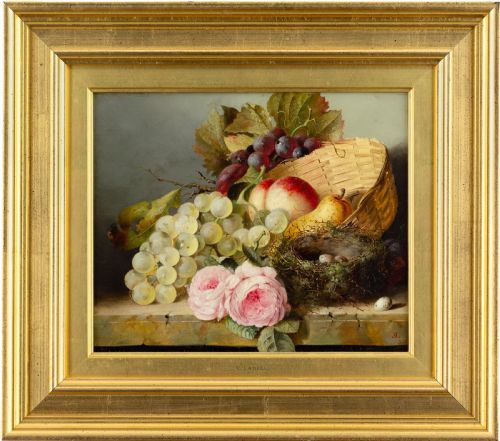
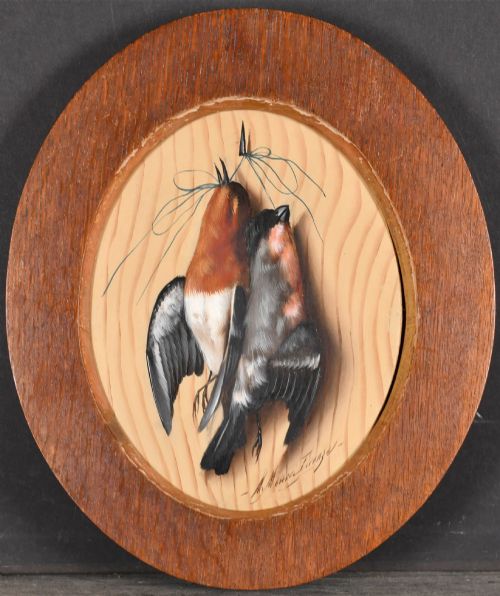
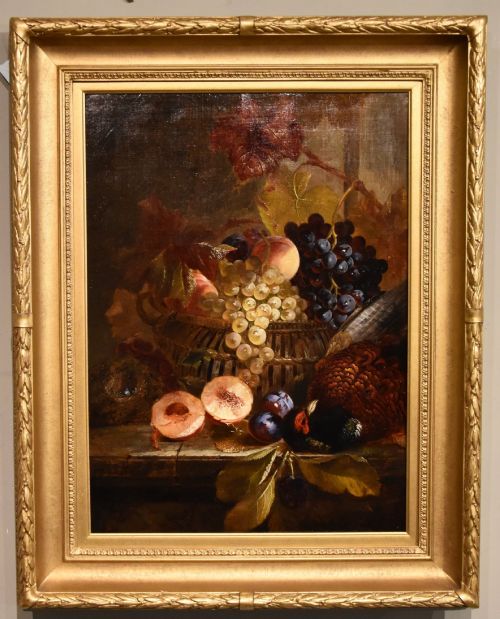
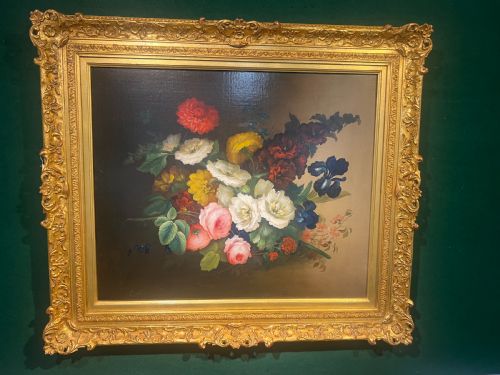
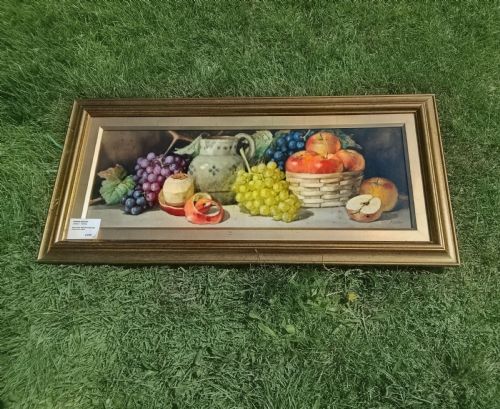
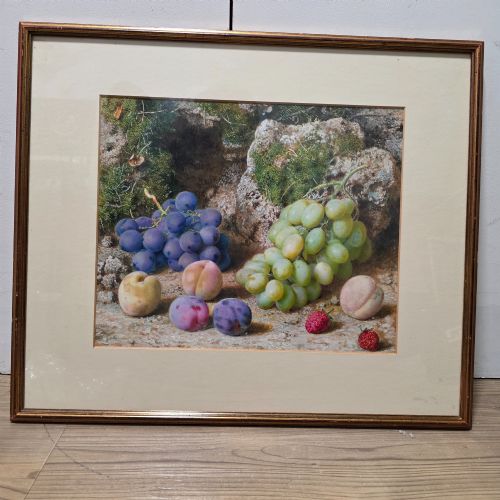
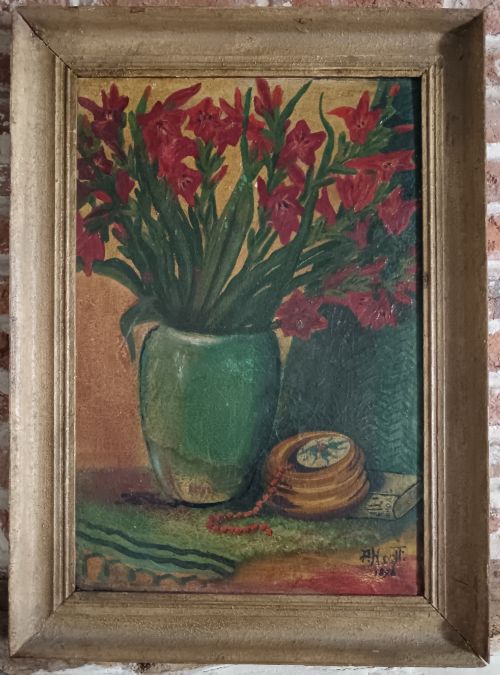
Victorian still life art captures meticulously arranged subjects like baskets of fruit, blossoming branches, and harvested game with botanical and domestic precision. These compositions reflect a nineteenth-century fascination with the textures of the natural world, often staged on wooden tabletops or within woodland settings.
The pieces appearing on this page span oil paintings on canvas and wood panel alongside detailed watercolours on paper. Artists worked within naturalist and academic traditions, producing everything from intimate fruit studies to large exhibition pieces.
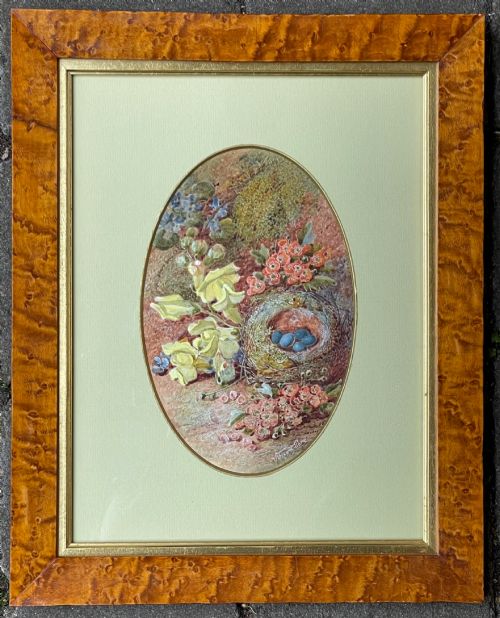
While many works date firmly within the nineteenth century, the selection extends into adjacent Edwardian and early twentieth-century examples that retain traditional realist methods. You will frequently encounter floral arrangements, birds' nests, and laden larders created by both established painters and school artists.
How they were made
Painters relied primarily on oil paint applied to stretched canvas, wooden panels, or heavy paper, building depth through layered glazes and opaque highlights. Watercolours utilised bodycolour to achieve similar opacity and rich detail on paper supports.
Many works remain housed in their original giltwood and solid wood frames, carved and gilded to complement the rich tones of the imagery within. The integration of canvas, oil paint, and gold leaf defined the standard workshop production of the period.
Victorian Still Life Art Retail Price Guide 2026
Typical asking prices for victorian still life art among the pieces listed under this phrase on Sellingantiques today, from the lower quarter to the upper quarter. They describe what is for sale here now, not the wider market.
Monkeys occasionally gaze out from the fruit bowls, proving that Victorian artists enjoyed surprising the viewer.
What varies in quality
Quality rests upon the artist's command of light, texture, and naturalistic proportion, distinguishing masterly renderings of fruit bloom and feather from rigid or formulaic studies. Superior works demonstrate subtle tonal transitions and a convincing sense of volume rather than flat depiction.
The sophistication of the composition and the handling of secondary elements, such as insects, glassware, or wicker textures, elevate certain paintings above standard decorative student pieces from art schools.
George Sydney Shepherd·Theude Grönland·Oliver Clare·Vincent Clare·Konstantin Stoitzner·Edward Ladell·Michelangelo Meucci·William Henry Ward·Edwin Steele·Arthur Dudley·John Sherrin·Benjamin Blake·Gertrude Hayes·Evelyn Chester·Henrietta Creswell·George Lance·William Duffield·Lester Sutcliffe·William Hough·Eloise Harriet Stannard·Edith Barrow·Sir George Reid·Thomas Hooper
The Victorian Still Life Art Glossary
- Bodycolour
- Watercolour paint mixed with a white pigment to make it opaque rather than translucent, allowing artists to add bright highlights to a painting.
- Giltwood
- Wood that has been coated with a thin layer of gold leaf or gold paint, commonly used for traditional picture framing during the nineteenth century.
- Trompe l'oeil
- An artistic technique that uses realistic imagery to create the optical illusion that the depicted objects exist in three dimensions.
- Grisaille
- A painting executed entirely in shades of grey or neutral monochrome, often used as a preparatory study or to imitate sculpture.
- Larder view
- A specific genre of still life depicting hung game, meat, and provisions associated with domestic storehouses and kitchen preparation.
Victorian Still Life Art: Frequently Asked Questions
What subjects appear in victorian still life art?
Artists painted clustered fruit, woodland birds' nests, gathered flowers, and hanging game suspended in larders.
These motifs reflected contemporary interests in natural history, botanical collection, and domestic abundance.
Were these works painted in oil or watercolour?
Both mediums were widely used by nineteenth-century artists depending on the intended scale and final display.
Oil on canvas and wood panel served for larger exhibition works, whilst detailed watercolours were typically mounted under glass.
How should I frame and display these pieces?
Many retain their period giltwood frames, which complement the dark, rich palettes typical of the era.
Display them away from direct sunlight to protect organic pigments in both watercolours and oil paints.
How do I identify the period of a painting?
Examination of the canvas weave, stretcher frames, and artist signatures often points to specific decades within the nineteenth century.
Stylistic markers like academic realism and naturalistic subject matter further anchor the work to its Victorian origins.