

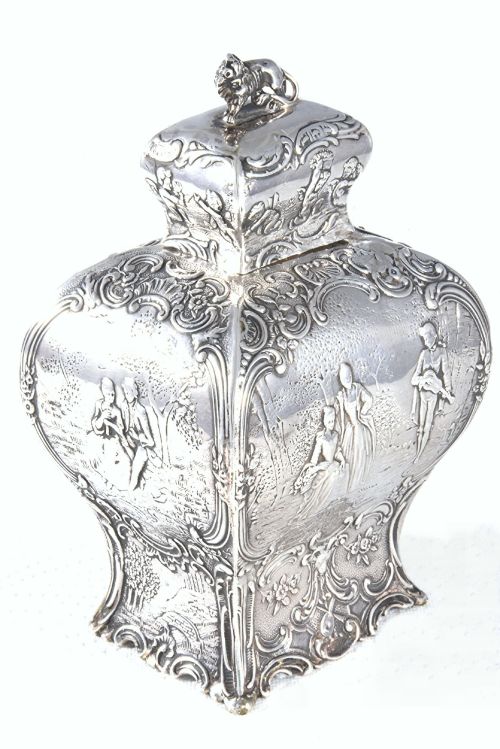


Victorian Sterling Silver Tea Canister
These Victorian sterling silver tea canister examples offer sturdy storage for loose leaf tea leaves, bringing period character directly to the table.
Victorian Sterling Silver Tea Canister
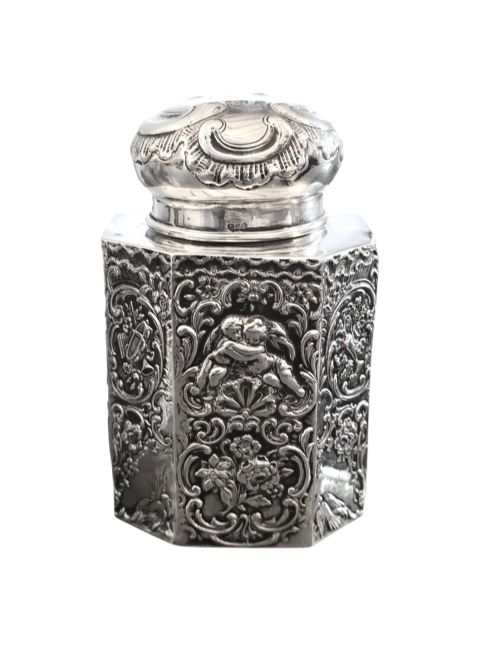
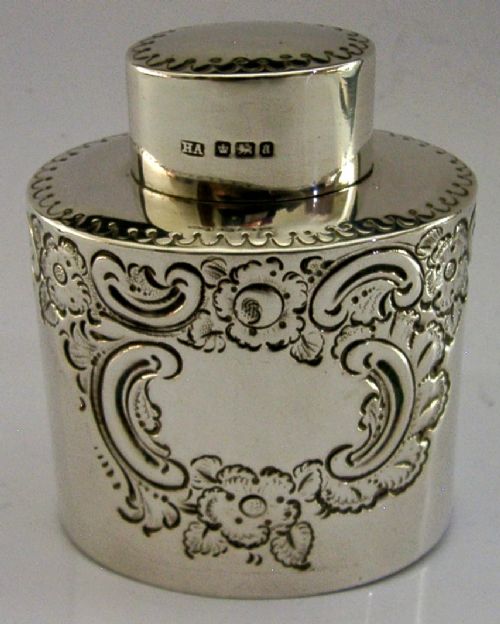
A victorian sterling silver tea canister is a functional container designed to keep loose leaf tea fresh in the home. The pieces found here predominantly date from the Victorian period, stretching from the 1880s into the Edwardian era around 1900.
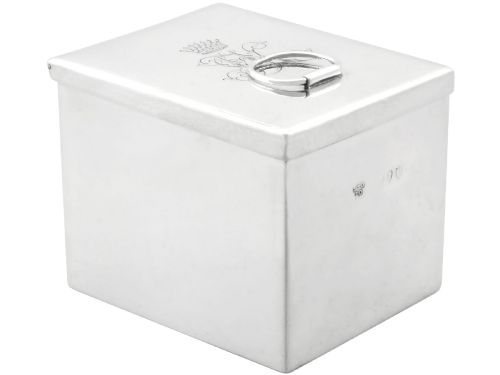
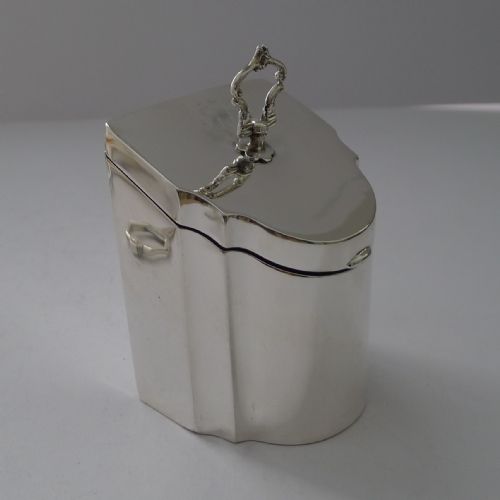
Forms vary from standard oval and bombe shapes to knife box designs and pieces incorporating cut crystal with sterling silver mounts. These items originate from English assay offices, including Sheffield and Birmingham, reflecting the craftsmanship of the late nineteenth century.
Buyers will most frequently encounter solid silver caddies alongside cut crystal variants featuring silver collars and lids. These objects represent the domestic habits of the period, serving both a utilitarian purpose on the tea table and a decorative function in the parlour.
Assessing quality in silver tea caddies
Quality in a victorian sterling silver tea canister is demonstrated through the thickness of the metal and the substance of the gauge. Heavier silver provides a more solid feel in the hand and ensures structural integrity over decades of use.
The crispness of repousse decoration and the precision of the fit between lid and body distinguish finer examples from standard production pieces. Additionally, the clarity of cut crystal and the secure integration of wooden elements contribute to the overall standard of manufacture.
Victorian Sterling Silver Tea Canister Retail Price Guide 2026
Typical asking prices for victorian sterling silver tea canister among the pieces listed under this phrase on Sellingantiques today, from the lower quarter to the upper quarter. They describe what is for sale here now, not the wider market.
Listings feature Victorian and Edwardian periods, utilising materials such as sterling silver, cut crystal, and ebonised wood across caddy forms.
Atkin Brothers
The Victorian Sterling Silver Tea Canister Glossary
- Sterling silver
- A silver alloy containing 92.5 percent pure silver and 7.5 percent other metals, usually copper, chosen for durability. This standard is marked by traditional hallmarks on British silver items.
- Repousse
- A metalworking technique where the silversmith hammers the design from the reverse side to form a raised relief pattern on the front. This method creates tactile, decorative surface ornamentation.
- Bombe
- A curved, bulging furniture or vessel shape swelling outward toward the base. In tea caddies, this contour provides a softer, rounded profile.
- Pull-off lid
- A removable cover that slides directly off the neck of the container without a hinged mechanism. These lids rely on a precise fit to remain secure.
- Cut crystal
- High-clarity lead glass shaped with faceted geometric patterns through cutting wheels. It provides a heavy, brilliant counterpart to the silver mounts.
Victorian Sterling Silver Tea Canister: Frequently Asked Questions
What is a tea caddy?
A tea caddy is a container originally built to store loose tea leaves securely before porcelain or metal caddies became common on the dining table. Because tea was an expensive commodity in the nineteenth century, these vessels often featured secure fitting lids.
Today, they function as decorative objects or practical containers for modern tea storage. Their solid construction allows them to handle daily use while maintaining their historical appearance.
How do I date a silver caddy?
Dating relies heavily on the hallmarks stamped into the sterling silver surface, which indicate the assay office, standard, and date letter for the year of manufacture. Stylistic clues such as repousse work or knife box shapes also point toward specific decades like the 1880s or 1890s.
Comparing the form and weight against documented Victorian and Edwardian examples helps narrow down the production period further. Consulting standard silver reference guides alongside the physical stamps provides the clearest timeline.
Were these caddies used daily?
Victorian households utilised tea caddies regularly during the formal afternoon tea service to keep dry leaves protected from humidity. Servants would bring the caddy to the drawing room where the host measured out the leaves.
Their sturdy silver and crystal construction meant they withstood frequent handling in busy domestic environments. This regular use accounts for the practical thickness and robust hinges found on many surviving pieces.
How should I clean silver caddies?
Cleaning requires a soft cloth and a reputable silver polish formulated to lift tarnish without removing the underlying metal. Avoid harsh abrasives, especially on repousse sections where intricate detail can trap cleaning residue.
For pieces combining sterling silver and cut crystal, keep moisture away from any wooden or ebonised components. Regular, gentle dusting is often sufficient to maintain the finish between occasional deeper polishes.