


Victorian Star Brooch
A victorian star brooch captures celestial brilliance in gold, silver and stones, offering versatile wear as both pin and pendant.
Victorian Star Brooch
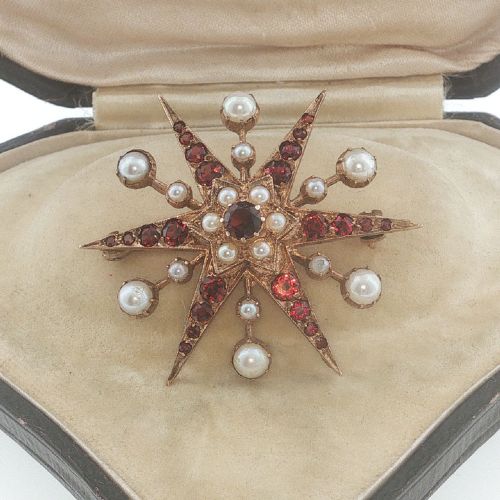
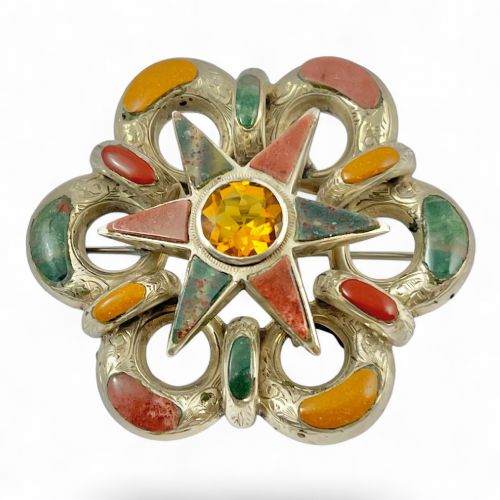
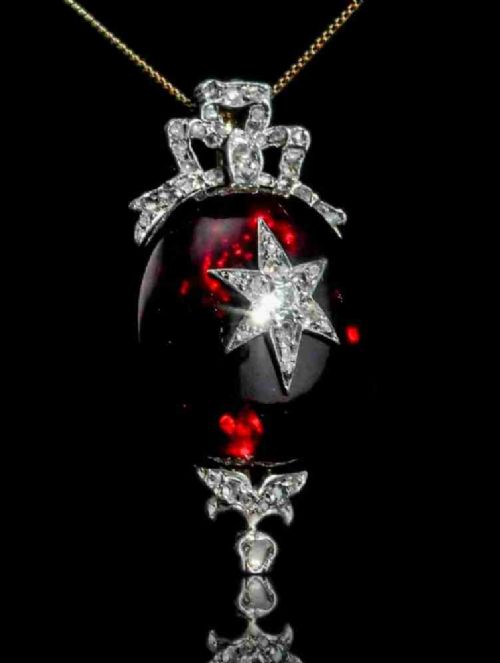
A victorian star brooch takes the form of a celestial starburst, frequently engineered to convert into a pendant for a chain or even mount onto a tiara frame. These pieces span the nineteenth and early twentieth centuries, encompassing Victorian, Edwardian and later revival periods.
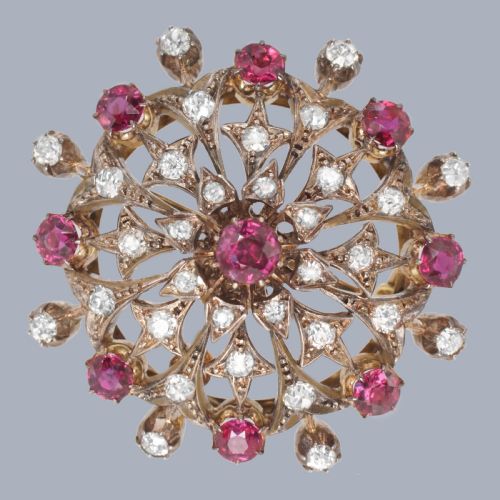
The most common formats on this page combine central diamonds, pearls, or coloured gems with multi-rayed gold and silver settings. Makers utilised yellow gold, 14k gold, 18k gold, and silver-topped gold to mount the stones securely while enhancing the brilliance of old cut diamonds.
Beyond simple pins, many examples incorporate interchangeable Bails or threaded fittings that allow the star to alternate between a brooch and a pendant. Garnet, turquoise, ruby, emerald, opal and paste stones frequently populate these celestial designs alongside seed pearls.
Materials and Technique
Goldsmiths combined silver and gold in many pieces, mounting stones in silver to reflect white light while backing the work in gold to protect clothing from tarnish. Old European and rose-cut diamonds were hand-set in closed or open-backed collets, surrounded by radiating points of varying lengths.
Gemstones such as garnets, turquoise, rubies, and seed pearls were meticulously arranged in clusters or cabochon cuts to form the celestial body. Delicate wirework, granulation, and blue enamel added depth and contrast to the yellow gold and silver frameworks.
Stones recorded across the inventory include diamonds, seed pearls, garnets, rubies, turquoise, opals, and emeralds.
Quality Variations
Quality rests in the precision of the stone-setting, the symmetry of the radiating points, and the integrity of the convertible mechanisms. Superior examples display perfectly matched old cut diamonds or unblemished natural pearls with secure, integrated pendant loops.
Lesser pieces show uneven ray spacing, simplified metal stamping without hand-chasing, or replacement stones that disrupt the original chromatic balance of the garnet, ruby or turquoise clusters.
The Victorian Star Brooch Glossary
- Old European Cut
- An early form of brilliant-cut diamond characterised by a small table, heavy crown, and open culet. These stones display softer, broader flashes of light than modern brilliant cuts.
- Rose-Cut Diamond
- A diamond cut with a flat base and a domed crown covered in triangular facets resembling an unopened rosebud. They appear most frequently in garnet and diamond star clusters.
- Silver-Topped Gold
- A manufacturing technique joining a silver face to a gold backing. This allowed jewellers to set diamonds in white metal while utilising gold's strength against tarnish on the reverse.
- Seed Pearl
- Tiny, naturally occurring pearls often threaded or grain-set in dense clusters. They provide delicate white accents around central diamonds or coloured gemstones in starburst motifs.
- Cabochon
- A gemstone shaped and polished with a smooth, convex surface rather than faceted. This cut highlights the rich colours of garnets, opals, turquoises, and sapphires.
Victorian Star Brooch: Frequently Asked Questions
How do I wear a convertible star brooch?
Many star brooches feature a hidden loop or screw-down bail on the reverse that flips up to accommodate a chain. This allows the piece to transition seamlessly from a lapel pin to a pendant necklace.
When wearing the piece as a brooch, ensure the pin catch locks securely. If converting it to a pendant, check that the suspension loop remains rigid and stable against the top ray.
Were these always made as brooches?
Jewellers frequently designed celestial stars with multi-use functionality from the outset. Many pieces functioned interchangeably as hair ornaments, tiara attachments, pendants, and brooches.
Modular fittings, detachable pins, and threaded stems allowed the wearer to adapt the star to different outfits and occasions throughout the nineteenth century.
How do I date a star brooch?
Dating relies on the combination of metal alloys, stone-cutting styles, and pin mechanisms. Earlier mid-nineteenth-century examples often use heavier closed-back settings and broad rose-cut diamonds, while later Edwardian pieces introduce lighter frameworks and seed pearls.
Hallmarks stamped on the pin stem or reverse provide definitive assay office stamps and date letters where present. Unmarked pieces require stylistic comparison with dated benchmarks.
What stones are typically found in these pieces?
Diamonds and seed pearls dominate the celestial aesthetic, often paired with deep red Bohemian garnets, turquoise cabochons, or vibrant rubies and emeralds. Coloured gemstones serve as focal points or contrasting accents against the radiating points.
Paste glass and blue enamel also appear in specific decorative revival pieces, mimicking precious gems while maintaining intense colour saturation.