






Yellow Gold Starburst
A yellow gold starburst piece captures celestial geometry through warm precious metals and clustered stones, offering enduring ornamental charm.
Yellow Gold Starburst
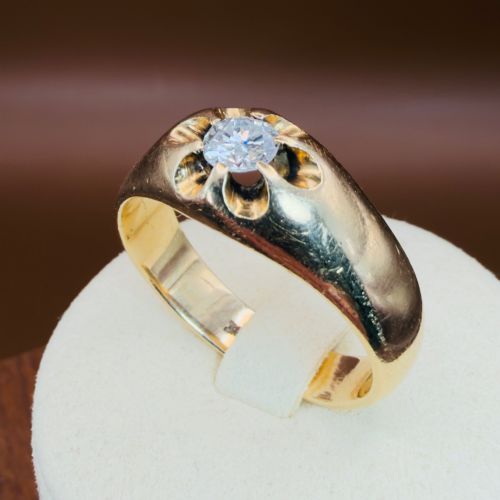
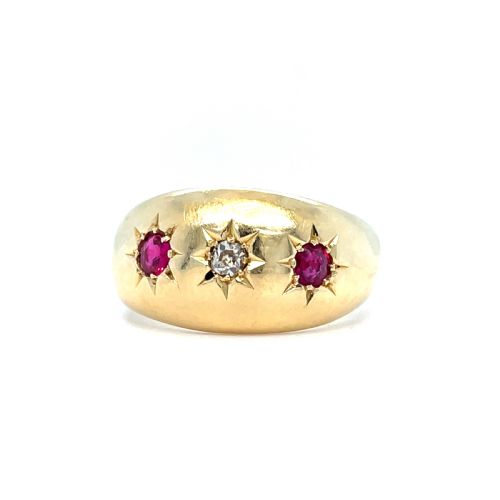
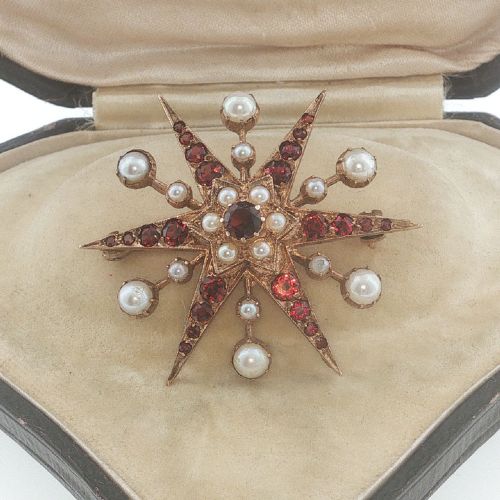
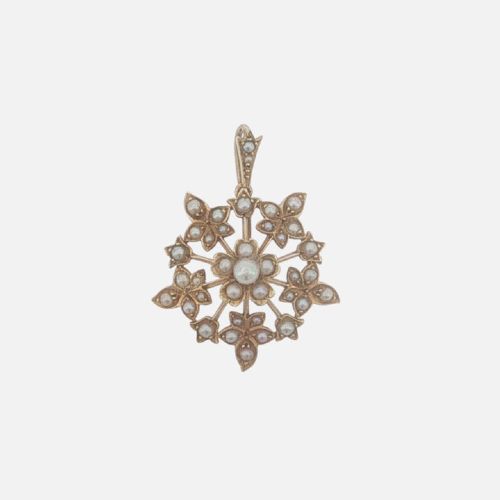
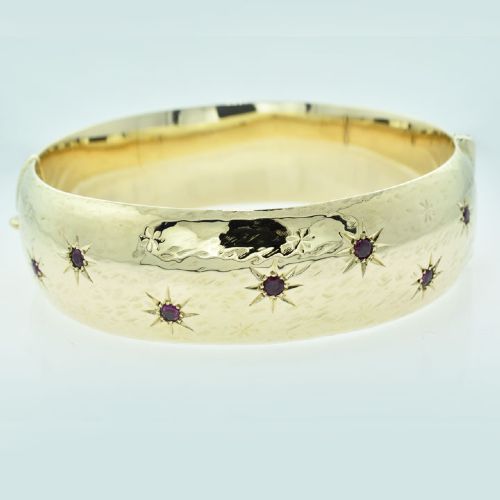
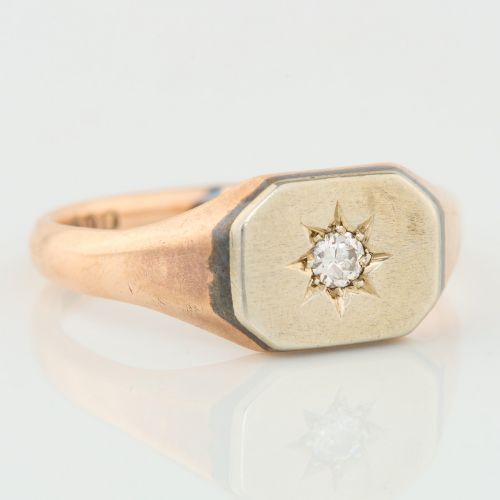
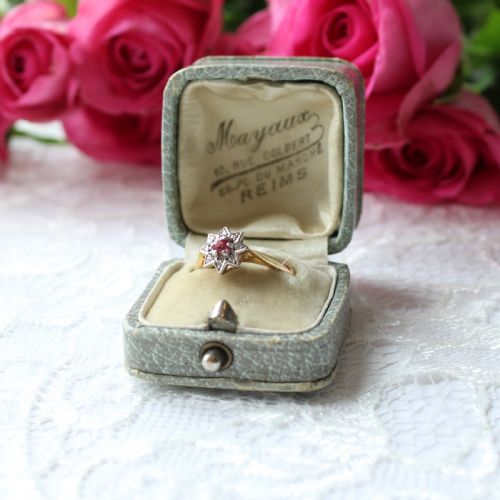
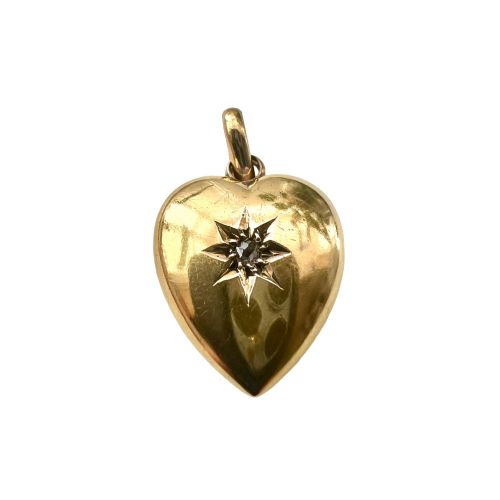
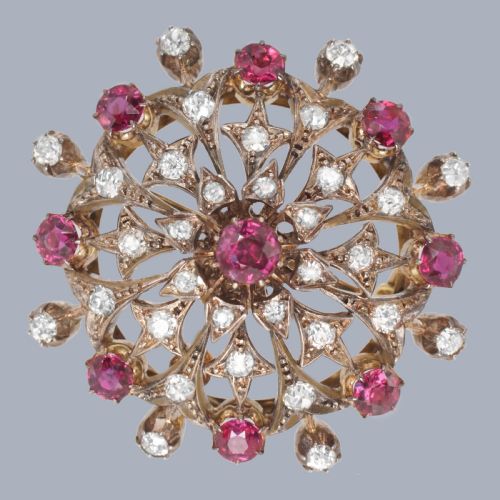
A yellow gold starburst configuration centres upon radiating gemstone points that mimic stellar flares, appearing across rings, pendants, brooches, and earrings. These ornaments emerge frequently in Victorian, Edwardian, and mid-century collections as band rings, gypsy settings, and convertible pendant-brooches.
Makers of the nineteenth and twentieth centuries applied this celestial motif to everyday jewellery such as stick pins and signet rings, alongside grander cluster designs. The motif bridges periods from late Victorian revival styles through to mid-century modern variations while retaining the characteristic starburst arrangement.
Materials and construction methods
Goldsmiths constructed these pieces primarily in nine-carat, fifteen-carat, and eighteen-carat yellow gold, often housing old-cut diamonds, rubies, sapphires, garnets, and seed pearls. Metal selection dictates the warmth and weight of the mounting, with higher carat alloys providing richer colour saturation.
Gemstones are secured via star settings, gypsy flush settings, or delicate claw clusters that accentuate the radiating symmetry. Artisans utilised hand-carved channels and pierced galleries to enhance light entry behind central diamonds and coloured stones.
Listings feature nine-carat, fifteen-carat, and eighteen-carat yellow gold alongside platinum-accented designs set with diamonds, rubies, sapphires, opals, and seed pearls.
Differentiating quality across periods
Quality rests in the precision of the radiating gemstone layout and the crispness of the surrounding gold engraving. Superior examples demonstrate balanced proportions where each prong or ray aligns harmoniously with the central stone.
The choice of components also defines the grade, distinguishing modest seed pearl clusters from substantial old-cut diamond and ruby configurations. Expert metalwork, clean hallmarks, and secure convertible mechanisms elevate a piece above standard production.
Hirsch & Oppenheimer
The Yellow Gold Starburst Glossary
- Gypsy setting
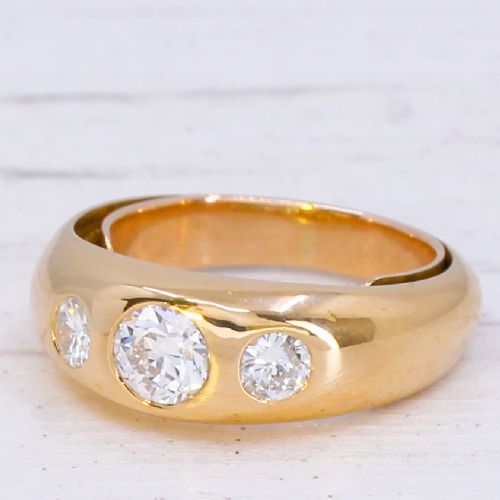
- A mounting style where the gemstone is flush-set directly into the thick gold band, creating a smooth, rounded surface popular in Victorian and Edwardian rings.
- Old-cut diamond
- A hand-faceted diamond shape typical of antique jewellery featuring a small table, high crown, and open culet, designed to catch candlelight.
- Seed pearl
- A very small natural or cultured pearl, often drilled and thread-set in tight clusters to form floral or celestial motifs.
- Convertible pendant-brooch
- A versatile jewellery form fitted with a concealed bail and a removable pin, allowing the wearer to use the piece as either a necklace attachment or a jacket ornament.
- Trilogy ring
- A ring featuring three primary gemstones set in a row, frequently utilised in starburst and gypsy configurations during the late nineteenth and early twentieth centuries.
Yellow Gold Starburst: Frequently Asked Questions
What periods do yellow gold starburst pieces belong to?
The inventory spans Victorian, Edwardian, and mid-century eras, running from the late nineteenth century through the 1960s. These chronological markers appear across distinct ring mounts and pendant designs.
Victorian and Edwardian items often incorporate seed pearls and old-cut diamonds, whereas mid-century examples lean towards bolder atomic or cluster geometries.
How do I wear a convertible pendant brooch?
Convertible pieces feature a fold-down loop and a secure pin mechanism on the reverse. This allows you to thread the item onto a chain or fasten it securely to lapels.
Inspect the hinge and catch before conversion to ensure the mechanisms operate smoothly and hold firmly.
Are starburst rings comfortable for daily wear?
Gypsy-set and low-profile starburst rings offer excellent durability for everyday use because the stones sit flush within the metal band. Prong-set cluster variations require slightly more care to avoid catching on clothing.
Selecting higher carat gold bands provides additional structural resilience for regular rotation.
How can I distinguish a Victorian starburst from a later revival piece?
Examine the fabrication techniques, gold carat stamps, and gemstone cutting styles characteristic of the nineteenth century. Old-cut diamonds and natural seed pearls typically indicate earlier nineteenth or early twentieth-century origins.
Later mid-century iterations often display distinct hallmarking standards and cleaner, more standardised casting marks.