

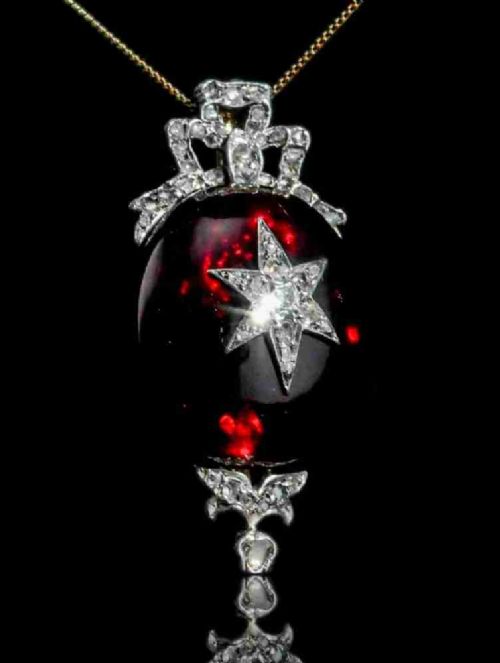


Antique Celestial Pendant
These antique celestial pendant pieces bring together the stars, suns and moons of past centuries in wearable gold and silver.
Antique Celestial Pendant
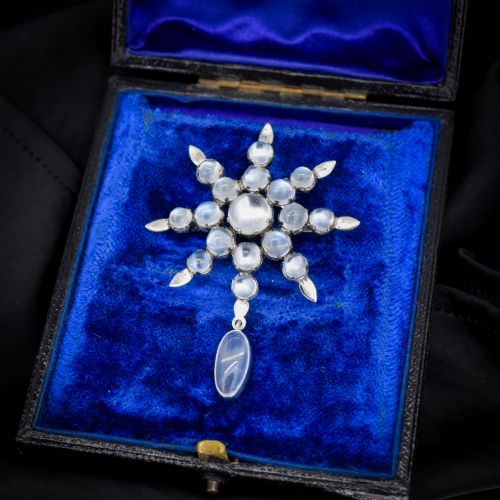
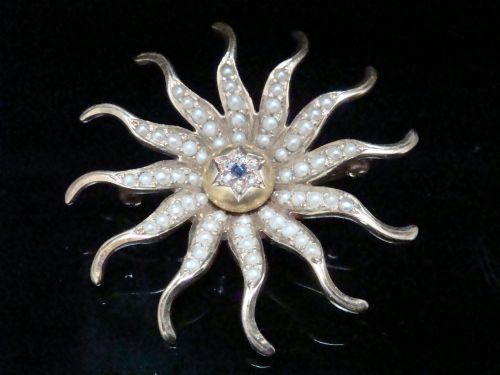
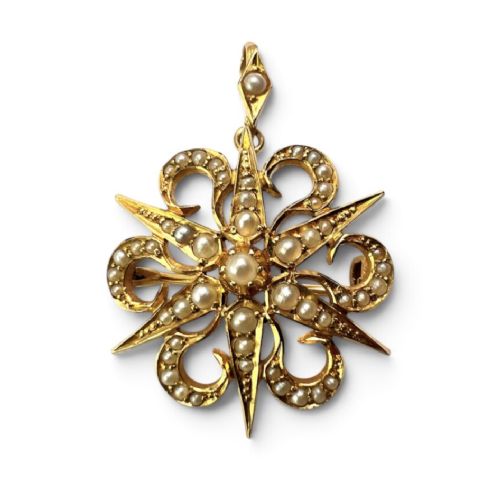
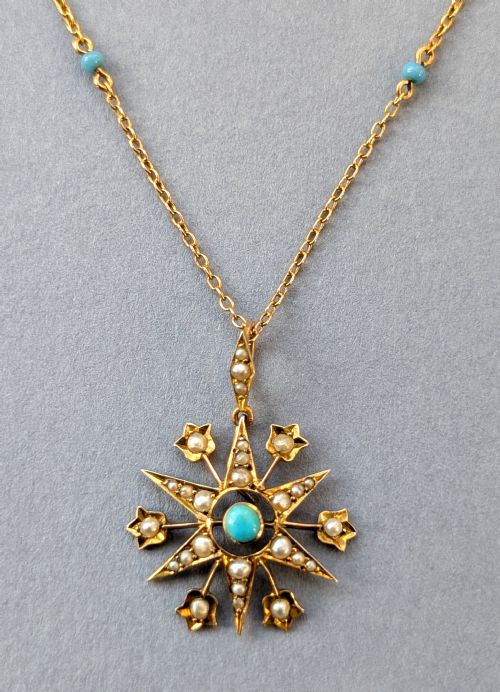
An antique celestial pendant captures the fascination with the night sky through motifs of stars, sunbursts and crescents rendered in precious metals. When searching for an antique celestial pendant, collectors encounter versatile jewels that frequently double as brooches through clever convertible fittings.
The selections span from the Victorian and Edwardian eras into the mid-century period. Common forms include starbursts, single stars and crescent moons set with diamonds, pearls and coloured gemstones.
How they were made
Goldsmiths shaped these jewels using yellow gold, 9ct gold, 14K gold, 15ct gold, 18ct gold, silver and platinum. Metals were combined to suit the stones, such as silver settings used to keep diamonds bright against gold backs.
Crescent and star motifs were worked with seed pearls, turquoise, garnets, rubies, sapphires and diamonds. Many pieces utilised convertible mounts that allowed a pendant to transform into a brooch or tiara.
Antique Celestial Pendant Retail Price Guide 2026
Typical asking prices for celestial pendant among the pieces listed under this phrase on Sellingantiques today, from the lower quarter to the upper quarter. They describe what is for sale here now, not the wider market.
Materials across these listings include diamond, silver, gold, 9ct gold, seed pearl, 18ct gold, turquoise and garnet.
What varies in quality
The distinction between ordinary and exceptional work lies in the delicacy of the metalwork and the harmony of the stones. Finer examples display meticulous prong or foil settings that enhance the natural sparkle of the diamonds and the lustre of the pearls.
Versatility also marks the upper tier of these jewels, where convertible mechanisms operate smoothly and securely. Pieces with fully articulated rays or balanced gemstone arrangements demonstrate superior design and execution.
Hirsch & Oppenheimer
The Antique Celestial Pendant Glossary
- Convertible
- A piece of jewellery designed to serve multiple functions, such as operating as both a pendant and a brooch. This engineering allowed Victorian and Edwardian wearers to adapt their ornaments for day or evening attire.
- Starburst
- A motif radiating outwards from a central gemstone to mimic the light of a star. Makers often used graduated diamond points to create a three-dimensional sense of depth.
- Crescent
- A moon shape symbolising growth and rebirth, frequently set with graduated pearls, gemstones or diamonds. This form was especially popular during the Victorian period.
- Cabochon
- A gemstone shaped and polished with a smooth convex surface rather than faceted. This cut highlights the rich, deep colour of stones like garnets.
Antique Celestial Pendant: Frequently Asked Questions
How do I wear a convertible pendant brooch?
These pieces feature hidden pin stems and bale attachments that tuck away or detach depending on whether you choose to pin them to clothing or hang them from a chain.
Ensure the safety catch is secure when wearing the piece as a brooch, and check that the suspension loop is stable when hanging it around the neck.
What periods do these celestial jewels come from?
The pieces span the Victorian and Edwardian eras, with occasional examples from the mid-century period and the year 1880.
Victorian makers favoured sentimental symbolism, often combining star motifs with pearls and coloured stones, while later periods introduced different alloy standards and platinum settings.
How are seed pearls secured in star settings?
Tiny seed pearls are typically half-drilled and mounted onto peg settings or delicate wire prongs anchored within the gold or silver star motif.
Because these organic gems are sensitive to moisture and cosmetics, careful handling is necessary to preserve their original lustre over the decades.
Why are some diamond stars set in silver?
Before platinum became widely used, jewellers set diamonds in silver over gold to maintain a bright, white background that enhanced the stones' fire.
This traditional technique is a reliable indicator of earlier craftsmanship, particularly in pieces dating back to the late nineteenth century.