

Victorian Staffordshire Ceramic Figure
These Victorian staffordshire ceramic figure pieces bring robust nineteenth-century character to a room through naive portraiture and animal forms.
Victorian Staffordshire Ceramic Figure
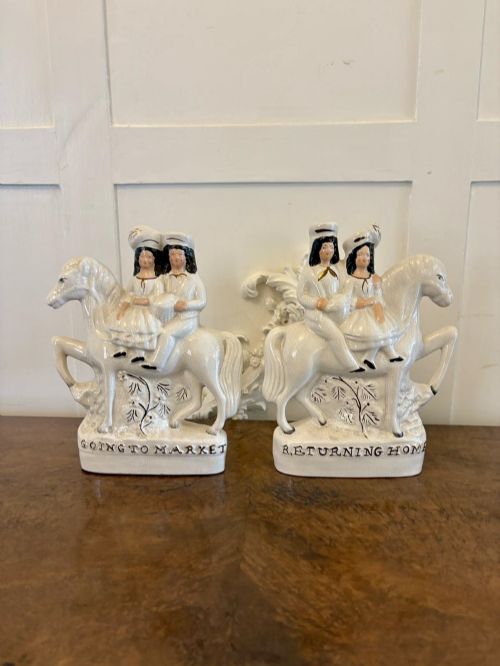
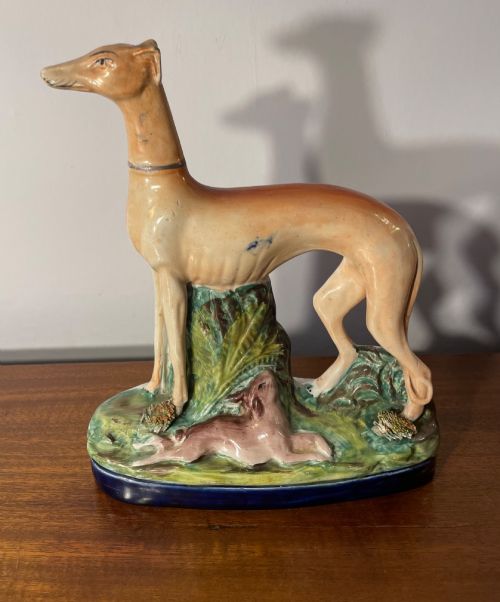
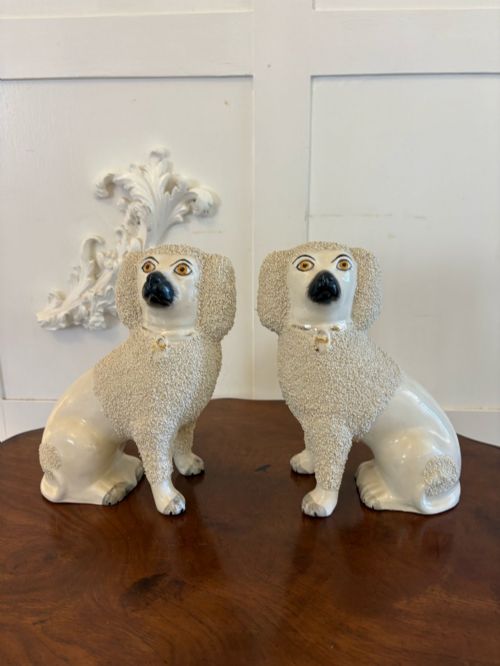
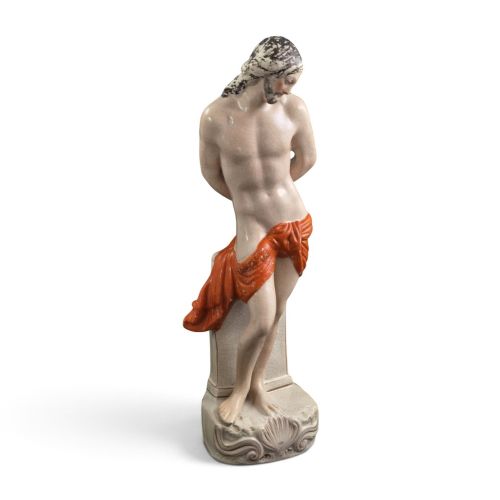
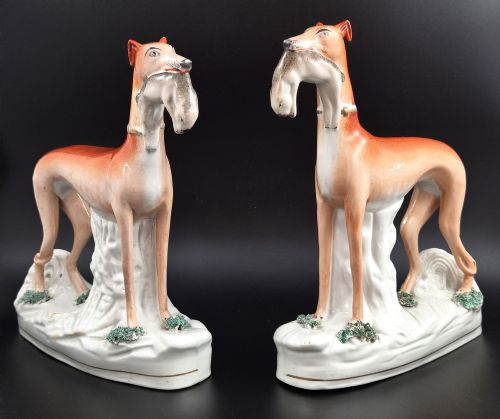
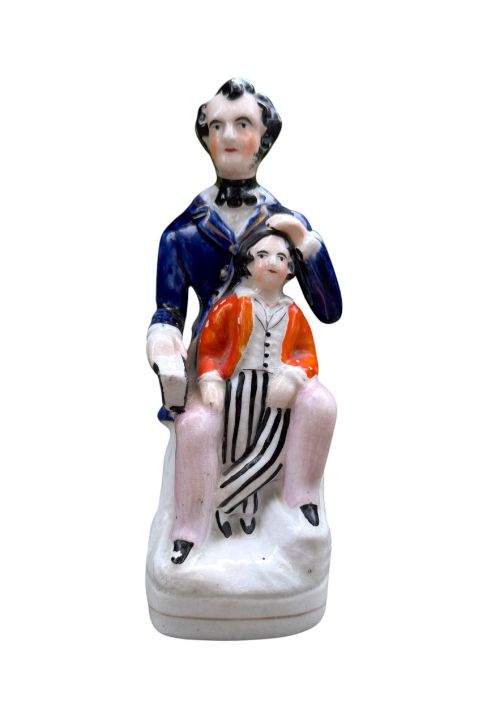
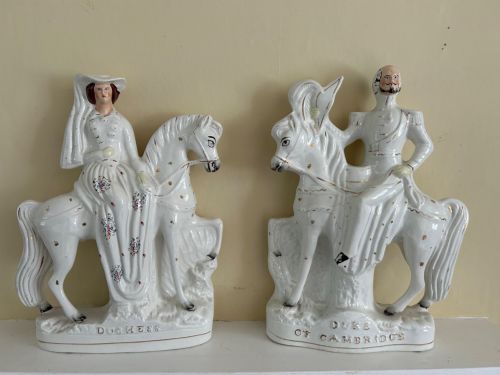
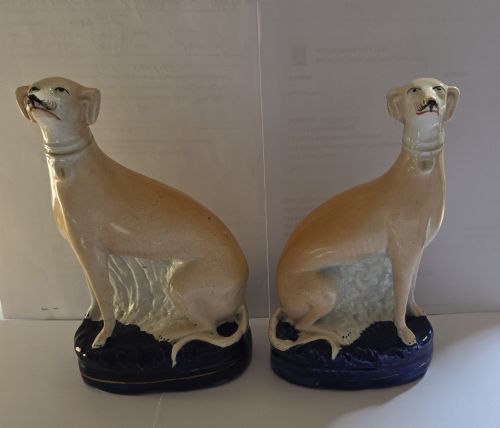
A victorian staffordshire ceramic figure spans a broad range of nineteenth-century subjects, from domestic animals like poodles and greyhounds to portrait groups of contemporary figures. Buyers frequently encounter flatback pottery figures designed for mantelpieces, where only the front is finished for display.
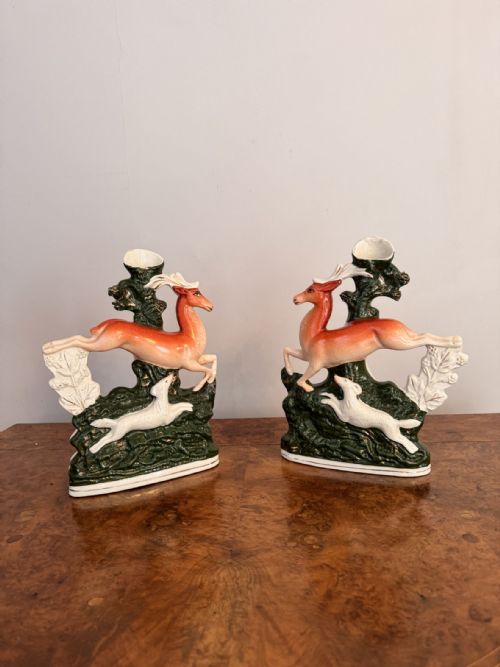
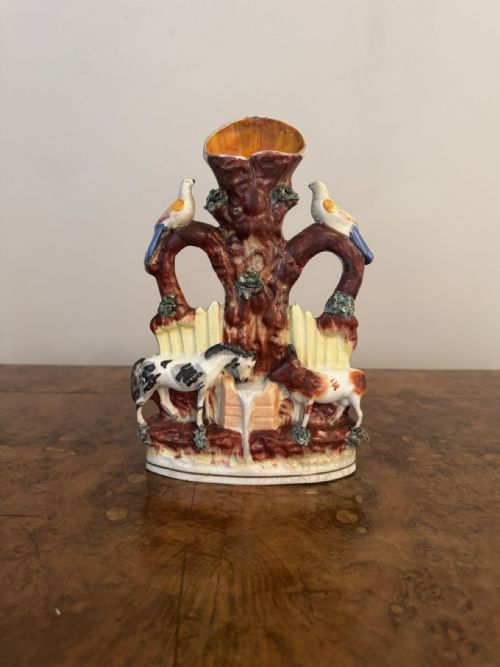
Spill vases and tobacco jars offer functional variations alongside decorative figurines. Pairs of dogs, lions, and deer dominate the animal subjects across the mid-nineteenth century.
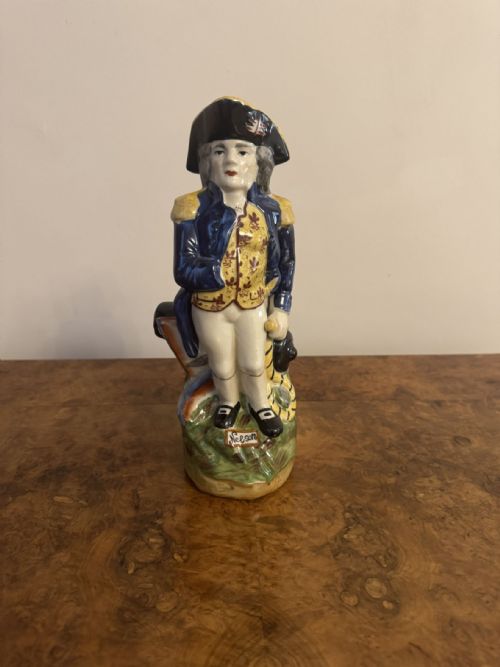
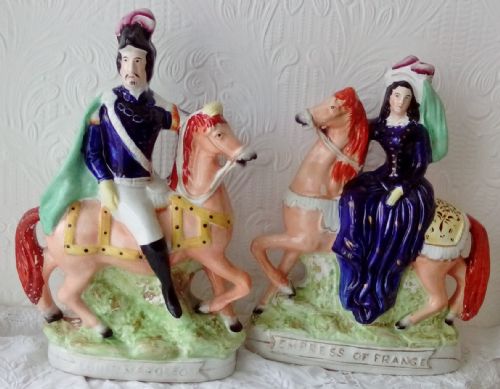
Historical and theatrical subjects record the public figures, preachers, and dramatic characters of the era. These domestic ceramics served as affordable ornaments for Victorian parlours.
How They Were Made
Potters shaped these objects using earthenware clay, applying lead glazes and enamel paint to colour the surfaces. Gold leaf accents sometimes highlight uniform details on the better examples.
Manufacturing methods relied on press moulding or slip casting to form the hollow bodies and flat backs characteristic of the period. Firing took place in traditional kilns before artists painted the enamel details by hand.
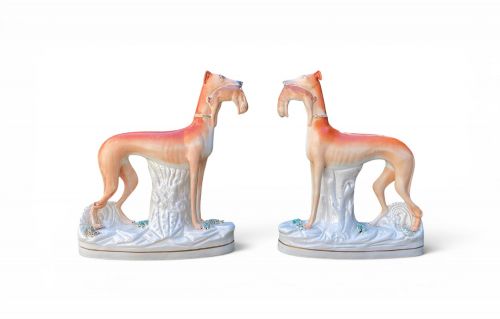
Victorian mantelpieces gained extra watchdog security through rows of identical ceramic greyhounds and comforter spaniels.
What Varies in Quality
The survival of original matched pairs and strong, unrubbed gilding elevates certain examples above standard decorative stock. Richness of glaze and depth of colour separate standard mantel ornaments from finer pieces.
John Bevington·Rockingham Pottery·Sutherland And Sons
The Victorian Staffordshire Ceramic Figure Glossary
- Flatback
- A ceramic figure designed with a plain, unmodelled back intended to sit flush against a wall or mantelpiece. This method saved clay and production time during manufacturing.
- Spill vase
- A hollow figurian form featuring an attached cylindrical holder designed to contain wooden matches or taper spills. These dual-purpose objects sat beside fireplaces for lighting pipes and candles.
- Earthenware
- A porous pottery body fired at lower temperatures, requiring a glaze to achieve water resistance. Staffordshire potters used this material for the majority of their moulded figures.
- Lead glaze
- A glossy coating containing lead oxide applied to pottery before firing to create a smooth, vitreous surface. It enhances the brightness of the underlying enamel paint.
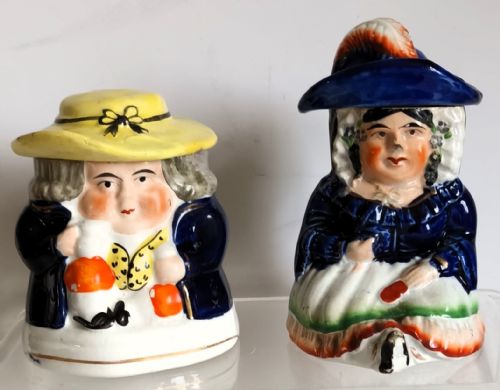
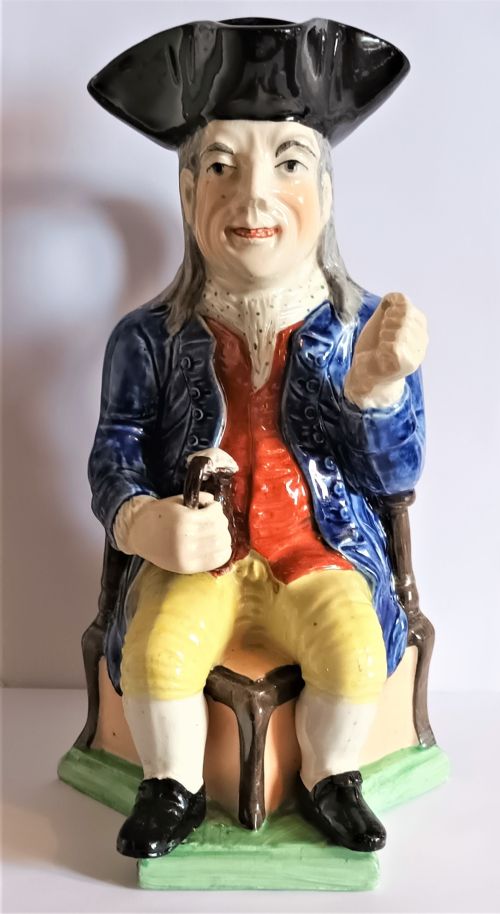
- Toby jug
- A pottery jug modelled in the form of a stout, jovial person holding a mug and jug of beer. These traditional drinking vessels date back to the eighteenth century and continued into the Victorian period.
Victorian Staffordshire Ceramic Figure: Frequently Asked Questions
Why are the backs flat?
Potters left the backs unmodelled because these ornaments stood directly against cottage and parlour walls on mantelpieces. This design choice saved material and kept production costs low.
Flatbacks also prevented the pieces from tipping forward, ensuring stable display in busy nineteenth-century rooms.
What were spill vases used for?
Spill vases held thin rolled spills of paper or wooden splints used to transfer fire from the hearth to candles or pipes. The attached hollow tube integrated utility into a decorative animal or human grouping.
Owners placed them near fireplaces where lighting tools were needed constantly throughout the day.
How do I date these figures?
Dating relies on dress, historical subjects, and the style of the glaze and enamel work across the nineteenth century. Figures depicting specific historical events or personages provide a reliable window of manufacture.
Pottery bodies and glazing techniques evolved from heavy lead finishes towards finer porcelain elements by the end of the century.
Were they made in pairs?
Many animal figures, particularly greyhounds, spaniels, and poodles, were produced as symmetrical left and right facing pairs for mantelpiece balance. These matched sets formed the standard decorative arrangement in Victorian homes.
Single figures also existed, but surviving pairs remain sought after by collectors.