
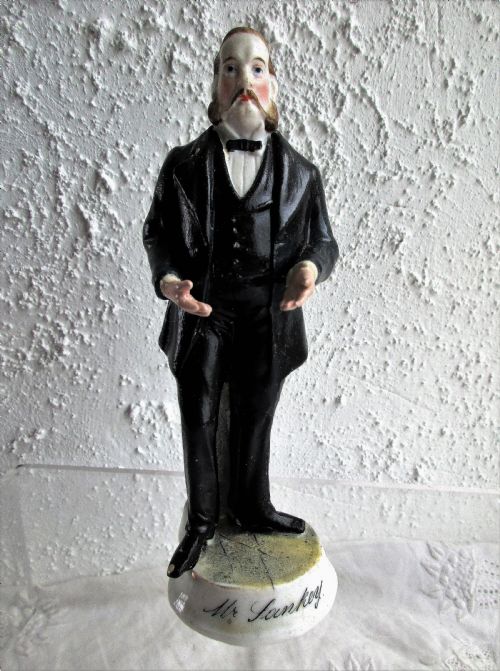


English Earthenware Portrait Figure
An English earthenware portrait figure captures public heroes, royalty and stage stars in fired clay, offering a direct tangible link to nineteenth-century popular culture.
English Earthenware Portrait Figure
An English earthenware portrait figure represents real historical personages, literary characters and contemporary celebrities from the Georgian and Victorian periods.
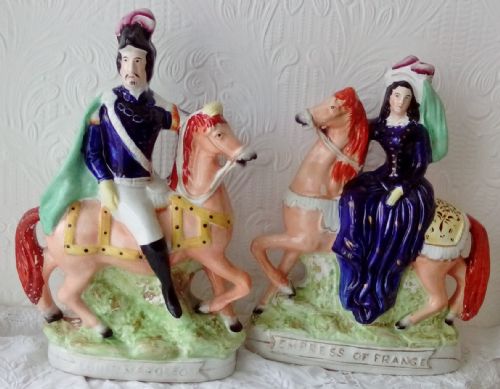
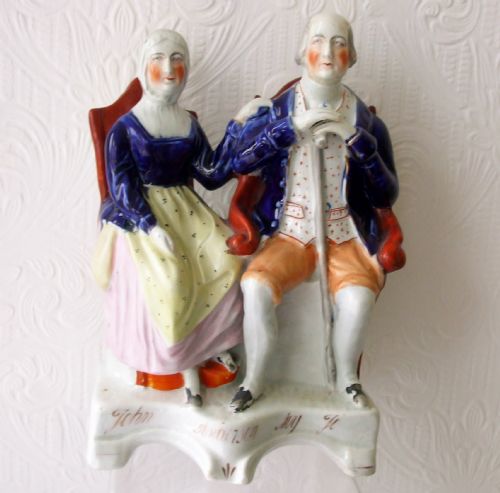
The pieces most frequently met on this page take the form of Staffordshire pottery figures and flatbacks depicting royalty, statesmen, evangelists and performers.
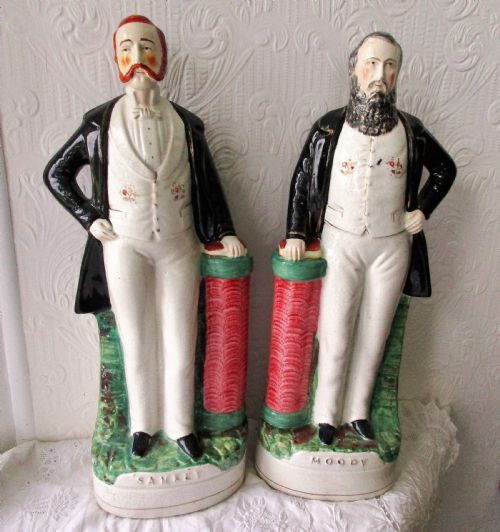
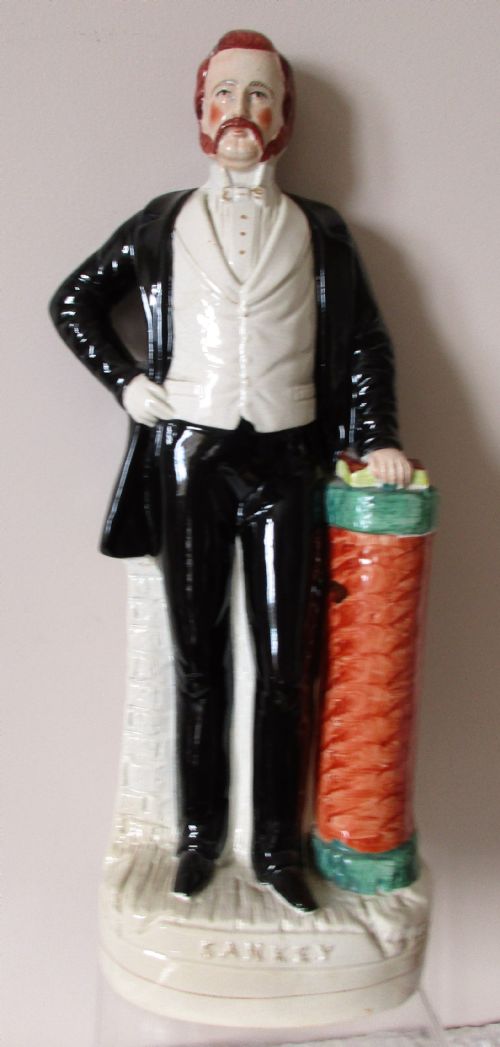
Makers recorded subjects ranging from Queen Victoria and Napoleon III to theatrical stars like Jenny Lind and evangelists Moody and Sankey.
Materials and construction
Potters shaped these objects from earthenware and ceramic, applying lead glaze to seal the porous body before decoration.
Evangelists Moody and Sankey share shelf space here with literary figures and royalty, proving Victorian taste embraced both salvation and spectacle.
Assessing quality
Quality rests upon the crispness of the modelling and the accuracy of the likeness, distinguishing lively portraits from stiff or generic forms.
The precision of the enamel painting and the smoothness of the lead glaze further separate standard output from finer studio work.
The English Earthenware Portrait Figure Glossary
- Earthenware
- A porous pottery body fired at lower temperatures than stoneware or porcelain. It requires a glaze to render it waterproof.
- Lead glaze
- A glossy coating containing lead oxide applied to pottery before a final firing. This finish gives the surface its characteristic shine.
- Enamel paint
- Opaque vitrifiable colours applied over the fired glaze and fixed in a muffle kiln. It allows for bright surface decoration.
- Flatback
- A style of Staffordshire figure where the reverse is left unmodelled and flat. These pieces were designed to stand against a wall on a mantelpiece.
- Porcelain
- A fine, vitrified ceramic material made from china clay and petuntse. It fires to a white, impermeable body.
English Earthenware Portrait Figure: Frequently Asked Questions
What do these figures depict?
These pieces portray notable figures of the nineteenth century, including monarchs, political leaders, military commanders, preachers and actors.
Subjects often commemorate specific historical events, royal weddings or contemporary cultural movements.
Are all the pieces made of pottery?
The majority consist of Staffordshire pottery and earthenware, though ceramic and porcelain variants also appear in the selection.
Glazes and enamel paints are standard across these material types to provide colour and surface protection.
How do I display a flatback figure?
Flatback figures are specifically designed with unglazed, flat backs so they sit flush against a wall or shelf.
Place them on mantelpieces or cabinets where viewers can see the painted front and legible title banners.
How can I tell the period?
Most examples date from the nineteenth century, aligning with Victorian styles and specific historical personalities like Queen Victoria or Napoleon III.
Earlier pieces stretch back towards c.1800, whilst specific dated figures point to events such as royal weddings in 1860.