


Victorian Spyglass Telescope
A victorian spyglass telescope brings the precision of nineteenth-century optics to your shelf, offering pocket-sized portability and brass craftsmanship.
Victorian Spyglass Telescope
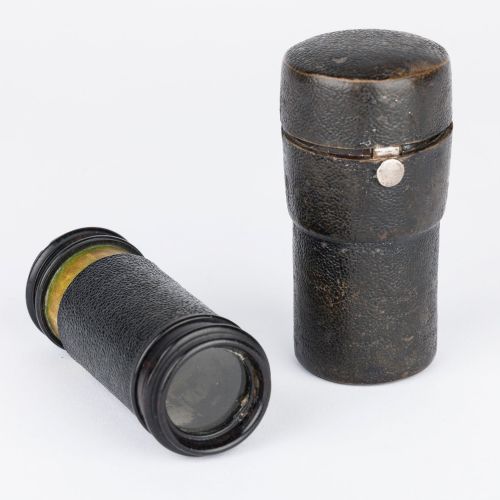
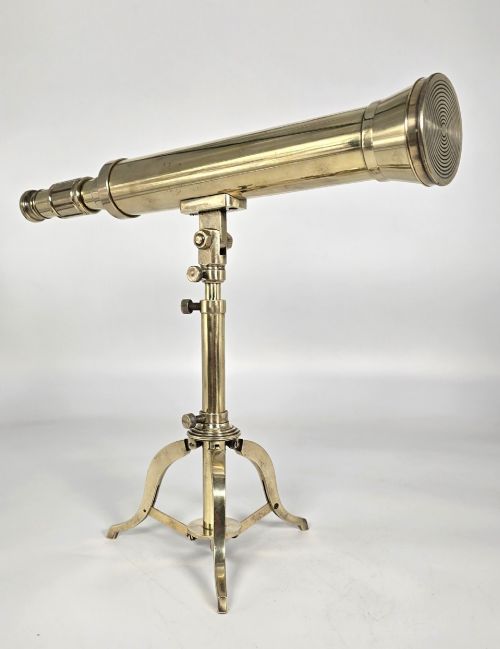
A victorian spyglass telescope encompasses portable optical instruments designed for maritime, field, and library use during the nineteenth century. These pieces range from pocket-sized brass draws and leather-bound marine tubes to larger library instruments mounted on folding brass tripods.
The versions most frequently met on this page are multi-draw brass telescopes, often housed in mahogany or wrapped in stitched leather. They include walking cane variants, officer of the watch models, and compact pocket spyglasses originating from English makers.
How they were made
Makers constructed these tubes primarily from turned brass, sliding draw sections into one another with tight tolerances to keep the optics aligned. Outer barrels were frequently wrapped in stitched leather, mahogany, oak, or fruitwood to provide a secure grip in maritime environments.
Lenses were ground from optical glass and housed within threaded brass cells, while specialised pieces incorporated nickel plating or bone handles. Makers such as Ross of London and Dollond engraved signatures directly onto the brass draw tubes using fine hand-punches.
Nineteenth-century gentlemen could discreetly check the horizon through a telescope hidden entirely inside a walking stick.
What varies in quality
The calibre of a victorian spyglass telescope depends on the precision of its optics and the rigidity of its draw tubes when fully extended. Finer instruments maintain a sharp focus across multiple brass sections without excessive wobble or play in the joints.
Makers' signatures also influence the standing of a piece, with signed works by known opticians demonstrating superior finishing and optical clarity compared to unsigned equivalents. The quality of secondary materials, such as fitted wooden cases or original tripod stands, further distinguishes standard production from high-grade instruments.
Ross of London·Steward of London·Newton and Co·L Casella London·Chadburn Brothers of Sheffield·S and B Solomons·Dollond
The Victorian Spyglass Telescope Glossary
- Draw
- A sliding tubular section of a telescope that extends to adjust the focal length. Multi-draw instruments fold down compactly into smaller overall lengths.
- Terrestrial
- An optical configuration designed for viewing land objects rather than astronomical bodies. It uses an erecting lens system to ensure the image appears right-side up.
- Marine telescope
- A durable optical instrument utilised at sea by officers and lookouts. These typically feature protective leather or wood casing to withstand salt spray and handling.
- Monocular
- A compact optical viewing scope for a single eye. These pieces offer magnified sight in a format smaller than standard binoculars.
- Library telescope
- A larger stationary instrument intended for interior use on a tabletop or stand. They provide higher magnification and sit upon dedicated brass tripods.
Victorian Spyglass Telescope: Frequently Asked Questions
How do I use a multi-draw telescope?
Gently pull each brass section outward until it is fully extended, taking care not to yank the tubes past their stops. Support the main barrel with one hand while turning the final eyepiece draw slightly to bring distant terrestrial objects into sharp focus.
Collapse the instrument in reverse order by pushing the narrower draw tubes back into the primary barrel before storing it. Keep the optical glass clean by using a soft cloth and avoid forcing stuck sections if metal expands in cold temperatures.
What is the difference between a spyglass and a telescope?
A spyglass generally refers to a compact, portable, multi-draw instrument designed to be carried easily in a pocket or coat. The term historically applied to handheld maritime tubes used for quick terrestrial scouting.
A telescope often encompasses larger stationary instruments, such as library models mounted on tripod stands, though the terms overlap frequently in nineteenth-century cataloguing. Both rely on similar brass draws and glass lens configurations to magnify distant views.
Were these instruments only used at sea?
While marine and officer of the watch models were essential tools for navigation and spotting coastal landmarks, many pieces served land-based purposes. Library telescopes remained indoors for viewing scenery from estates or studying the horizon.
Walkers and gentlemen also carried specialised walking cane telescopes concealed inside bone or wood shafts for discreet outdoor use. The variety of sizes reflects widespread deployment across naval, military, and civilian life.
How do I care for brass and leather barrels?
Maintain the polished finish of brass tubes by wiping away dust with a dry cloth, avoiding harsh chemical polishes that strip historical patination. Leather outer wraps benefit from occasional light conditioning to keep the hide supple and prevent drying.
Store the instrument in a dry environment away from direct sunlight and extreme temperature shifts to protect the internal glass lenses. Keeping sliding draws clean prevents grit from scratching the brass surfaces during extension.
How can I tell the age of a brass telescope?
Examine the construction methods, such as the threading on lens cells, the thickness of the brass, and the style of maker engraving. Earlier nineteenth-century examples often feature hand-lettered signatures and simpler draw arrangements, whereas later Victorian pieces might include nickel plating or patented improvements.
Associated wooden cases, tripod stands, and material choices like bone or specific hardwoods provide further chronological clues. Comparing the signature style against known working dates of London and provincial makers helps narrow down the decade of manufacture.