






Maritime Telescope
A maritime telescope delivers clear distance viewing with the weight of naval history in your hand.
Maritime Telescope
A maritime telescope is an optical instrument built for navigation, signalling and watchkeeping at sea. When you search for a maritime telescope, you encounter single-draw, two-draw, three-draw and four-draw configurations, alongside tabletop models and pocket spyglasses. The forms span the Georgian, Regency, Victorian and Edwardian periods.
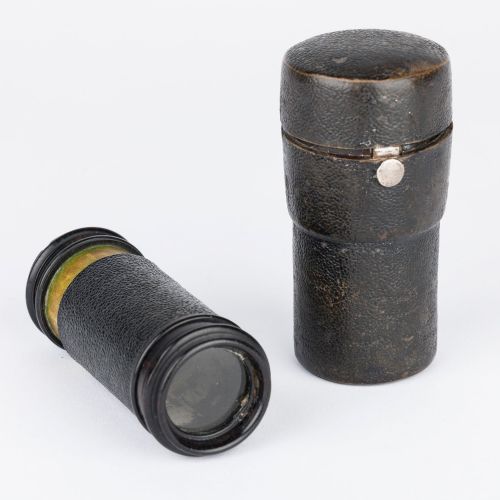
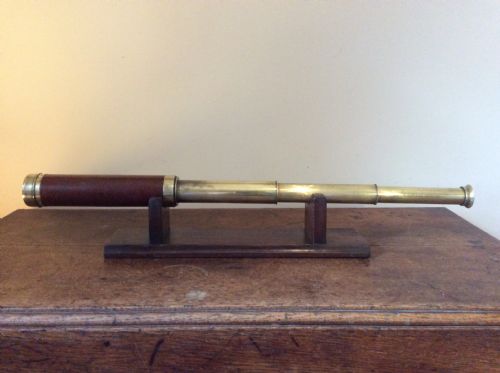
The pieces on this page include pocket versions, extending marine instruments, officer of the watch designs and scientific instruments. Examples range from compact pocket spyglasses to larger telescopes mounted on adjustable tabletop stands.
Materials and construction
These instruments employ polished and nickel-plated brass for barrels and fittings, paired with glass lenses for magnification. Many barrels feature leather or wood coverings, including mahogany, walnut and oak, to improve grip and protect the metal.
Makers constructed draw tubes to slide smoothly within one another for extension and focus. Cardboard linings sometimes appear within historic barrels, while exterior surfaces display maker signatures and period engravings.
Maritime Telescope Retail Price Guide 2026
Typical asking prices for maritime telescope among the pieces listed under this phrase on Sellingantiques today, from the lower quarter to the upper quarter. They describe what is for sale here now, not the wider market.
Listings feature instruments spanning the eighteenth, nineteenth and early twentieth centuries, constructed from brass, mahogany, walnut, oak, leather and glass.
Assessing quality in optical instruments
Quality rests upon the precision of the optical glass and the tightness of the draw tubes when extended. Sharper image clarity and smoother draw action separate superior instruments from standard utilitarian models.
The refinement of the maker's engraving, the quality of the leather or wood housing, and the survival of original inscriptions contribute to an instrument's standing. Finer examples display balanced proportions and robust brass casting.
Ross of London·Voigtländer & Sohn AG·W & T Gilbert·Clarkson London·Newton & Co·Broadhurst Clarkson & Co·Cary London·L Casella London·Davis of London
The Maritime Telescope Glossary
- Draw
- A sliding tube section that extends from the main body of a telescope. Multiple draws allow a long focal length to collapse into a portable size.
- Achromatic
- An optical lens designed to correct chromatic aberration, bringing light of different colours to the same focal point for a clearer image.
- Spyglass
- A small, portable handheld refracting telescope used for terrestrial viewing and marine navigation.
- Theodolite
- A precision scientific instrument used for measuring horizontal and vertical angles in surveying and navigation.
Maritime Telescope: Frequently Asked Questions
How do I use a draw telescope?
Grip the main barrel firmly and pull each sliding draw section outward until fully extended. Adjust the final smaller section near the eyepiece until the distant subject comes into sharp focus.
Keep the lenses clean and handle the extending tubes with care to maintain smooth movement during adjustment.
What is an officer of the watch telescope?
An officer of the watch telescope is a marine instrument specifically configured for naval deck duties. These compact single or multi-draw brass glasses allowed officers to scan horizons and identify vessels quickly.
They often feature protective leather sleeves and clear maker signatures from prominent opticians.
How do I date a brass telescope?
Examine the engraved maker signature, the number of draw tubes, and the materials used for the body and case. Georgian and Regency pieces typically display simpler lines, while Victorian examples often utilise leather grips and multi-draw configurations.
Maker directories and registered trade dates provide exact working periods for the opticians inscribed on the brass.
Can I use antique telescopes for viewing today?
Many historic brass and glass telescopes remain optically functional for terrestrial observation. Careful handling ensures the historic lenses and brass threads stay intact during use.
Store them in dry conditions and avoid exposing vintage glass to extreme temperature shifts.