
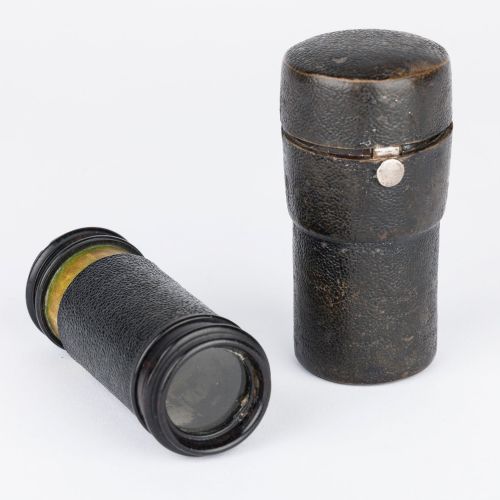


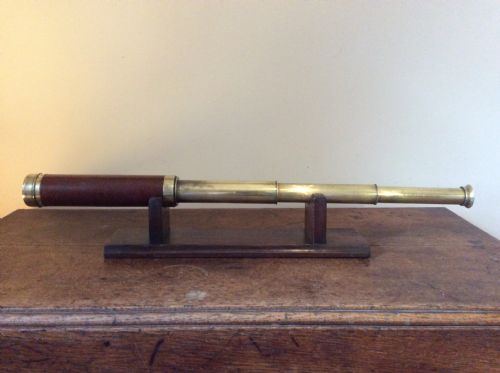


Brass Marine Telescope
These brass marine telescope examples offer the precision and function of historic maritime navigation, spanning periods from the eighteenth century to the twentieth.
Brass Marine Telescope
When you search for a brass marine telescope, you encounter navigational and scientific instruments designed for use at sea or on land. These pieces function as telescopes, spyglasses, and officer of the watch instruments from various historical eras.
The selections available include single-draw, multi-draw, and pocket configurations originating from periods such as the Georgian, Regency, Victorian, and Edwardian epochs. Makers like Ross of London, Richardson, Broadhurst Clarkson & Co, and Dollond appear among the English examples.
Materials such as brass, mahogany, leather, walnut, and glass combine in forms ranging from traditional round barrels to hexagonal and nine-sided designs. These instruments represent both day or night terrestrial viewing and presentation pieces.
How they were made
Makers constructed the primary optical tubes predominantly from polished brass, often combining multiple sliding draws to allow the instrument to extend for use and collapse for storage. Glass lenses provide the necessary magnification for terrestrial and navigational sighting.
Many outer barrels feature protective coverings of leather, or incorporate turned wooden sections such as mahogany and walnut to improve grip and handling in maritime environments.
Listings feature materials including brass, leather, glass, wood, mahogany, oak, nickel, and walnut across multiple historical periods.
What varies in quality
The distinction between standard instruments and superior examples often lies in the complexity of the draw construction, such as six-draw or nine-sided barrel forms, alongside signed maker attributions from notable opticians like Ross of London or Dollond. Presentation pieces and specialised day or night optics represent finer tiers of production.
The choice of secondary materials, including high-grade mahogany or stitched leather grips fitted around solid brass tubes, influences the overall tactile and visual standard of the instrument.
Ross of London·Broadhurst Clarkson and Co·A Hurlimann Paris·Dollond
The Brass Marine Telescope Glossary
- Draw
- A sliding tubular section of a telescope that extends outward to focus the instrument. Multiple draws allow a longer focal length to collapse into a shorter portable body.
- Spyglass
- A small, portable refracting telescope used primarily for terrestrial viewing. These compact instruments were standard equipment for officers and travellers.
- Terrestrial
- An optical configuration designed to view land objects upright rather than inverted. Most marine telescopes utilise erecting lenses to achieve this orientation.
- Officer of the Watch
- A specialised marine telescope configuration utilised at sea for monitoring ship movements and horizon sightings. These instruments prioritized clarity and reliability during watch duties.
Brass Marine Telescope: Frequently Asked Questions
How do I use a brass marine telescope?
Extend all the sliding brass draws fully until the instrument reaches its maximum length. Adjust the final eyepiece draw carefully while sighting a distant object until the image comes into sharp focus.
Keep the lenses clean using appropriate optical cloth and collapse the draws gently for storage to avoid damaging the internal fittings.
What is the difference between a spyglass and a telescope?
A spyglass generally refers to a smaller, highly portable handheld telescope with fewer draws, designed for quick use by individuals on the move. Larger marine telescopes often incorporate more draws and specialised optics for extended viewing.
Both serve similar terrestrial functions, but size and optical configuration typically distinguish the two terms in historical contexts.
Were these telescopes used exclusively at sea?
While designed primarily for maritime navigation and shipboard use by officers, many instruments served equally well on land for travel, surveying, or general terrestrial observation. Day or night variants accommodated varying light conditions encountered both on deck and ashore.
Navigators and travellers alike relied on these portable optical tools for distance estimation and horizon monitoring.
How can I tell the period of an antique telescope?
Examine the materials, engraving styles, and construction techniques employed on the brass barrel and any leather or wooden coverings. Georgian and Regency pieces often display distinct cylindrical forms, while Victorian examples may introduce hexagonal or multi-draw variations.
Maker signatures and presentation inscriptions also provide reliable evidence for dating an instrument to a specific era.