
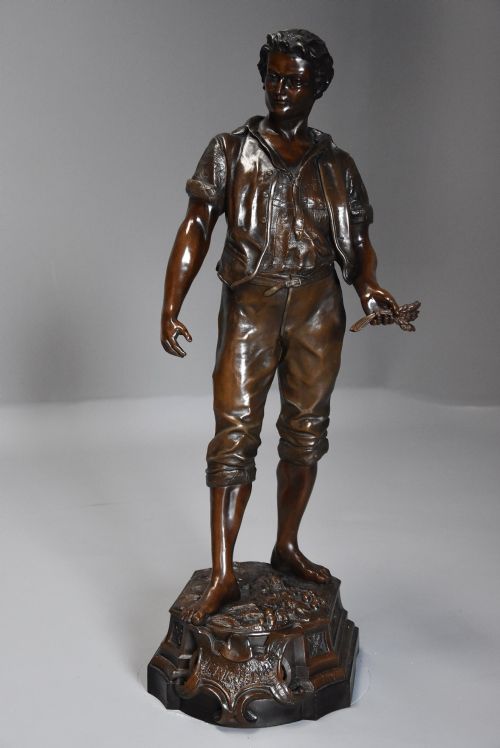
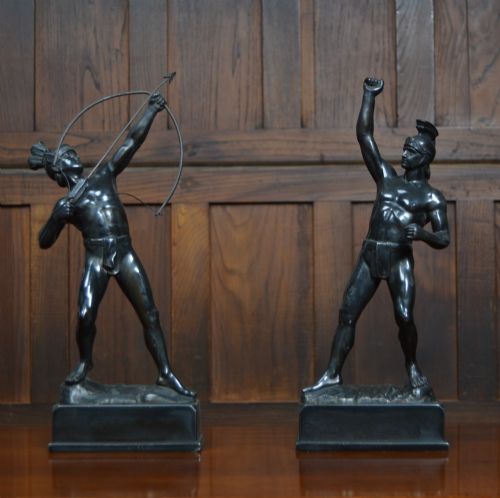


Victorian Spelter Figure
A victorian spelter figure gives interiors the weight of nineteenth-century foundry work without the cost of solid bronze.
Victorian Spelter Figure
When you examine a victorian spelter figure, you are looking at nineteenth-century cast metal sculpture designed for domestic display. The form spans standalone statues, clock garnitures, table lamps, and figural candlesticks depicting labourers, soldiers, literary characters, and classical deities.
French foundries dominate the available pieces, bringing continental realism and revivalist detail to the British market. You will frequently encounter pairs of figures cast as soldiers, cavaliers, or allegorical subjects intended for mantelpieces and side tables.
Materials and casting methods
These pieces are cast from zinc alloy, commonly known in the trade as spelter, which melts at lower temperatures than bronze and takes fine detail from the mould. Foundries typically applied a bronzed, painted, or cold-painted surface finish to imitate the appearance of heavier, costlier metals.
Many works incorporate secondary elements such as wood, glass, brass, and fabric components like torchere shades or lampshades. The metal parts are secured with threaded rods and bolts hidden within the interior structure of the sculpture.
Keep an eye out for the nodding dog whose head bobs on a hidden spring inside the spelter coat.
Distinctions in execution
The standard of a victorian spelter figure rests upon the crispness of the original chasing and the depth of the patination. Finer examples retain sharp facial expressions, articulated fingers, and distinct costume details that poorer casts lose during secondary moulding.
Signatures from known modellers or foundry marks stamped into the metal elevate a piece above anonymous production work. The solidity of the cast and the preservation of the applied bronze or painted finish determine the visual success of the object.
F.Milliot·Phillipe H. Mourey·Louis Moreau
The Victorian Spelter Figure Glossary
- Spelter
- A zinc-based alloy used as an economical alternative to bronze for decorative Victorian sculptures and table objects. It is softer and lighter than true bronze.
- Patination
- The surface finish applied to the metal, such as a bronzed or painted coat, intended to simulate age or a different material. This coating can show wear over time.
- Garniture
- A set of matching decorative ornaments, typically comprising a mantel clock flanked by two matching figural vases, candlesticks, or statues. These matched sets sat centrally on nineteenth-century fireplaces.
- Cold-painted
- A method where enamel paint is applied to metal after casting without being fired in a kiln. This technique allows for bright, multi-coloured finishes on figures and animals.
Victorian Spelter Figure: Frequently Asked Questions
How do I clean a spelter figure?
Dust the surface gently with a soft, dry brush to prevent accumulation in the recesses of the casting. Avoid liquid cleaners, polish, or abrasive cloths that can strip the original bronze finish or cold-painted details.
Keep the piece away from damp environments and direct sunlight to protect the underlying zinc alloy and its applied patination.
Are these figures solid metal?
No, these sculptures are hollow-cast from a zinc alloy rather than cast as solid blocks of metal. This method reduced weight and material costs during production.
Because the alloy is relatively soft and brittle, you should lift these figures by their base rather than by projecting arms or delicate accessories.
How can I tell spelter from bronze?
Spelter is lighter in weight than bronze and feels slightly softer to the touch if an unpainted area is exposed. A scratch or worn spot on spelter often reveals a dull grey or silvery metal underneath.
Bronze develops a natural green or dark brown oxidation over centuries, whereas spelter relies on applied surface coatings that flake or rub away to expose the pale zinc base.
What is a clock garniture?
A clock garniture is a matched decorative set featuring a central mantel clock accompanied by two side pieces such as candlesticks or sculptural figures. These arrangements were designed to sit harmoniously on a fireplace mantel.
The figures in a garniture often share a thematic link, such as Renaissance soldiers or classical allegories, cast in the same metal finish.