
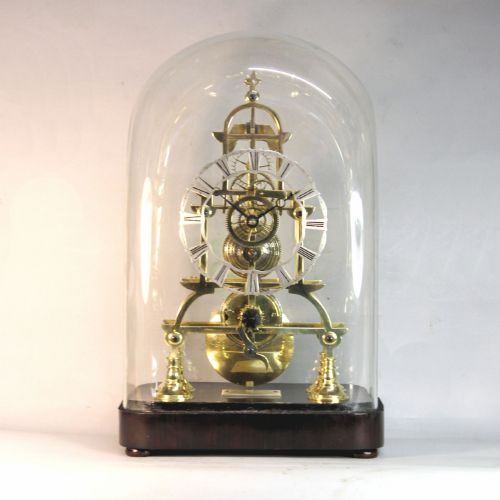


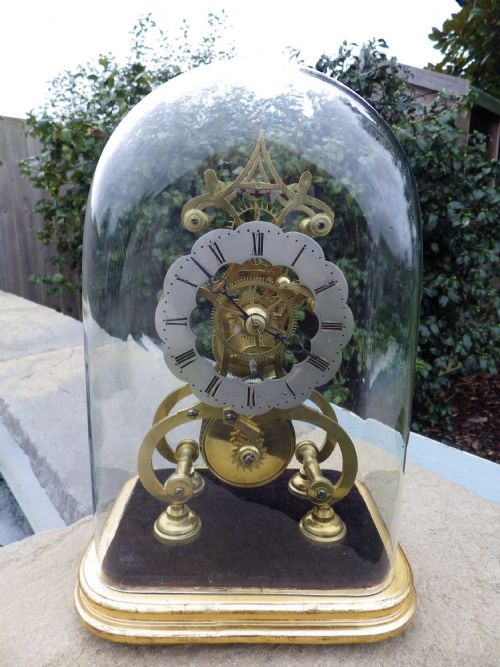


Victorian Skeleton Clock
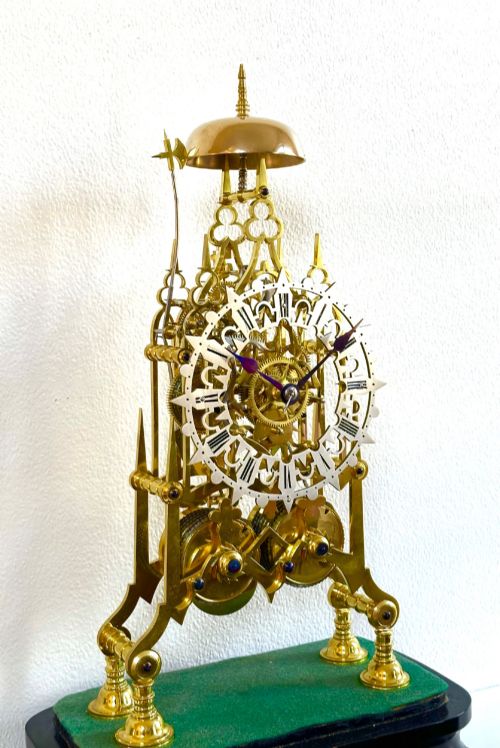
A victorian skeleton clock strips away the heavy wooden case of a traditional mantel clock to expose the intricate gear train in brass and steel.
Victorian Skeleton Clock
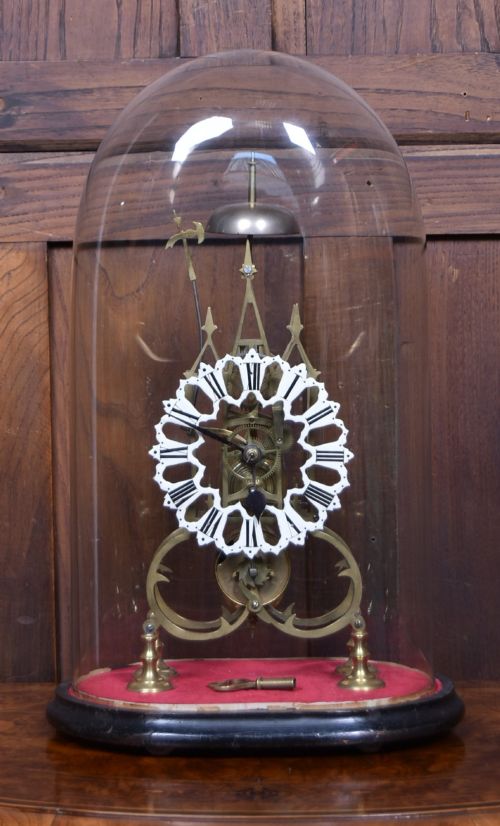
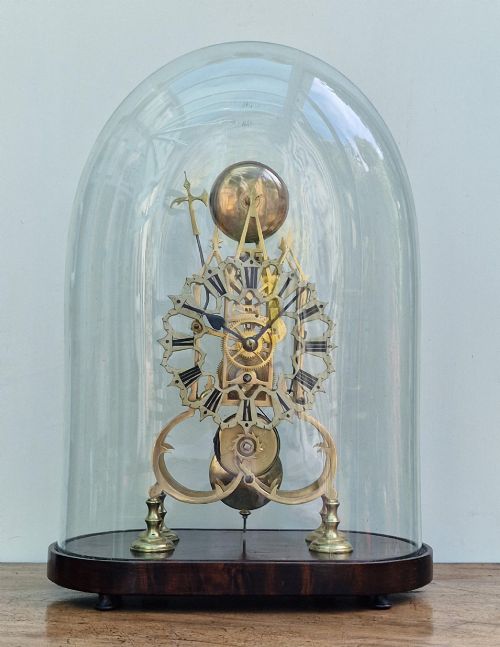
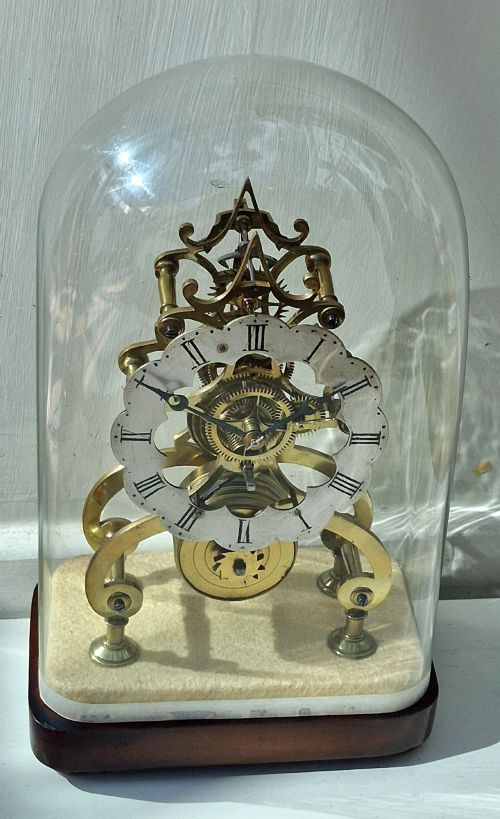
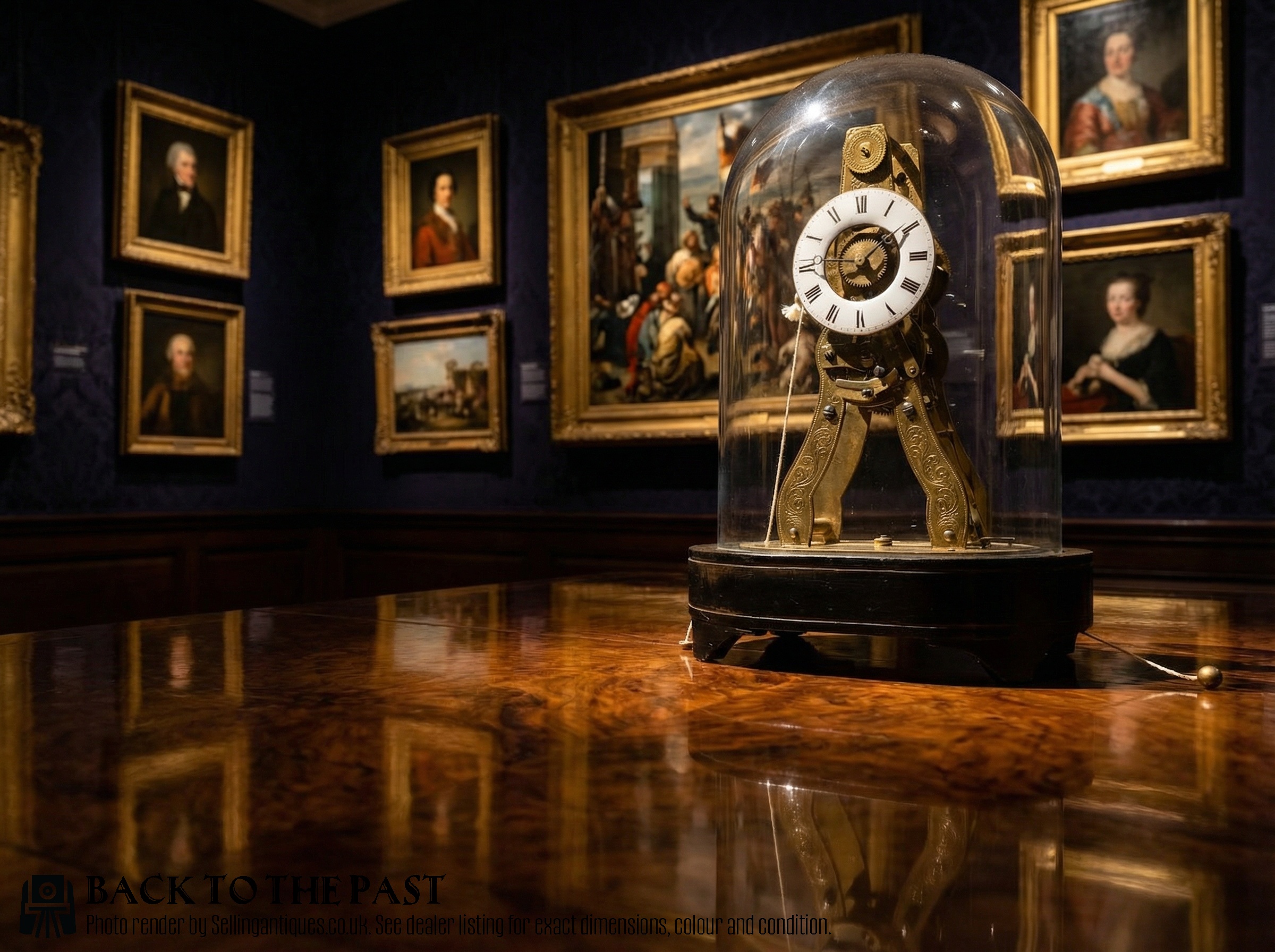
A victorian skeleton clock presents an openwork brass movement supported on a plinth, typically protected beneath a blown glass dome. These timepieces range from miniature examples to substantial cathedral styles modelled after Gothic architecture.
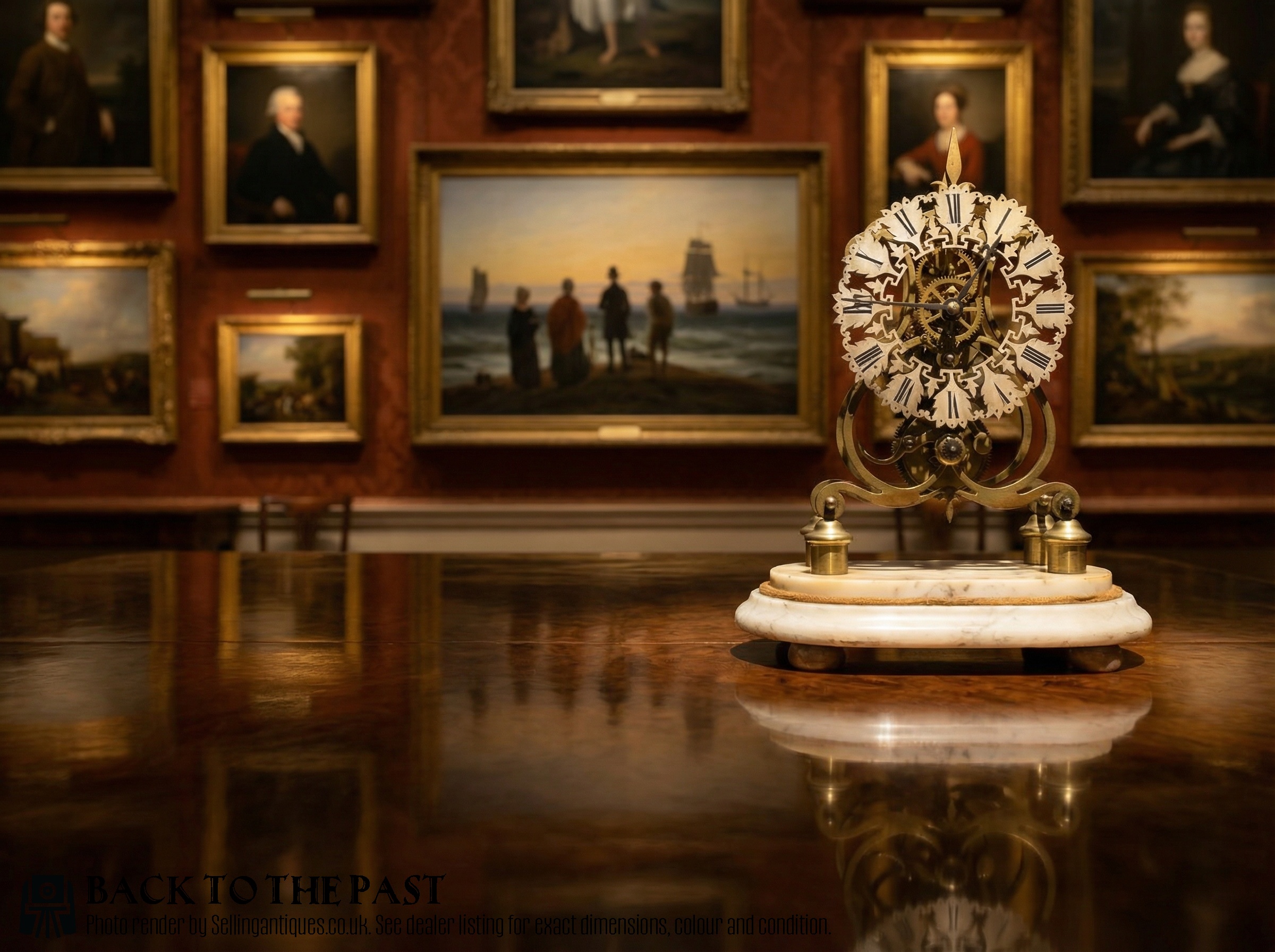
The aesthetic focuses on transparency, allowing the observer to watch the interaction of the wheels, levers and escapement from every side. Many sit upon marble or ebonised wood bases that anchor the open metalwork visually.
Materials and Construction
Brass forms the structural skeleton and gear trains of these pieces, often complemented by steel components and enamel chapter rings for the numerals. Bases utilise dense stones like marble or timbers such as mahogany, rosewood and ebonised wood.
Craftsmen cut the plate brass into elaborate open shapes, often skeletonising the framework to reduce weight while maintaining rigidity. Movements rely on fusee or timepiece mechanisms, sometimes incorporating passing strikes or musical functions.
Victorian Skeleton Clock Retail Price Guide 2026
Typical asking prices for victorian skeleton clock among the pieces listed under this phrase on Sellingantiques today, from the lower quarter to the upper quarter. They describe what is for sale here now, not the wider market.
Listings feature brass, glass, marble, and mahogany across nineteenth-century Victorian periods.
Distinctions in Quality and Execution
The refinement of the wheelwork and the intricacy of the brass cutting dictate the standing of an individual piece. Clocks featuring six-spoke wheel work or complex escapements demonstrate a higher level of horological ambition.
The presence of the original glass dome and matching plinth preserves the integrity of the piece. Maker signatures inscribed on the dial or movement elevate the work from standard workshop production to documented horology.
Richard Winter of Chieveley·Thwaites of London·William Evans of Handsworth·Walter Scott·E White Of Manchester·Allen Colyer·Dent of London·Dalgety of Greenwich
The Victorian Skeleton Clock Glossary
- Fusee
- A conical pulley used with a cord or chain to maintain even force on the clock movement as the mainspring unwinds. This mechanism improves the timekeeping accuracy of the clock across its running cycle.
- Glass Dome
- A blown glass cover placed over the clock to protect the delicate exposed mechanism from dust and air currents. It sits upon a fitted base made of wood or marble.
- Passing Strike
- A mechanism that sounds a single hammer blow on the hour or half-hour without counting the full time. It adds an acoustic element to the visual display of the movement.
- Escapement
- The mechanism that controls the release of power from the gear train to the pendulum or balance wheel. Specific forms include the coup perdu detent escapement.
- Chapter Ring
- The circular band attached to the movement that bears the hour numerals. These are frequently made of white enamel with black Roman numerals.
Victorian Skeleton Clock: Frequently Asked Questions
What is a skeleton clock?
A skeleton clock is a timepiece designed without a traditional enclosing case so that the internal movement remains entirely visible. The brass plates are cut away to expose the gears and escapement.
Most examples are housed under a glass dome to protect the delicate brass work from dust while keeping the mechanism in plain view.
How do you wind a fusee skeleton clock?
Winding requires a key inserted into the dial or movement to tension the mainspring via the fusee chain or cord. Care must be taken not to overwind the mechanism.
The fusee ensures even power delivery to the gear train as the spring unwinds.
Why are some called cathedral clocks?
Cathedral clocks feature brass architecture styled after Gothic buildings, complete with miniature arches, buttresses and spires. These designs emulate ecclesiastical architecture of the period.
They represent a more ornate branch of victorian skeleton clock production.
Are glass domes original?
Many surviving pieces retain their original blown glass domes and matching wooden or marble plinths. The presence of the original dome protects the exposed brass from tarnishing.
Replacements do occur, but surviving contemporary domes are valued for authenticity.