




Victorian Silver Tea Service
A victorian silver tea service gathers the table with heavy sterling or plated metal, offering pots, creamers, and sugar basins shaped by nineteenth-century craft.
Victorian Silver Tea Service
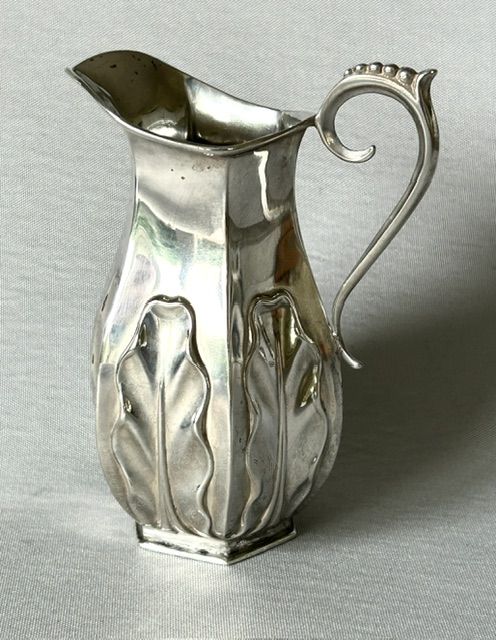
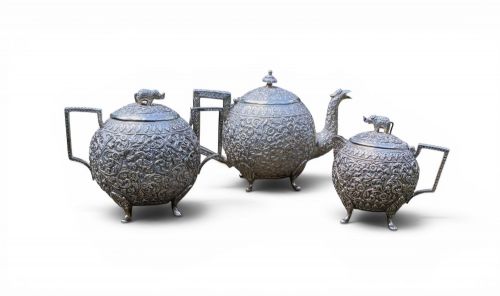
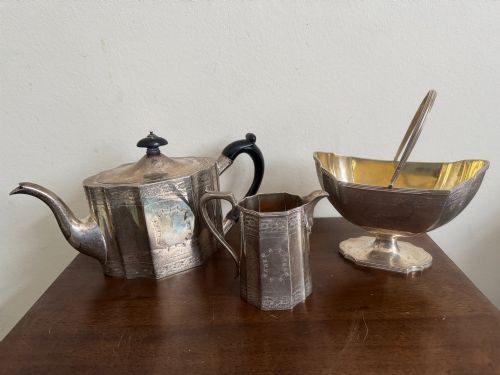
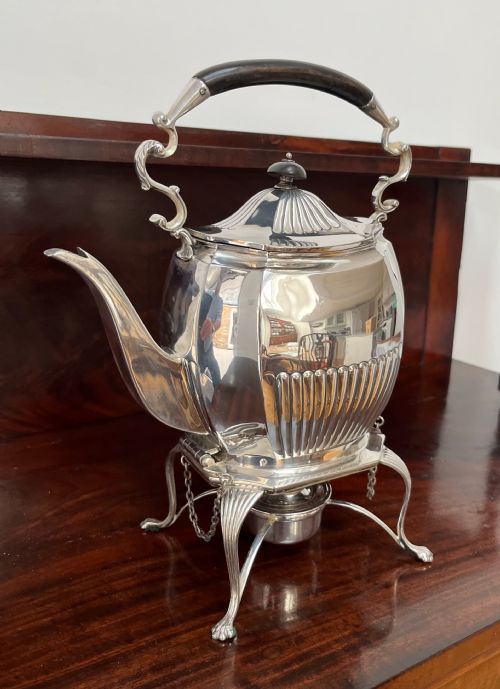
A victorian silver tea service comprises matched or garniture settings of teapots, coffee pots, cream jugs, and sugar bowls, alongside rarer additions like spirit kettles on stands and sugar baskets. These groupings emerge from nineteenth-century social rituals where hosting tea demanded formal matching vessels arranged upon large silver trays.
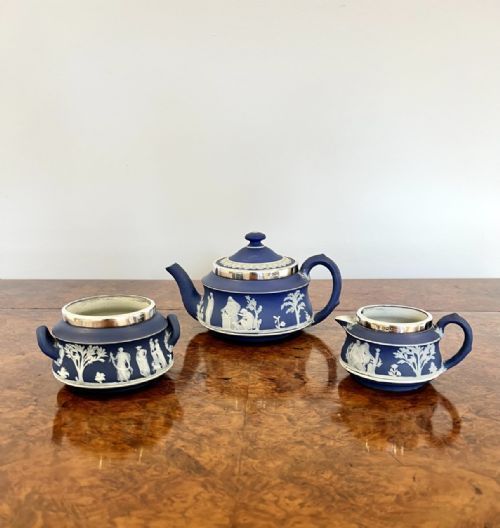
The most common configurations found here range from three-piece bachelor sets to four and five-piece services that include hot water pots. Pieces span strict Victorian production alongside Edwardian variations and silver plated equivalents manufactured by prominent commercial houses.
Materials and Construction
Silversmiths constructed these sets primarily from sterling silver or durable silver plate over base metals, utilising hammering, spinning, and casting techniques. Handles often incorporate insulating elements like bone or ebonised wood to prevent heat transfer during use.
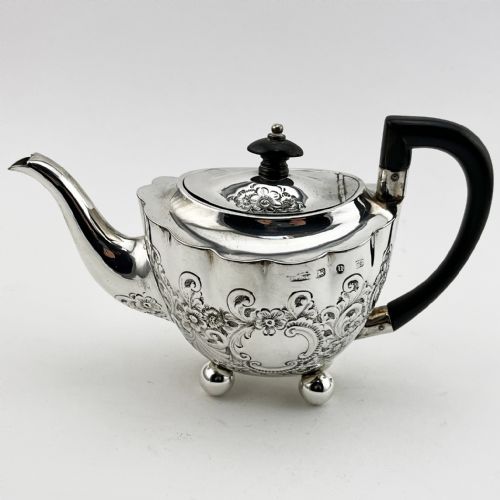
Decorative surface work relies on chased and engraved motifs, ranging from formal Neoclassical lines and Rococo scrolls to elaborate naturalist foliage and figural masks. Many hollowware bodies rest upon cast pedestals or feet soldered directly to the base.
Listings feature sterling silver and silver plate tea services alongside individual cream jugs, sugar baskets, and spirit kettles spanning the Victorian and Edwardian eras.
Evaluating the Metalwork
Quality rests upon the weight of the metal and the crispness of the chased or engraved detail rather than the mere presence of a maker mark. Superior sets maintain thick gauge walls that resist denting and feature well-balanced handles insulated with proper bone or wood spacers.
The integration of decorative elements dictates the tier of the piece, where hand-chased figural masks and deep relief floral patterns indicate superior silversmithing compared to thin pressed plate or shallow machine engraving.
John Rawlings·Josiah Williams And Co·Elkington And Co·John Walton·Francis Higgins·George Fox·Barnard·A B Savory Sons·Atkin Brothers·Henry Holland
The Victorian Silver Tea Service Glossary
- Sterling silver
- A silver alloy containing 92.5 percent pure silver by mass, with the remainder composed of other metals like copper. This standard alloy provides the durability required for functional hollowware.
- Spirit kettle
- A water kettle mounted upon a metal stand equipped with a small burner beneath. These vessels kept water hot throughout lengthy drawing room gatherings.
- Chasing
- A metalworking technique where the silversmith punches and pushes the front face of the metal to raise a design without removing material. It creates rich surface relief on teapots and cream jugs.
- Hollowware
- Table vessels such as teapots, cream jugs, and sugar bowls that possess interior volume. They are distinct from flatware items like spoons and sugar tongs.
- Harlequin set
- A collection of tea vessels sharing a similar period or style but assembled from different makers or assay offices rather than created as an original single commission.
Victorian Silver Tea Service: Frequently Asked Questions
What pieces belong in a full set?
A complete matching service typically incorporates a teapot, a two-handled sugar bowl, and a cream jug. Larger configurations often add a coffee pot and a hot water kettle on a stand.
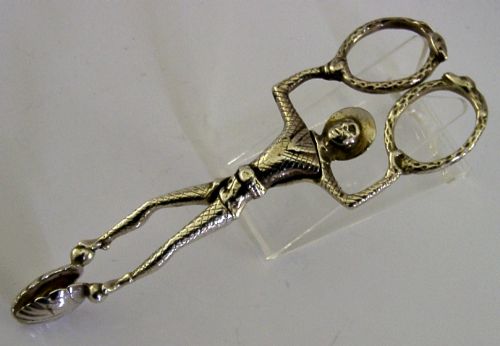
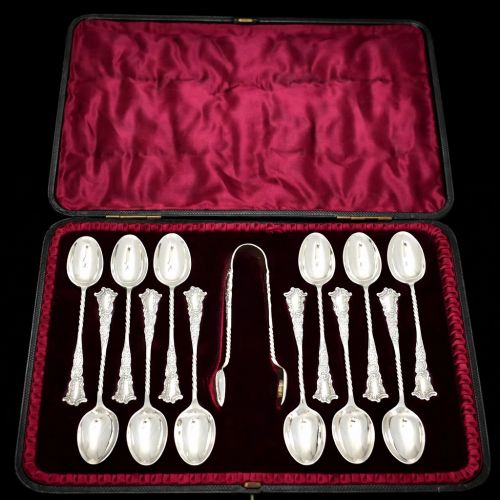
Additional accessories like sifter spoons, sugar tongs, and large serving trays frequently accompany these primary vessels depending on the original commission.
How do I clean antique silver safely?
Wash silver pieces gently in warm water using mild soap and a soft cloth to remove everyday dust and residue. Avoid abrasive dips or harsh scrubbing brushes that strip away thin plating and historic patination.
Dry the metal thoroughly with a soft microfiber towel immediately after washing to prevent water spots and tarnishing.
Can I use these teapots daily?
Solid silver and plated teapots function well for serving hot liquids if handled with care regarding their insulating handles. Check that bone or wooden insulators remain secure before pouring boiling water.
Hand wash the interior promptly after use to prevent tannin staining from black tea settling against the metal surface.
How do I read silver hallmarks?
British hallmarks stamped into the metal include a standard mark indicating silver purity, an assay office symbol showing where it was tested, and a date letter for the year of manufacture. A maker mark identifying the silversmith is also stamped alongside these symbols.
Reference tables compiled by assay offices help match specific date letters and maker initials to historical records.