


Victorian Silver Table Decor
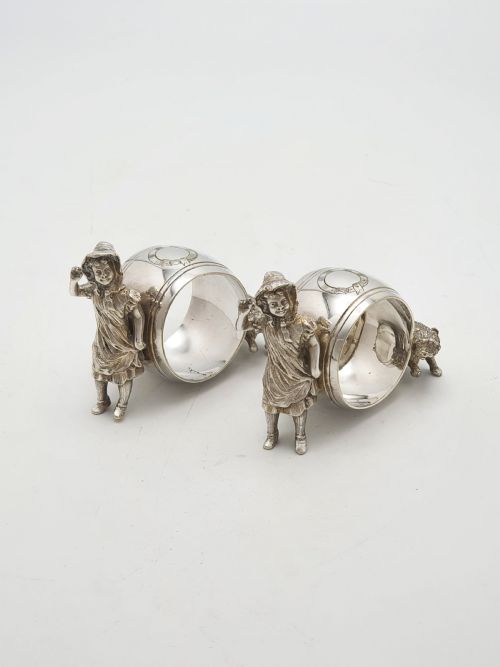
Victorian silver table decor brings theatrical flair to formal dining through figural napkin rings, novelty menu holders, and elaborate cruet sets.
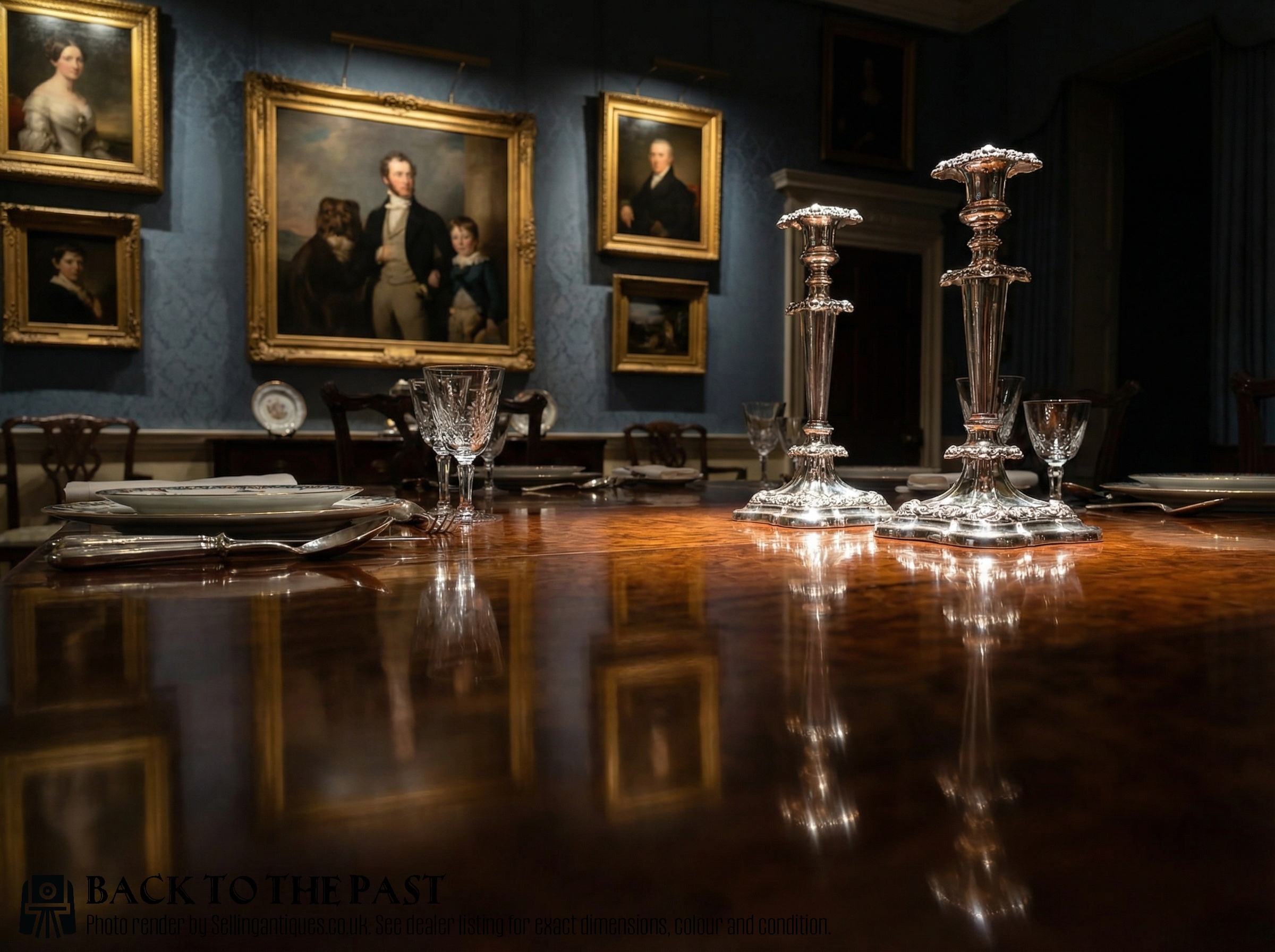
Victorian Silver Table Decor
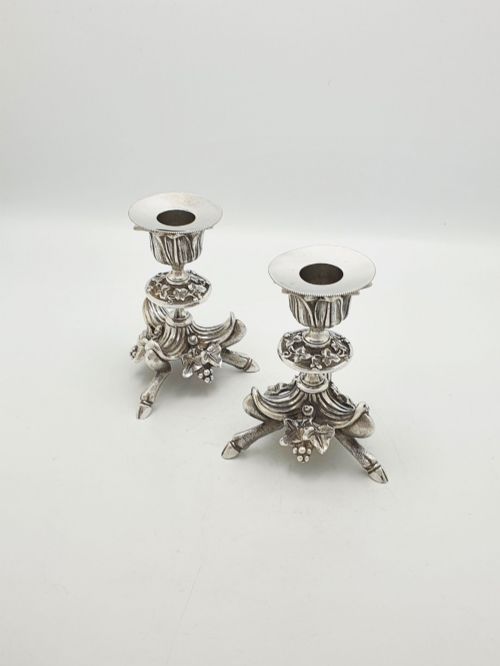
Victorian silver table decor encompasses a broad array of ornamental and functional dining pieces designed to ornament the nineteenth-century dining room. Buyers encounter everything from practical sterling silver napkin rings and knife rests to novelty cruet sets and figural menu holders.
The selection frequently includes pieces from the late Victorian period, alongside Edwardian items and earlier silver plated forms. Candleholders, tea caddies, and small decorative figures appear alongside specialised dining accessories like spoon warmers and sugar baskets.
Makers utilised both solid sterling silver and silver plate, incorporating materials such as opaque glass, leatherette, and mother of pearl into specific items. Stylistic influences range from classic Rococo Revival and Egyptian Revival to naturalistic animal and bird forms.
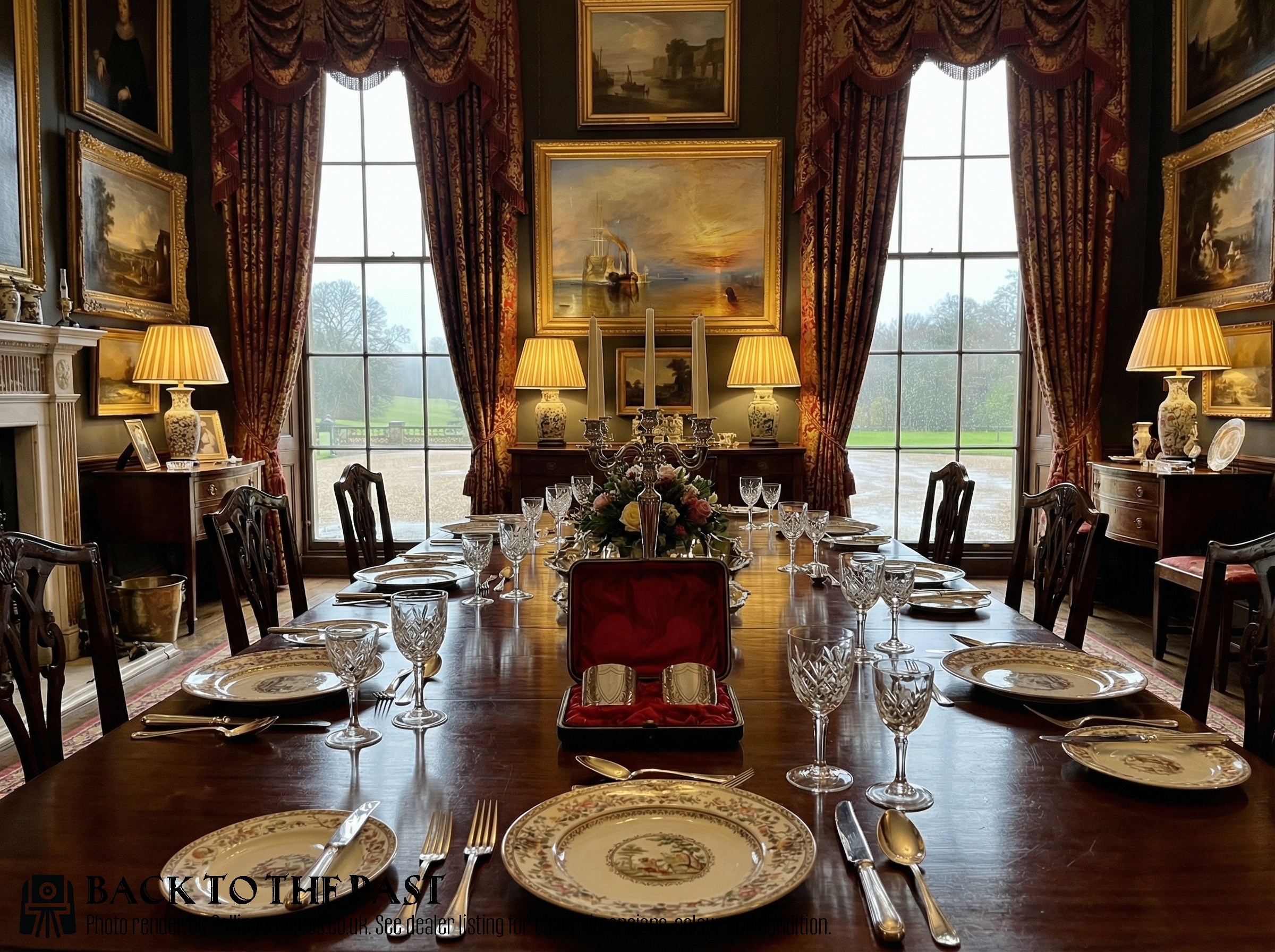
Materials and construction
Craftsmen fashioned these dining accessories primarily from sterling silver or electroplated nickel silver over a base metal core. Solid silver examples typically carry full hallmarks denoting the assay office, date letter, and maker, while plated items rely on applied layers of silver over base metals like brass.
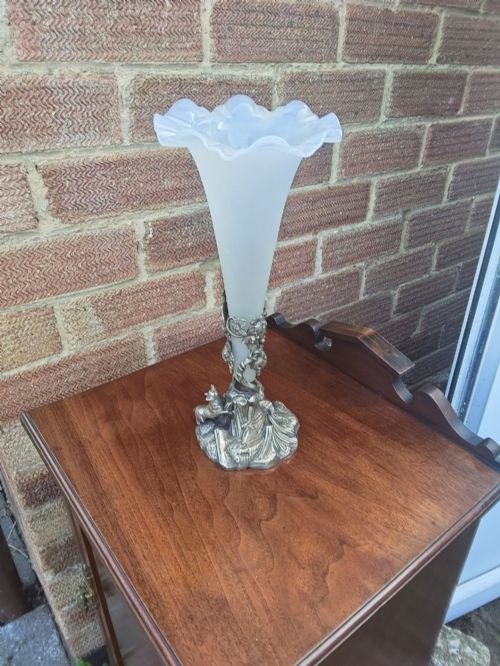
Makers integrated mixed media to achieve varied textures and decorative contrasts across the tabletop. Opaque glass, cow horn, wood, silk, velvet, and mother of pearl frequently appear combined with metalwork in items such as epergnes, knife rests, and boxed sets.
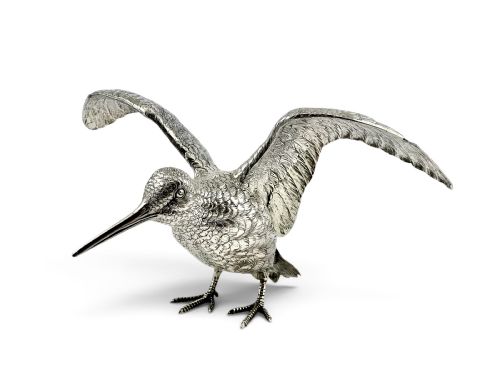
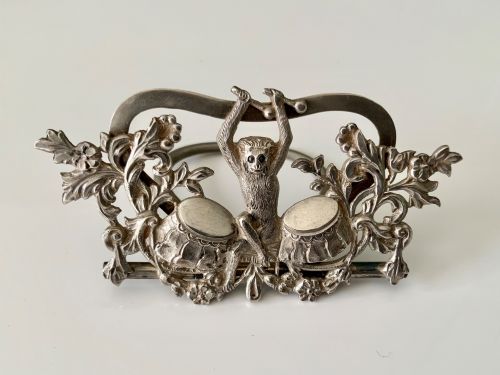
Dining tables gained personality through curious silver figures, including a drumming monkey, a woodcock, and a cockatoo.
Distinctions in manufacture
The integrity of the construction and the quality of the plating or hallmarking dictate the standing of a piece. Substantial gauge metal, secure hinges on boxes or cruet frames, and intact original cases or fitted linings separate superior workshop production from standard commercial output.
Elkington & Co
The Victorian Silver Table Decor Glossary
- Cruet set
- A matched collection of bottles or containers for condiments, held within a metal frame or stand. These sets often take decorative forms, such as carriage frames or equestrian themes.
- Menu holder
- A small upright display stand used to hold dinner menus or place cards on the table. They frequently incorporate figural novelty designs like animals or figures.
- Napkin ring
- A small ring used to identify and store individual table napkins between meals. They are often found in matched pairs or boxed sets bearing hallmarks.
- EPNS
- Electroplated Nickel Silver, a process where a thin layer of silver is deposited onto a nickel alloy base. This technique allowed manufacturers to produce affordable decorative tableware.
- Epergne
- A large table centrepiece featuring multiple branching arms or holders for fruit, sweets, or flowers. These vessels often combine metal frames with coloured glass inserts.
Victorian Silver Table Decor: Frequently Asked Questions
How are napkin rings packaged?
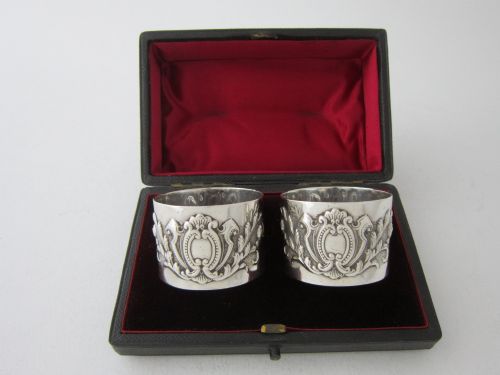
Many Victorian and Edwardian napkin rings survive in their original fitted presentation cases, lined with velvet or silk. These boxes protect the silver and indicate a high quality of retail supply.
Pairs and sets of four are commonly encountered in these fitted cases, often bearing matching hallmarks and engraving.
What are knife rests used for?
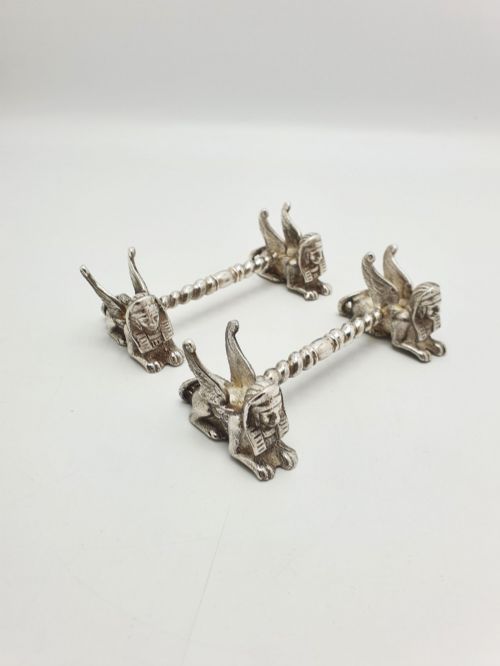
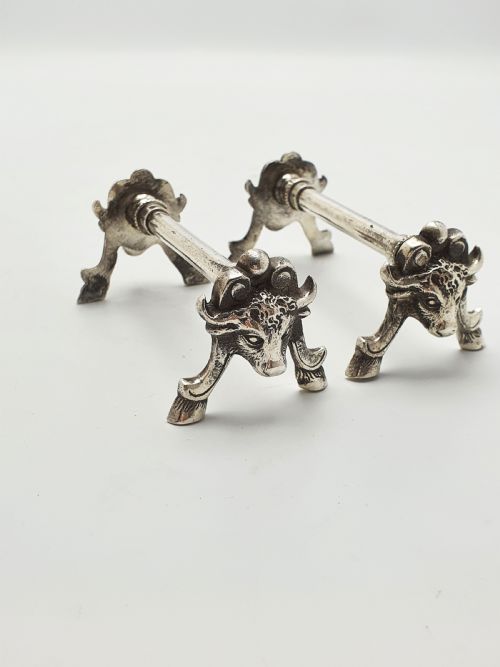
Knife rests are small horizontal supports placed on the tablecloth to keep the blades and handles of carving or dining knives elevated between courses. This practice kept tablecloths clean from food residue.
Victorian versions often feature playful figural designs, including animals, sphinxes, or mother of pearl elements.
What is an epergne?
An epergne is an elaborate table centrepiece designed to hold fruit, sweetmeats, or floral displays across multiple branching arms and trumpets. They served as the visual focal point of formal Victorian dining.
These pieces frequently combine metal stands with contrasting materials such as opaque glass.