



Victorian Silver Salver
A victorian silver salver serves drinks or displays objects, bringing nineteenth-century metalwork to the table with raised rims and engraved surfaces.
Identifying these pieces
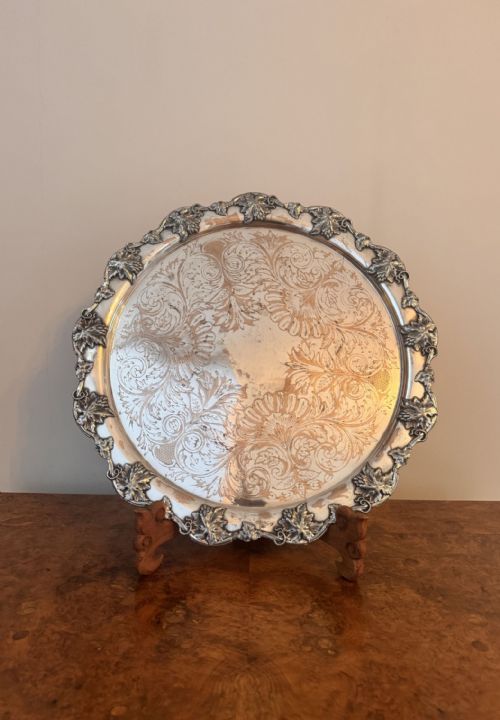
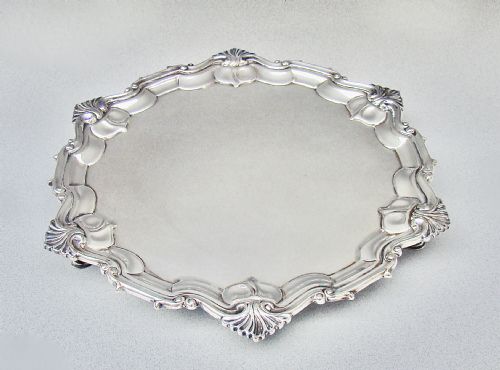
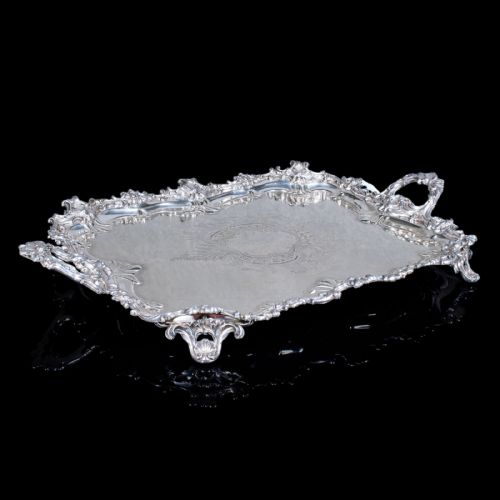
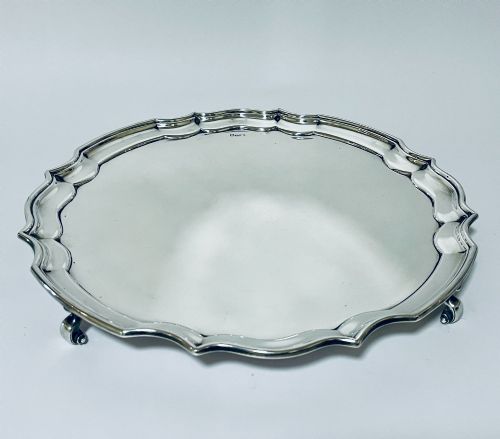
A victorian silver salver takes the form of a round serving tray, standing on small feet or resting flat. Pieces span sterling silver and silver plate, shaped in circular outlines with detailed borders.
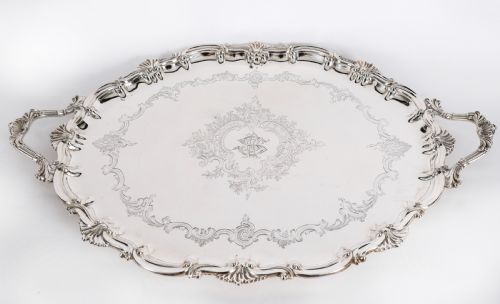
Makers produced both solid metal and plated versions, incorporating scroll feet, figural masks, and shaped rims. Stylistic influences include Rococo Revival and Georgian revivals alongside regional Scottish and Indian colonial work.
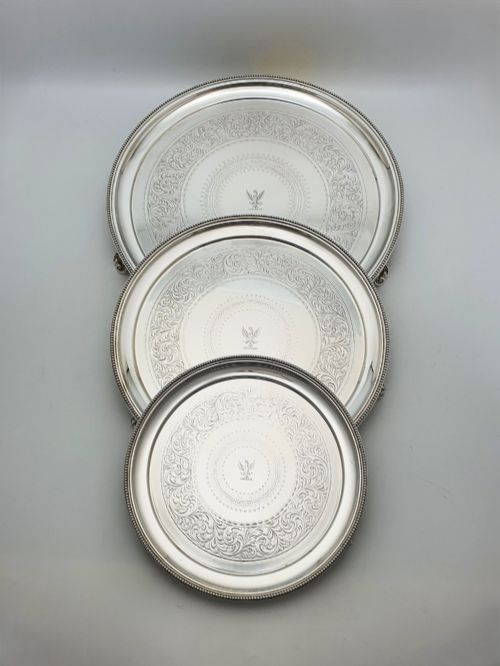
The most common formats meet the eye as round trays with engraved surfaces, varying from small intimate servers to large display pieces intended for formal hospitality.
Materials and construction
Silversmiths worked in sterling silver and silver plate, applying techniques of metal shaping, casting, and hand engraving. Rims often received chased or pierced detailing, whilst surfaces were decorated with intricate scrolling patterns.
Supports were cast separately and soldered to the base, producing footed waiters and larger trays balanced on scroll or bracket feet.
Retail Price Guide 2026
Typical UK retail prices for victorian silver salver, calculated from the Sellingantiques database of over a million retail prices indexed since 2003. This retail price guide relies exclusively on Sellingantiques data; no external sources or auction records are used, so the figures do not describe the wider market.
Listings feature items spanning from the early nineteenth century through to later twentieth-century pieces, executed in sterling silver and silver plate.
Distinguishing quality
Quality rests in the crispness of the engraved surface decoration and the substantial weight of the metal itself. Thicker gauge sterling silver and heavier silver plate provide structural rigidity and durability.
The complexity of the rim design and the execution of cast feet distinguish standard production items from more elaborate workshop pieces.
Elkington and Co·Philip Ashberry and Sons·Martin Hall and Co·Fenton Russel
The Victorian Silver Salver Glossary
- Salver
- A flat tray with feet used for serving food, drinks, or documents. These pieces form the primary focus of this collection.
- Waiter
- A small salver, often round, used specifically for handing round glasses or cups. The term frequently appears in nineteenth-century descriptions.
- Sterling silver
- An alloy consisting of ninety-two point five percent silver by mass, with the remainder being other metals, usually copper. It provides the legal standard for solid silver items.
- Silver plate
- A layer of silver applied to a base metal core such as copper or Britannia metal. Manufacturers utilised this method to offer decorative items at a lower cost.
- Rococo revival
- A nineteenth-century design style drawing on eighteenth-century French motifs, characterised by C-scrolls, asymmetrical plant forms, and shell ornamentation.
Frequently Asked Questions
What is a silver salver used for?
A victorian silver salver functions primarily as a serving tray for beverages, letters, or calling cards. Households used them during formal visits and dining occasions.
Over time, these trays transitioned into decorative display items, valued for their engraved surfaces and polished metallic appearance within domestic interiors.
How do I know if it is sterling silver?
Solid sterling silver pieces carry hallmark stamps indicating the assay office, metal purity, and date letter. These marks are typically struck on the underside or rim.
Silver-plated items lack these official sterling hallmarks and instead display manufacturer marks or plate stamps indicating the underlying base metal.
How do I clean a silver salver?
Cleaning requires a specialised silver polish applied softly with a cloth to remove tarnish without scratching the engraved surface. Wash the tray gently afterwards to remove residue.
Avoid harsh abrasives and soaking, particularly on silver-plated examples where aggressive rubbing can wear away the thin silver layer.
Are these trays heavy?
Solid sterling silver salvers possess a noticeable weight relative to their size due to the density of the metal. Larger examples require two hands when loaded with heavy glassware.
Silver-plated versions can vary in weight depending on the thickness of the base metal core and the gauge of the plating applied.