

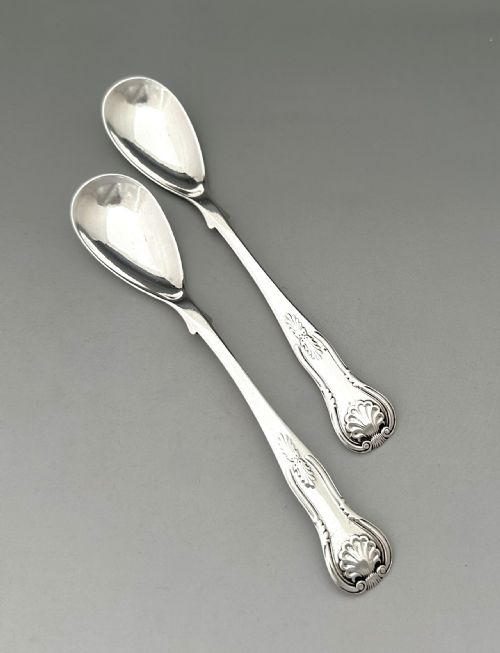


Victorian Silver Salt Spoons
These victorian silver salt spoons are diminutive table implements designed for open salt cellars, offering both functional service and decorative refinement.
Victorian Silver Salt Spoons
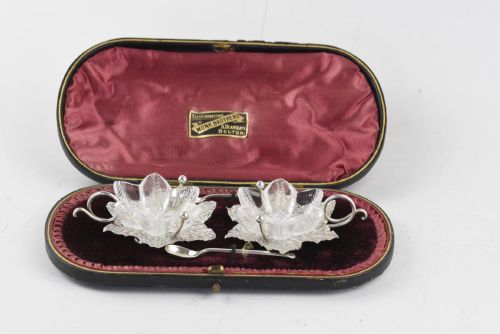
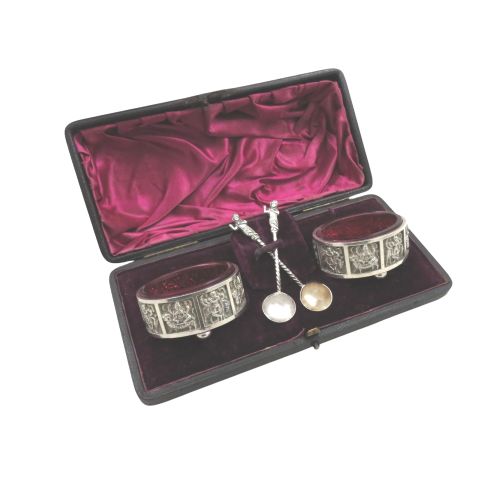
Victorian silver salt spoons are small serving utensils created to accompany open salt cellars, mustard pots, and condiment sets during formal dining. Buyers examining this category most frequently encounter matched pairs or sets housed in fitted presentation boxes alongside glass-lined or solid silver salt bowls.
The surviving examples emerge primarily from the nineteenth century, reflecting the manufacturing output of English assay offices in London, Birmingham, and Chester. Alongside standard paired designs, forms encompass naturalistic castings, novelty bird shapes, and regional Scottish patterns.
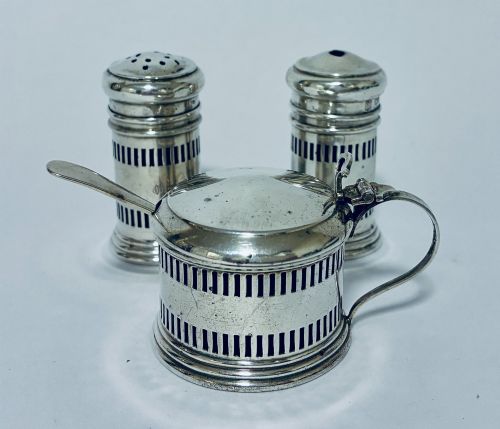
These implements often form part of broader cruet sets or cased presentations intended for domestic service. The surviving inventory bridges utilitarian dining items and collectible silver artefacts shaped by the stylistic shifts of the period.
How they were made
Makers shaped these spoons predominantly from sterling silver and solid silver plate, utilising traditional techniques such as striking, pressing, and hand-chasing. Bowls were frequently formed to cradle miniature proportions, while handles incorporated intricate patterns including the King's pattern and naturalistic motifs.
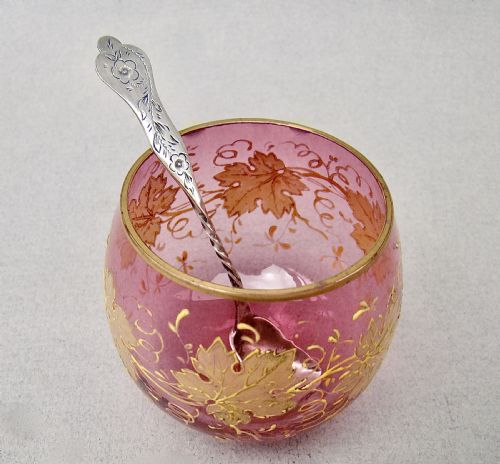
Many spoons were produced as part of fitted sets alongside cobalt, cranberry, or amethyst glass liners designed to protect the metal from corrosive saline contents. Presentation packaging frequently employed wood frames lined with velvet, silk, and leather.
Listings feature Victorian and Edwardian periods alongside materials including sterling silver, cobalt glass, and silk.
What varies in quality
Quality separates standard mass-produced condiment implements from pieces bearing crisp hand-chased detail, substantial gauge metal, and fully legible hallmarks. The presence of matching original boxes and intact coloured glass liners elevates the integrity of surviving sets.
Maker attribution further differentiates individual items, with pieces bearing the marks of established silversmiths displaying superior finishing and proportion in miniature scale.
Hamilton & Inches·Thomas Hart Stone·George Unite·Elkington·Hilliard & Thomason·Vale Brothers and Sermon
The Victorian Silver Salt Spoons Glossary
- Salt Cellar
- An open small bowl used to hold salt at the dining table before the invention of the spring-loaded shaker. These vessels commonly require diminutive spoons for dispensing.
- Cruet Set
- A matched collection of bottles, jars, or open cellars held in a stand for condiments and sauces. They frequently include mustard pots and associated spoons.
- Sterling Silver
- An alloy of silver containing 92.5 percent pure silver and 7.5 percent other metals, usually copper. This standard governed British silversmithing output throughout the period.
- Hallmark
- A series of official marks stamped on precious metal items in Britain, indicating the maker, assay office, purity standard, and year of testing. They provide the primary means of dating surviving pieces.
- Cloisonne
- An enamelling technique where metal wire is soldered to a metal base to create compartments filled with coloured paste and fired. This method appears on decorative condiment items from the era.
Victorian Silver Salt Spoons: Frequently Asked Questions
What are victorian silver salt spoons used for?
These implements served to transfer salt from an open table cellar onto an individual diner's plate. They prevented guests from using their fingers or general cutlery during meals.
Their small scale matched the proportions of miniature salt bowls and mustard pots placed across nineteenth-century dining tables.
Are salt spoons sold individually or in sets?
Surviving examples appear both as single pieces and as matched pairs or sets of four and six. Many are found grouped with open salt cellars inside original fitted presentation boxes.
Cased sets frequently include companion mustard spoons or glass liners intended for complete table service.
How do I identify the date of a salt spoon?
Dating relies upon the assay office marks, maker's stamps, and date letters struck directly into the silver metal. Comparing these punches against official British hallmarking records reveals the exact year of manufacture.
Stylistic indicators such as naturalistic casting or Aesthetic Movement engraving also point to specific decades within the nineteenth century.
Did salt spoons come with glass liners?
Many open salt cellars paired with these spoons incorporate removable glass liners in cobalt, cranberry, or amethyst hues. These liners protected the silver from chemical corrosion caused by direct contact with salt.
Sets retaining their original matched glass components hold particular interest for collectors.