

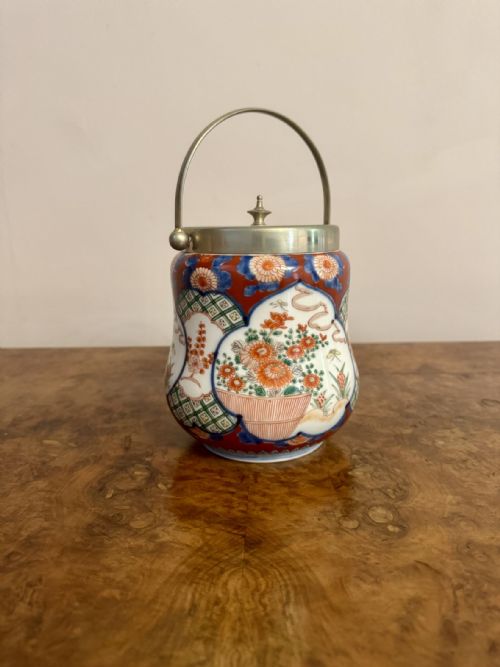
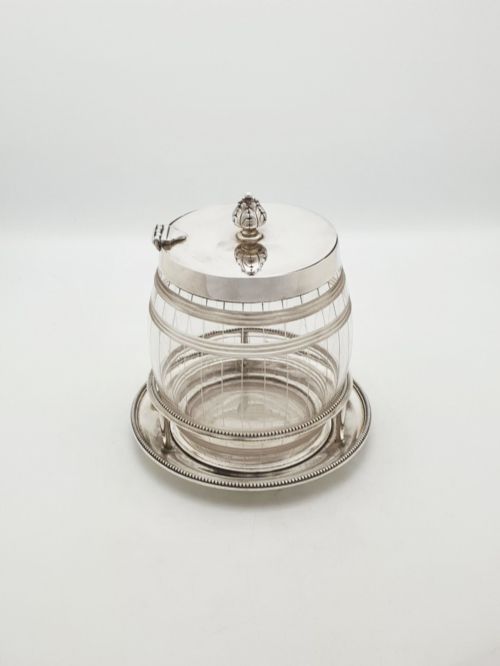


Victorian Silver Plated Tub
A victorian silver plated tub offers substantial charm for the dining table, combining sturdy metalwork with practical domestic function.
Victorian Silver Plated Tub
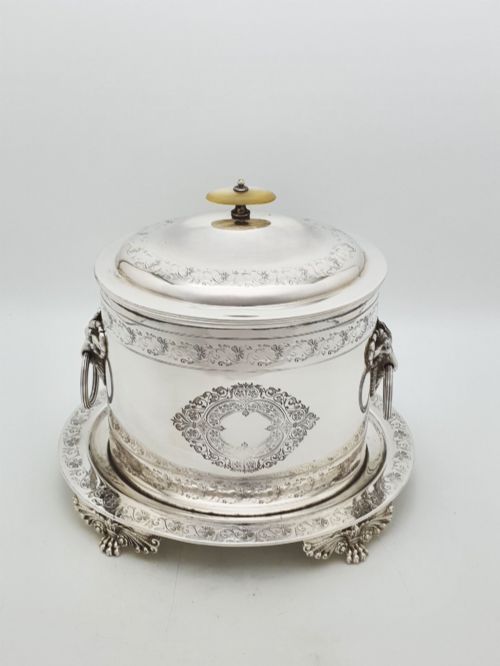
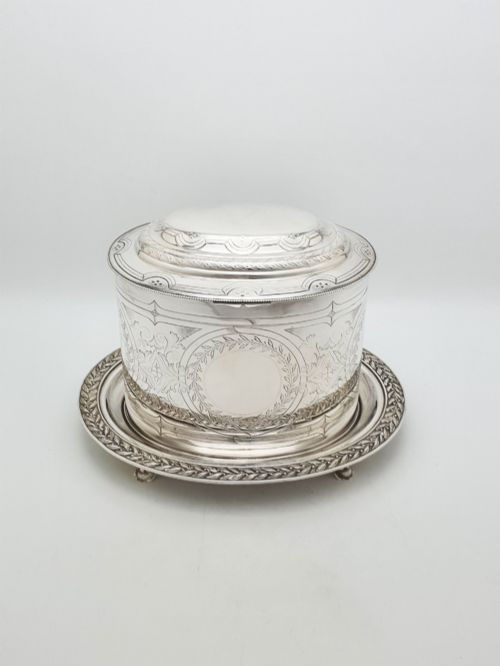
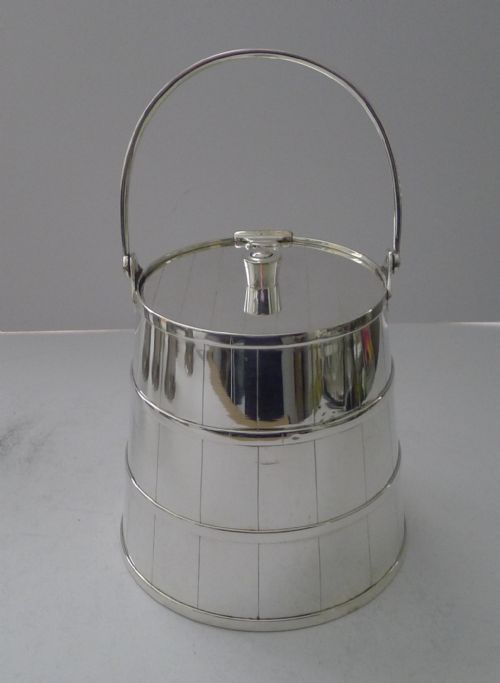
Buyers seeking a victorian silver plated tub will encounter various domestic vessels primarily designed as biscuit barrels, butter dishes, and ice buckets. These pieces originate from the Victorian era and extend into the Edwardian period, spanning production dates from eighteen fifty through to nineteen ten.
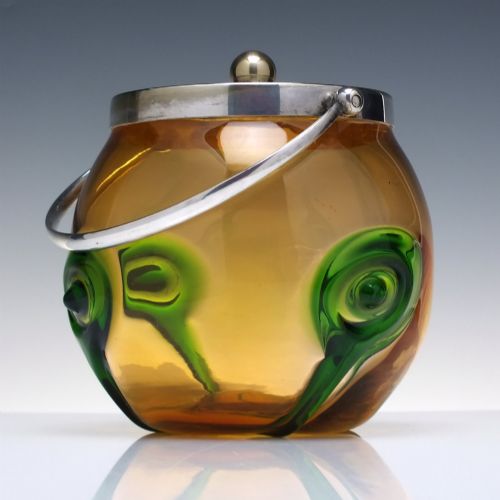
The dominant forms on this page include cylindrical biscuit barrels and handled tubs fitted with internal liners. Materials paired with the silver plate frequently comprise cut glass, ceramic, jasperware, and occasionally oak or porcelain.
Materials and construction
Makers utilised a base metal foundation coated in a layer of silver plate to achieve a polished appearance without the weight of solid silver. This metalwork was frequently combined with blown or moulded cut glass bodies and ceramic inserts.
Decorative techniques recorded on these pieces include hand engraving on the metal surfaces and applied embellishments such as ram heads. Stoneware and jasperware components demonstrate specialised ceramic moulding popular during the period.
Victorian Silver Plated Tub Retail Price Guide 2026
Typical asking prices for victorian silver plated tub among the pieces listed under this phrase on Sellingantiques today, from the lower quarter to the upper quarter. They describe what is for sale here now, not the wider market.
Listings span the Victorian and Edwardian periods, utilising materials such as silver plate, cut glass, jasperware, oak, and porcelain.
Assessing quality
Quality differences emerge in the crispness of the engraved decoration and the integration between the metal mounts and the glass or ceramic bodies. Pieces featuring complex decorative elements like figural mounts display superior craftsmanship.
The condition of the silver plate and the presence of original fitted components, such as glass liners or matching stands, influence the overall standard of the surviving vessel.
Stuart & Sons·Elkington·John Grinsell & Sons
The Victorian Silver Plated Tub Glossary
- Silver Plate
- A thin layer of silver fused to a base metal core. This technique allowed manufacturers to produce lustrous tableware at a lower cost than solid silver.
- Jasperware
- A type of fine stoneware developed with a matte surface, often featuring contrasting raised white ornamentation. It appeared frequently on nineteenth-century domestic vessels.
- Biscuit Barrel
- A covered container designed to hold dry biscuits or cakes on the dining table. They typically feature a hinged lid and a swing handle.
- Cut Glass
- Glass decorated by grinding facets and patterns into the surface using a wheel. This material added significant weight and sparkle to tableware containers.
Victorian Silver Plated Tub: Frequently Asked Questions
What were these tubs used for?
These vessels served primarily as functional tableware for storing biscuits, butter, or ice in a domestic dining setting.
Their lidded designs kept food items protected while displayed on sideboards or dining tables during formal meals.
How do I clean silver plate?
Cleaning requires a soft cloth and a mild silver polish formulated specifically for plated items to avoid wearing away the thin metal layer.
Avoid harsh abrasive cleaners or soaking pieces with wooden components in water.
How can I tell the period?
Dating relies on stylistic clues such as aesthetic movement motifs, manufacturing marks stamped into the metal, and the combination of materials.
Late nineteenth-century examples often incorporate cut glass or ceramic bodies reflecting contemporary design trends.
Are liners usually original?
Original glass or ceramic liners fit snugly within the silver plated framework and match the dimensions and contours of the metal housing.
Replacement liners occasionally appear in later repairs due to the fragile nature of old glass.