




Victorian Silver Plated Server
A victorian silver plated server brings nineteenth-century dining ceremony to the table through elaborate metalwork and specialised function.
Victorian Silver Plated Server
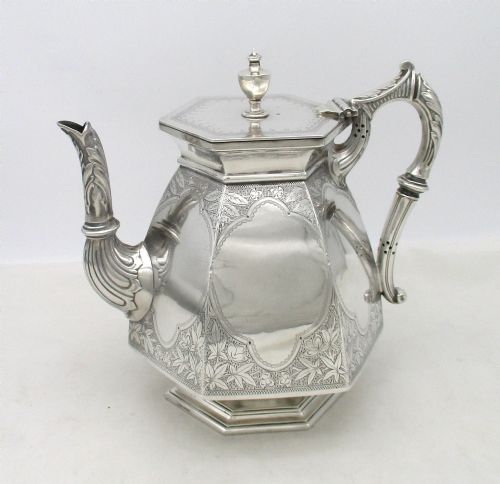
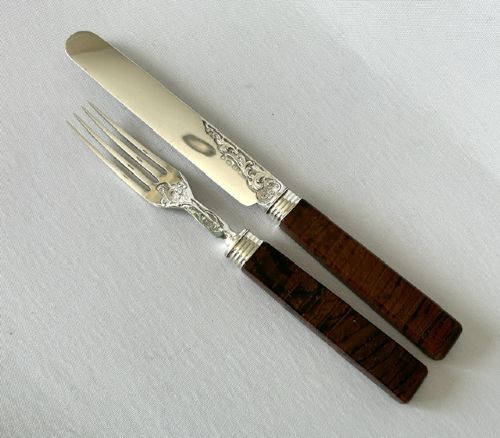
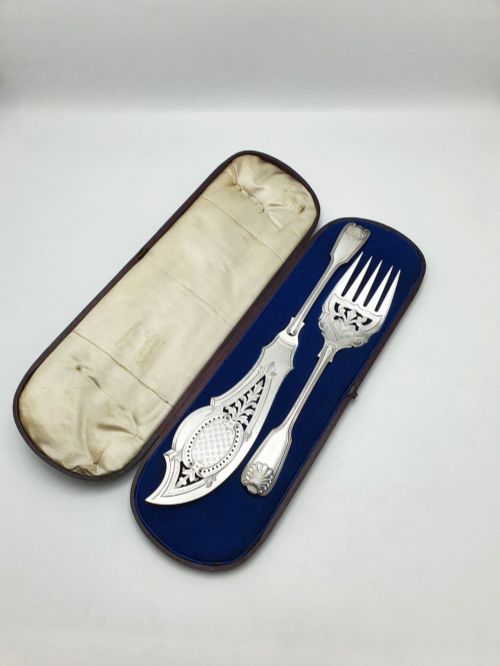
A victorian silver plated server encompasses specialised utensils and dishes designed for specific dining courses, including fish serving sets, fruit knives and forks, asparagus dishes, and revolving breakfast dishes. Buyers encounter these forms emerging from the mid-nineteenth century through the Edwardian period, reflecting elaborate Victorian culinary habits.
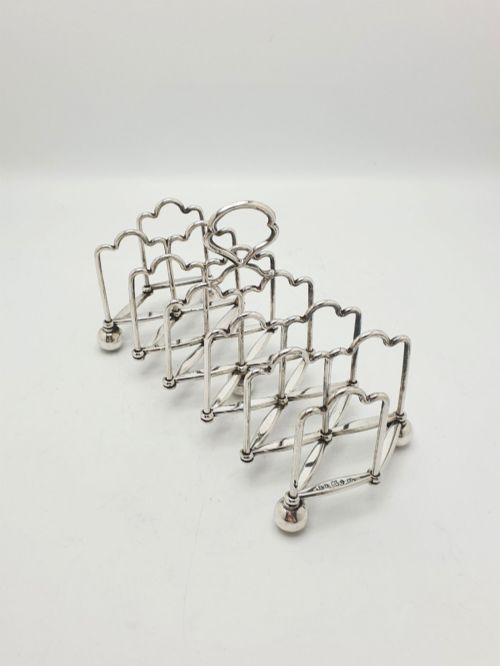
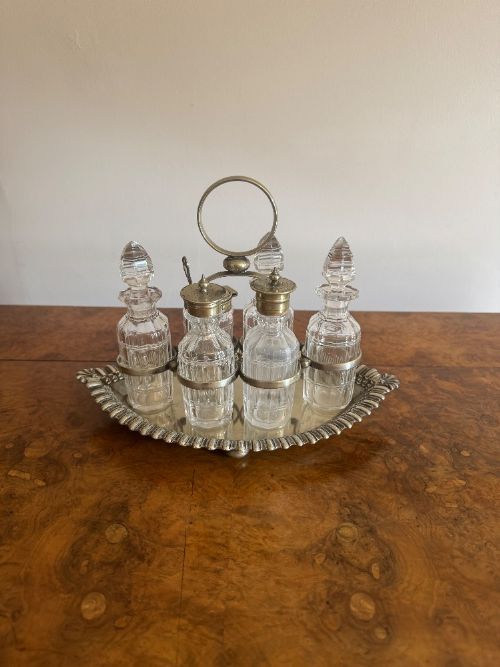
The selections span from utilitarian toast racks and butter dishes to decorative cruet sets, claret jugs, and elaborate salad bowls featuring carved oak and majolica components. Many examples pair silver plate with cut glass, cranberry glass, or carved antler handles.
Makers utilised electroplated nickel silver alongside older Old Sheffield Plate techniques to create functional serveware that mimicked solid silver tableware at a lower cost. These pieces survive in various domestic contexts, from boxed dessert sets to large meat covers and punch bowls.
Materials and construction
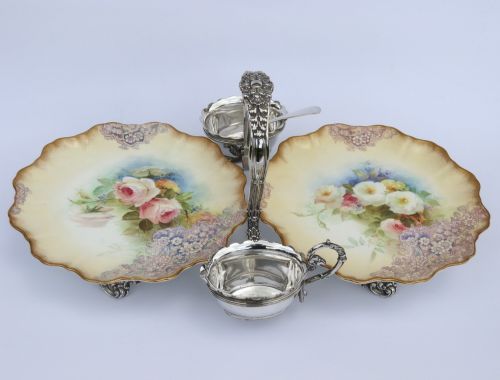
Makers applied silver plate and electroplated nickel silver over base metal foundations, frequently incorporating cut glass liners, polished oak, and ceramics such as Doulton Burslem plates. Handles utilised alternative materials including carved oak, antler, and agate alongside engraved metal.
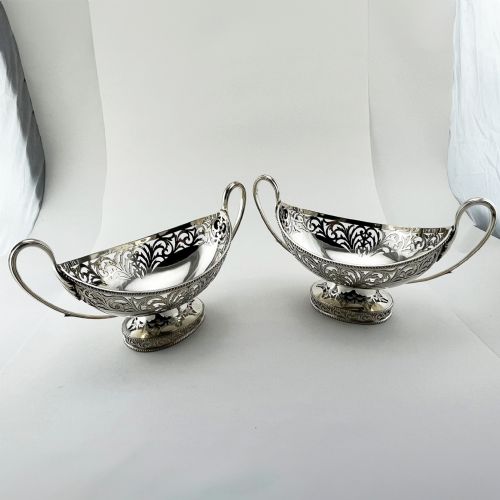
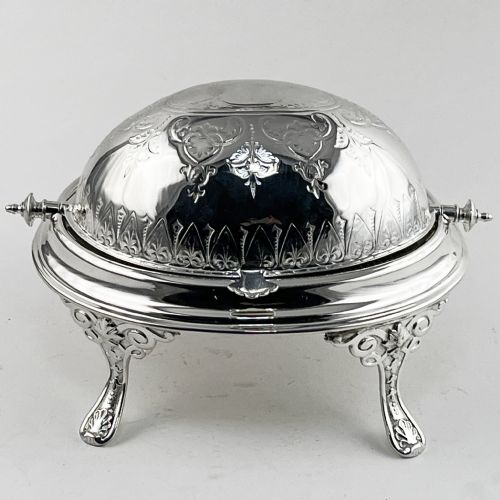
Techniques involved precision engraving, pierced ends, and complex mechanical actions for revolving lidded butter dishes, breakfast dishes, and double rollover dishes. Specialised pieces like spoon warmers and claret jugs combined metal mounts with ceramic or glass bodies.
Listings feature items spanning the 1850s to the Edwardian era, incorporating materials like cut glass, oak, and majolica alongside silver plate.
Judging execution and finish
Quality rests on the crispness of the engraving, the depth of the piercing on serving tongs and fish servers, and the structural integrity of moving parts like revolving breakfast dish lids. Superior examples feature integrated design where handles of antler, agate, or carved oak complement the plated metal mounts.
The selection of secondary materials distinguishes finer objects, seen in the use of high-grade cut glass, cranberry glass, and paired ceramic components by noted makers. Robust plating thickness and substantial weight also separate workshop standards across the period.
Elkington·Walker and Hall·Thomas Bradbury·Mappin and Webb·Padley Parkin·Roberts and Belk·Daniel and Arter
The Victorian Silver Plated Server Glossary
- Silver Plate
- A thin layer of silver bonded or electroplated onto a base metal such as nickel silver or copper. This process allowed nineteenth-century manufacturers to produce durable dining items with the appearance of solid silver.
- Electroplated Nickel Silver
- Abbreviated as EPNS, this alloy of copper, nickel, and zinc served as the standard base metal for silver plating from the mid-nineteenth century onward. It provided a strong and stable foundation for the plating process.
- Old Sheffield Plate
- An earlier method of fusing a thin sheet of silver to a thicker copper core before shaping. This technique predates widespread electroplating and appears on select mid-nineteenth-century serving trays.
- Cruet Set
- A collection of glass bottles or jars mounted in a silver plated frame for holding condiments, oil, vinegar, or sauces at the table. These often feature matching spoons and ornate carrying handles.
- Claret Jug
- A pouring vessel with a glass or crystal body fitted with silver plated mounts, handle, and hinged lid. They were used for serving red wine during formal Victorian meals.
Victorian Silver Plated Server: Frequently Asked Questions
What were silver plated servers used for?
These utensils and dishes were created for specific culinary tasks during formal nineteenth-century meals, such as portioning fish, serving fruit and desserts, or presenting butter and toast.
Different designs corresponded to particular courses, allowing hosts to serve dishes with specialised tools rather than general cutlery.
How do I clean silver plated items?
Maintenance requires gentle washing with warm soapy water and soft cloths to preserve the thin layer of silver over the base metal.
Avoid harsh abrasive cleaners that can wear away the plating and expose the underlying nickel silver or copper.
How can I tell the period of a piece?
Dating relies on stylistic clues such as Aesthetic Movement motifs, Rococo Revival curves, or Art Nouveau lines, alongside stamped maker marks.
Material combinations like cut glass paired with electroplated nickel silver typically point toward late nineteenth-century manufacturing standards.
Can I use these antiques daily?
Many items remain structurally robust enough for regular use, particularly sturdy serving trays, toast racks, and salad bowls.
Careful hand washing and proper storage will protect delicate glass liners, carved antler handles, and hinged mechanisms from unnecessary wear.