
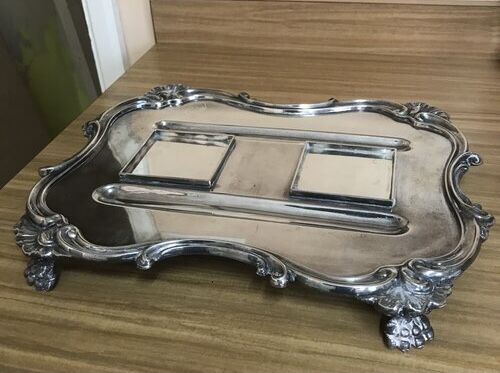


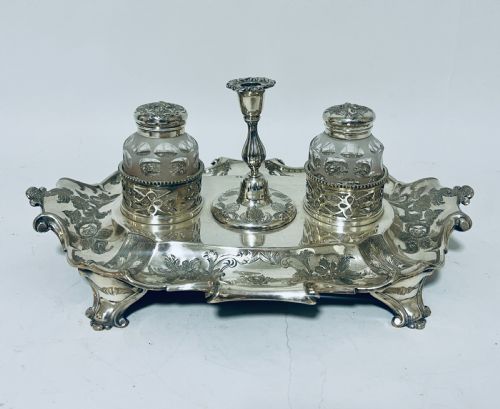


Victorian Silver Plate Inkwell
A victorian silver plate inkwell brings functional desk elegance to a study, combining durable metal bases with glass or horn reservoirs.
Victorian Silver Plate Inkwell
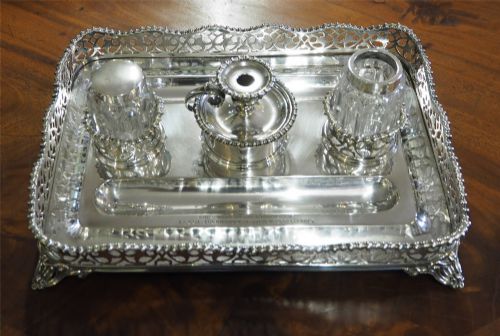
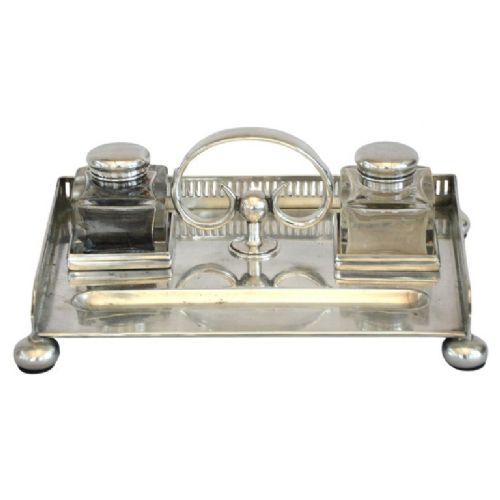
When you search for a victorian silver plate inkwell, you encounter desk accessories that span the Victorian and Edwardian periods, stretching from the mid nineteenth century into the early twentieth century. These pieces range from simple single inkwells to elaborate double inkstands featuring pen rests and integrated desk tidies.
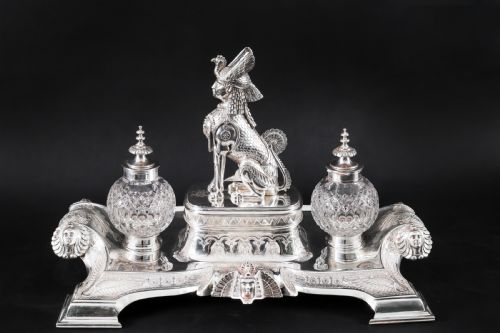
The most common formats on this page include fitted stands holding cut glass vessels, horn cornucopia designs, and novelty pieces reflecting stylistic revivals such as Egyptian Revival, Rococo Revival, Gothic Revival, and Art Nouveau.
Originating predominantly from English workshops, these items served as essential writing furniture for correspondence and business before the widespread adoption of the fountain pen.
How they were made
The construction relies on a combination of silver plating applied to base metals, paired with organic and mineral elements such as cut glass, oak, wood, and horn. Makers shaped the metal stands through casting and stamping, often incorporating ornate detailing aligned with prevailing historical revivals.
Glass inserts and reservoirs were mouth blown and frequently cut with geometric patterns to catch the light, while horn and oak elements provided robust natural textures that contrasted with the reflective silver plate.
Several items utilise real animal horn shaped into cornucopias to hold your vintage fountain pens.
What varies in quality
Quality in these desk accessories is determined by the crispness of the cast ornamentation, the thickness and durability of the silver plating, and the integrity of the fitted glass or horn components. Superior examples display balanced proportions, substantial weight, and well executed detailing from recognised makers.
Simpler production pieces show more utilitarian construction with lighter metal gauges and minimal ornamentation, whereas high end specimens integrate complex design schemes like figural novelty shapes or architectural revival motifs.
Elkington·Wilkinson And Co·Walker And Hall·Harrods·W M F·Martin Hall
The Victorian Silver Plate Inkwell Glossary
- Silver Plate
- A manufacturing process where a thin layer of silver is bonded to a base metal core. This technique allowed makers to produce luxurious domestic items at a fraction of the cost of solid silver.
- Inkstand
- A comprehensive desk tray or stand that holds one or more inkwells along with related writing accessories like pen rests and stamp boxes. These matched sets formed the centerpiece of a nineteenth century writing table.
- Standish
- An alternative traditional term for an inkstand or portable desk set designed to hold ink, sand for blotting, and pens. They often featured carrying handles for transport between rooms.
- Cut Glass
- Glass shaped and patterned by grinding and polishing wheel cuts on the surface. It provides heavy, sparkling reservoirs that resist the corrosive properties of writing ink.
Victorian Silver Plate Inkwell: Frequently Asked Questions
How do I clean a silver plated inkwell?
Use a soft cloth and a gentle, non abrasive silver cleaner designed for plated items to remove tarnish without stripping the metallic coating.
Take care to avoid harsh scrubbing around engraved details and keep cleaning liquids away from original wooden or horn bases.
What is the difference between an inkwell and an inkstand?
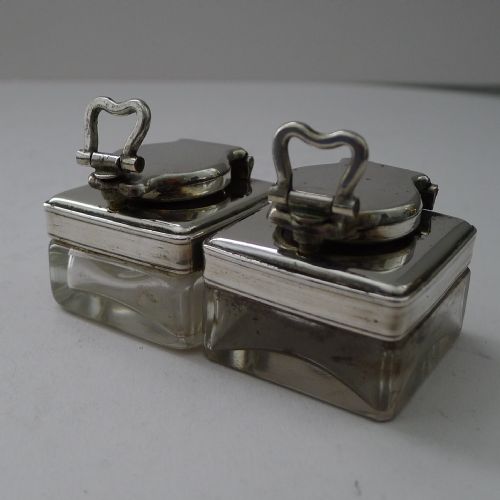
An inkwell is simply the individual container that holds the ink, often featuring a hinged lid to prevent the liquid from drying out too quickly.
An inkstand is the larger base tray or stand that accommodates one or more inkwells alongside integrated pen rests and storage compartments.
Are travel inkwells leak proof?
Period travel versions were designed with threaded screw tops or internal collars to secure the glass liner during transit.
Despite these historical sealing mechanisms, modern owners generally avoid carrying filled antique inkwells to prevent accidental leaks.
How can I tell a Victorian inkwell from an Edwardian one?
Victorian pieces frequently display heavier historic revival ornamentation, drawing from Gothic, Rococo, or Egyptian motifs popular during the nineteenth century.
Edwardian and later pieces tend to feature cleaner lines influenced by Art Nouveau styling or more restrained classical revival forms.