




Silver Plate Inkwell
A silver plate inkwell brings solid desktop utility and period character to a room, ranging from simple glass and metal vessels to elaborate novelty designs.
Silver Plate Inkwell
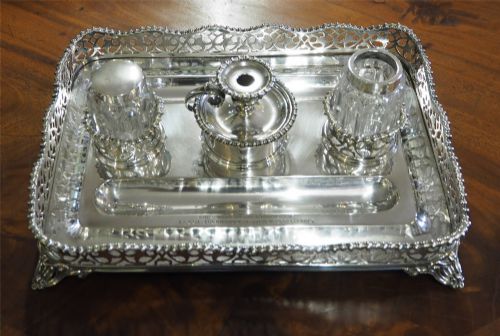
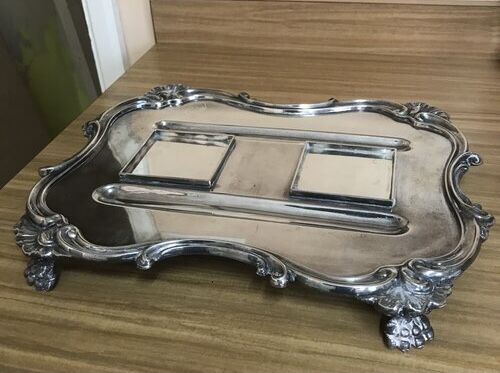
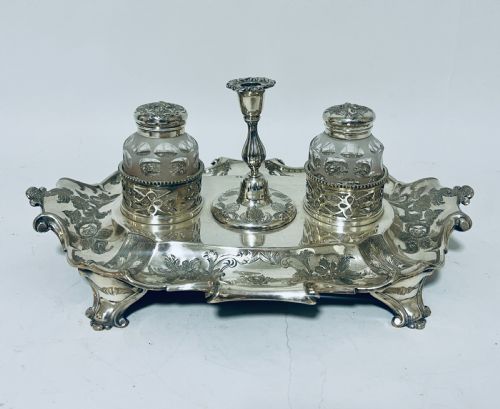
A silver plate inkwell is a desk accessory designed to hold writing fluid alongside pen rests and other stationary fittings. These pieces emerge in various forms across the Georgian, Victorian and Edwardian periods.
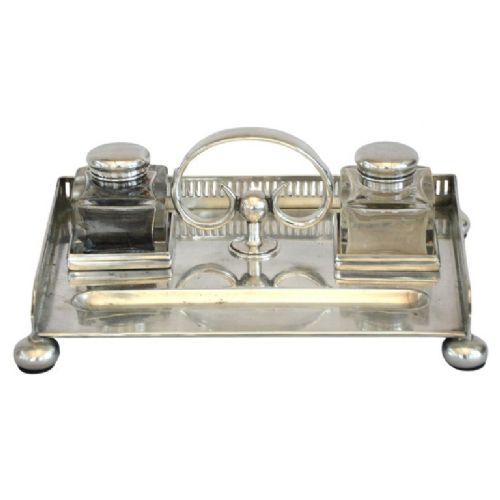
The most common versions on this page are double inkstands and single desk sets featuring cut glass or metal inserts. Novelty pieces shaped as animals, horns or curling stones also appear regularly.
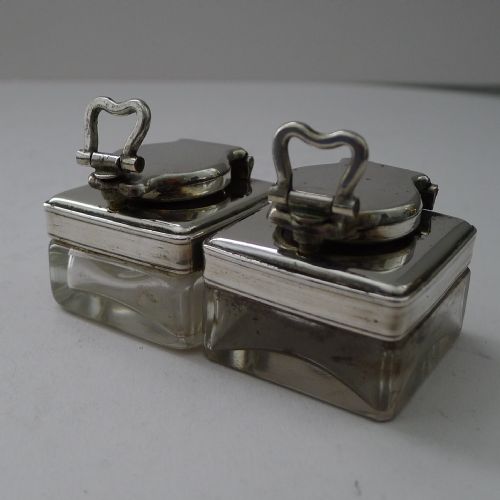
Desk accessories range from compact travel inkwells to large standishes meant for central placement on a study desk.
How They Were Made
Manufacturers utilised silver plate and Sheffield plate over base metal, combining these metallic elements with heavy cut glass inserts and crystal bowls. Natural materials such as oak, wood and horn provide structural contrast in numerous desk stands.
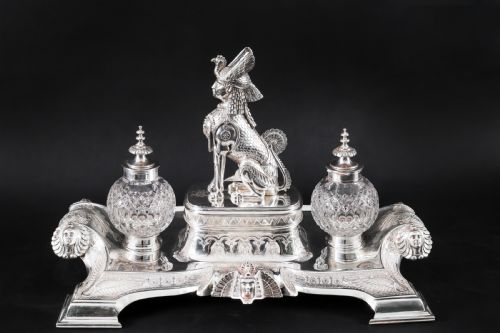
Casting and plating techniques allowed makers to produce intricate details in styles spanning Rococo Revival, Egyptian Revival and Art Nouveau. Fitted glass reservoirs often screw or drop securely into metal collars.
Desks gained extraordinary character through novelty inkwells shaped as curling stones, beehives, roosters and ram horns.
What Varies in Quality
Quality depends upon the weight of the metal and the clarity of the cut glass inserts used within the stand. Heavier desk sets by established firms display crisper cast ornamentation and more substantial construction.
The sophistication of the design dictates distinction, moving from utilitarian double inkstands to elaborate animal novelties and sculptural horns. Complete sets retaining matching glass bottles and original pen rests command greater interest.
Elkington And Co·Wilkinson And Co·Walker And Hall·Daniel Holy·Martin Hall·James Deakin·Mappin And Webb
The Silver Plate Inkwell Glossary
- Inkstand
- A complete tray or stand holding one or more inkwells along with spaces for pens and wafers. These desk furnishings formed the centrepiece of a nineteenth-century writing table.
- Standish
- A structured desk accessory containing ink pots, sanders and pen holders. The term generally denotes a more formal or substantial desk stand.
- Sheffield Plate
- An early method of fusing a thin sheet of silver onto a thicker copper base. This technique precedes modern electroplating.
- Novelty Inkwell
- An ink reservoir cast into an imaginative pictorial shape such as an animal, helmet or sporting object. These figural pieces served as decorative conversation items on desks.
Silver Plate Inkwell: Frequently Asked Questions
How do I clean a silver plate inkwell?
Use a soft cloth and a gentle metal cleaner formulated for silver plate, taking care to avoid harsh abrasives that wear away the thin silver layer.
Remove glass inserts entirely before cleaning the metal frame to prevent moisture damage to inner collars and fitted wooden bases.
Were these pieces used for everyday writing?
Writing stands served as essential desk furnishings in studies, offices and libraries during the nineteenth and early twentieth centuries.
Wealthy households and business premises maintained multiple inkstands for correspondence and record keeping.
How can I tell the period of an inkstand?
Examine the decorative style, such as Egyptian Revival or Art Nouveau, alongside manufacturing marks and the method of plating used on the metal.
Georgian and early Victorian examples often feature heavier Sheffield plate construction, whereas later Edwardian pieces utilise standard electroplate.
Do glass liners usually match the metal stand?
Many pieces retain their original heavy cut glass or crystal ink inserts, which fit precisely into the designated collars of the stand.
Replacement glass bottles appear frequently due to the fragile nature of the original removable reservoirs.