




Edwardian Double Inkstand
These edwardian double inkstand pieces are substantial desk accessories that anchor a workspace with period presence and practical inkwells.
Edwardian Double Inkstand
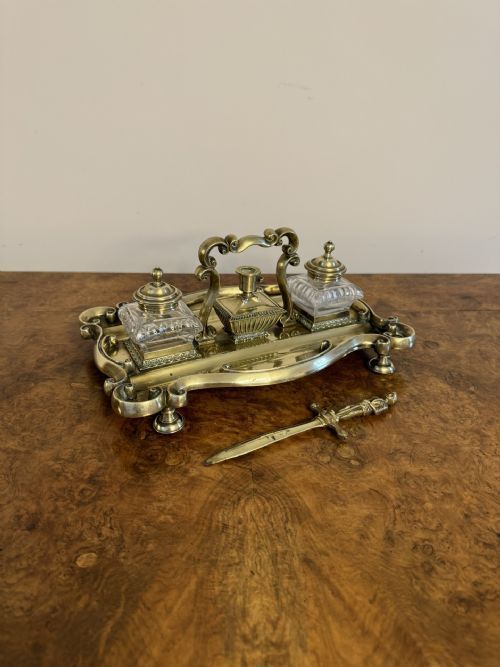
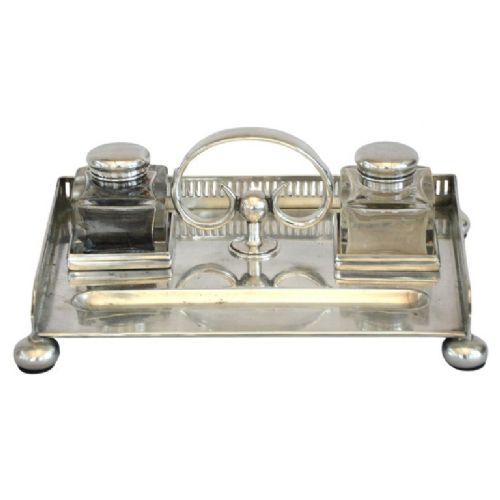
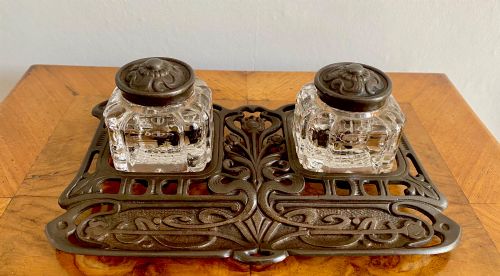
An edwardian double inkstand sits on a writing desk to hold two ink bottles alongside pens or other accessories. They appear in styles ranging from ornate brass to silver plate and solid silver, often featuring cut glass inkwells.
The pieces on this page span the Edwardian era, Victorian period, and late nineteenth century. Forms include desk tidies, stands with drawers, and stands combined with chambersticks.
What varies in quality
Quality rests in the weight of the metal frame and the clarity of the cut glass inkwells. Heavier gauge silver, solid brass, and substantial oak bases distinguish the finer examples from lighter plated alternatives.
The presence of original ink bottles with matching tops elevates a piece. Complete sets retain their fitted glass components, while others survive with replacement bottles or missing elements.
Listings feature brass, cut glass, sterling silver, silver plate, oak, and cast metal across Victorian, Edwardian, and nineteenth-century periods.
Walker And Hall
The Edwardian Double Inkstand Glossary
- Inkstand
- A desk stand designed to hold one or more inkwells and sometimes pens. These pieces organise writing implements on a desktop.
- Desk tidy
- A compartmented tray or stand for holding stationery, letters, and writing accessories alongside inkwells. They often include drawers or built-in pen rests.
- Chamberstick
- A small portable candlestick with a pan to catch dripping wax, occasionally incorporated into the design of a desk stand. This allowed a writer to carry a flame for sealing letters.
- Cut glass
- Glass shaped by grinding and polishing facets into the surface. This technique adds weight and brilliance to the inkwells.
Edwardian Double Inkstand: Frequently Asked Questions
What is an edwardian double inkstand?
It is a desk accessory featuring a base that holds two inkwells, designed for writing correspondence.
Such pieces date primarily from the early twentieth century and nineteenth century, appearing in brass, silver, and silver plate.
How were they used?
Writers dipped pens into the dual inkwells, which often held different coloured inks for writing and editing.
Additional compartments on the stands kept pens, stamps, and small writing supplies orderly on the desktop.
How do I date a piece?
Hallmarks on silver stands provide specific assay dates and maker marks.
Stylistic details like Art Nouveau curves or heavy brass ornamentation also help indicate whether a piece belongs to the Victorian or Edwardian era.
Are the inkwells original?
Many pieces retain their heavy cut glass inkwells with matching silver-top lids.
Due to fragility, some surviving stands feature replacement bottles that fit the original apertures in the metal or wood base.