

Victorian Silver Chain
When you search for a victorian silver chain, you enter a world of heavy pocket watch albert chains, book chains, and ornate chatelaines built for daily use.
Victorian Silver Chain
A victorian silver chain encompasses functional pocket watch albert chains, robust book chains, and ornamental neck chains produced throughout the nineteenth century and into the early twentieth century. These pieces trace their origins to utilitarian timekeeping and personal adornment, bridging the gap between practical gentleman's pocket watch attachments and lady's decorative collar necklaces.
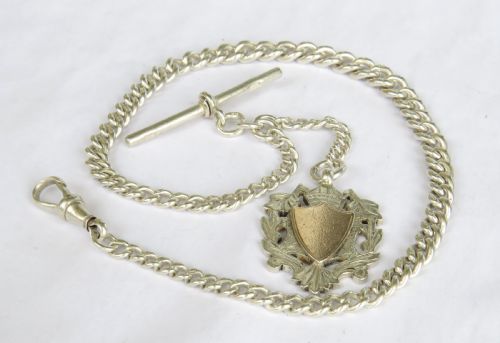
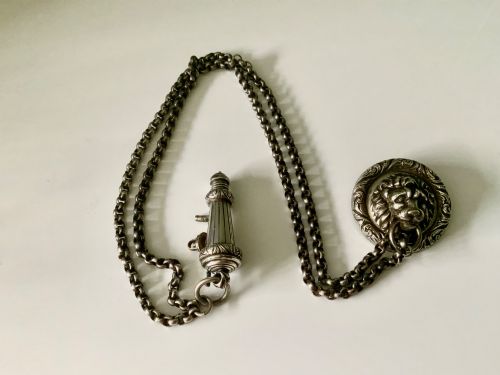
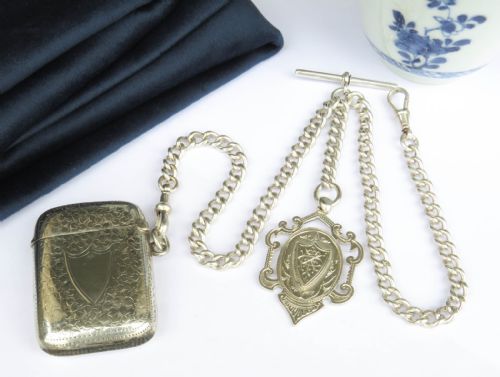
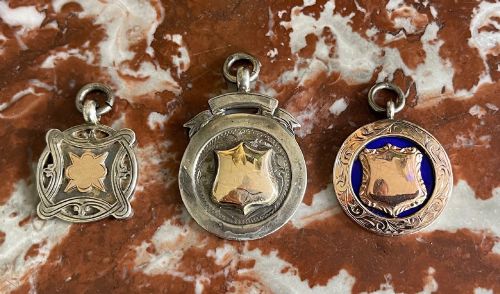
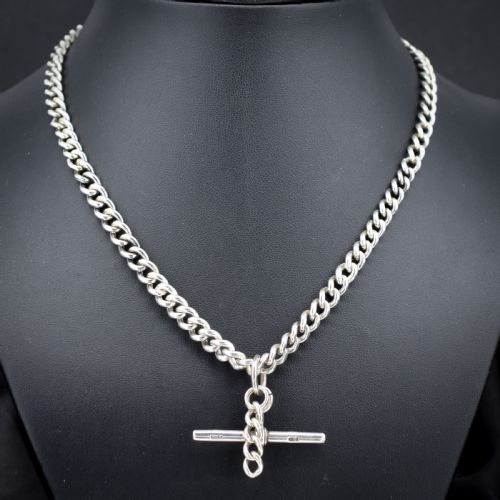
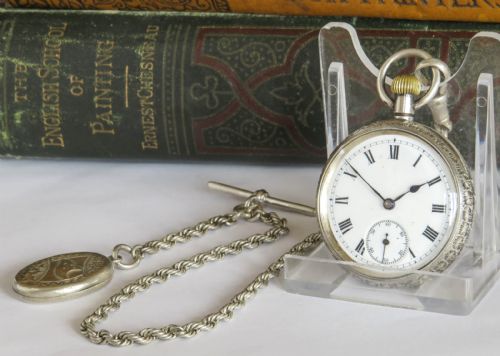
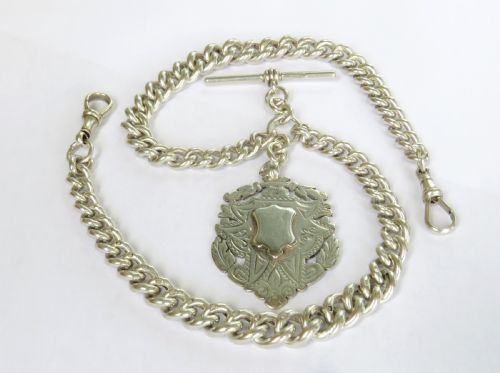
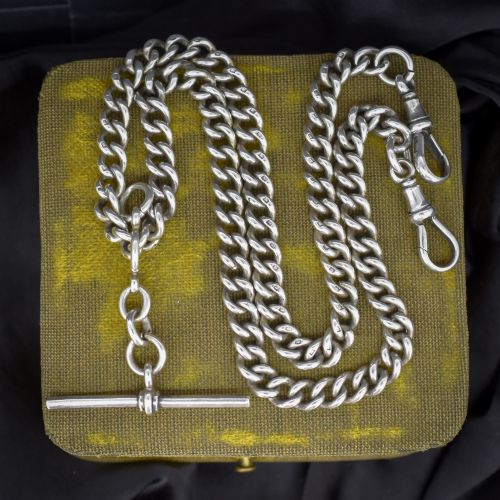
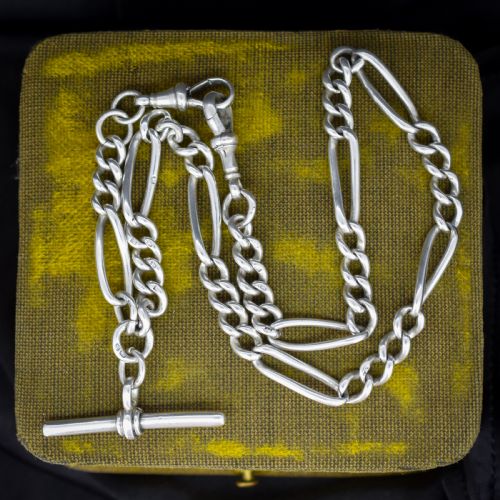
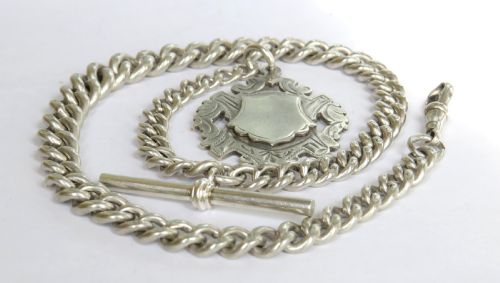
The pieces most commonly encountered on this page are sturdy sterling silver curb link albert chains and intricate book chains, often complete with original dog clips, T-bars, and hanging fobs. Many survive paired with swivel seals, lockets, or coin pendants that reflect the personal history and utility of their era.
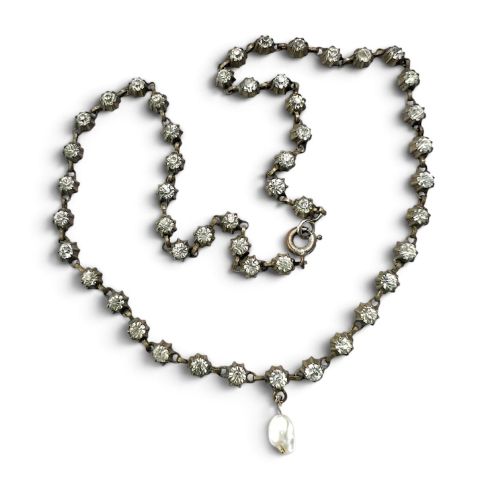
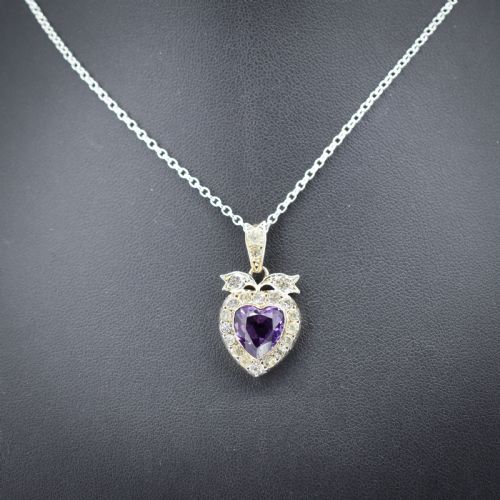
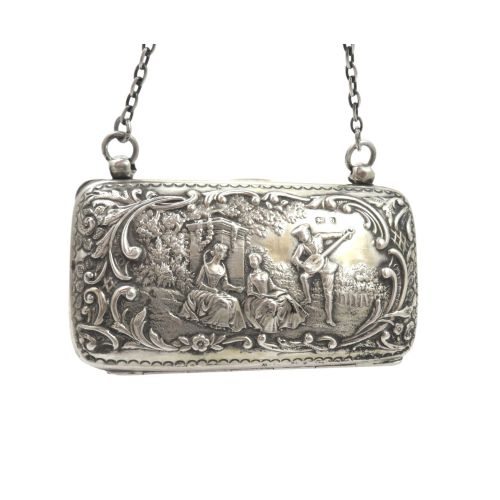
Beyond the standard albert and book chain forms, variations include longuard chains, chatelaine assemblies with hanging tools, and delicate albertina bracelets featuring tassels. Makers utilised sterling silver and continental silver, sometimes incorporating enamel, paste glass, or gold accents to enrich the design.
Materials and Construction
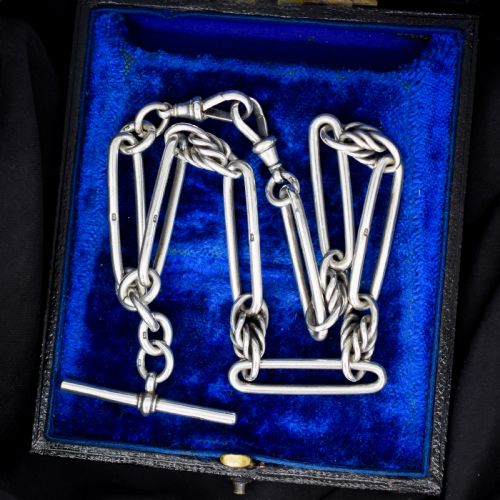
Silversmiths constructed these chains primarily from sterling silver and standard silver grades, frequently applying hallmarks that record assay offices in Birmingham and other centres. Links were individually stamped, cast, or folded, then assembled by hand to form curb patterns, trombone segments, or rigid book chain plates.
Surface decoration involved hand engraving, botanical motifs, niello inlay, and pierced openwork, creating textured highlights across the metal links. Functional components such as spring-loaded dog clips, swivel connectors, and T-bars were engineered from matching silver to withstand regular wear.
Some chains multitask by dangling tiny silver thimbles, tiny buckets, or working tinder boxes right alongside the pocket watch.
Factors of Quality
Superior quality in a victorian silver chain reveals itself in the substantial gauge of the silver links and the crisp definition of hand-engraved surface patterns. Heavier pieces maintain structural integrity without excessive link thinning from decades of friction.
Original components dictate the upper tier of desirability, particularly matching silver hallmarks across every link, intact dog clips with strong spring tension, and period-correct fobs or lockets. Retaining the original T-bar and swivel mechanism preserves the integrity of the piece.
Joseph Bladon
The Victorian Silver Chain Glossary
- Albert chain
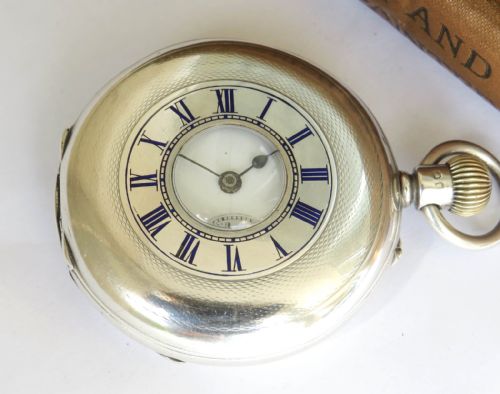
- A watch chain designed to secure a pocket watch in a waistcoat pocket, featuring a T-bar at one end and a swivel clip at the other. It is named after Prince Albert, who popularized the fashion.
- Book chain
- A necklace or bracelet constructed from folded rectangular silver links that resemble the pages or spine of a book. These pieces often feature central lockets or engraved floral motifs.
- Dog clip
- A spring-loaded swivel clasp attached to watch chains and necklaces for securing fobs, pendants, or pocket watches. The spring mechanism allows quick attachment and release.
- T-bar
- A short transverse bar of silver attached to the middle or end of a watch chain, designed to slip through a buttonhole to anchor the chain securely. It serves as both a functional toggle and a decorative element.
- Vesta
- A small pocket container specifically manufactured for holding matches, often suspended from a silver chain alongside a pocket watch or albertina.
- Albertina
- A scaled-down, multi-strand variation of the albert chain traditionally worn by women as a bracelet or delicate necklace, frequently ending in a tassel.
Victorian Silver Chain: Frequently Asked Questions
How do I wear an albert chain as a necklace?
An albert chain easily transitions into a necklace by fastening the dog clip directly to one of the links or to the T-bar itself. The length allows the T-bar to drop gracefully as a pendant accent.
Many collectors wear these shorter lengths as chokers, letting the hanging drop or swivel fob rest centrally against the collarbone.
How can I date a silver chain without hallmarks?
Dating relies on stylistic clues such as clasp construction, link geometry, and accompanying charms like coins or lockets. Spring-loaded dog clips and hollow stamped components often point towards the later Victorian decades.
Matching components and specific engraving styles help narrow the production window when official assay marks are absent or rubbed.
Can I attach modern charms to a Victorian silver chain?
Attaching modern charms is possible if the jump rings fit the gauge of the antique links, though original antique dags and fobs preserve historical context. The existing dog clips and swivel connectors accommodate additional pendants securely.
Care should be taken to ensure added weight does not strain delicate link connections, particularly on albertina bracelets or lighter book chains.