




Victorian Silver Basket Handle
Victorian silver basket handle designs span swing handles on sugar bowls to fixed loops on fruit dishes, bringing period grace to the table.

Victorian Silver Basket Handle
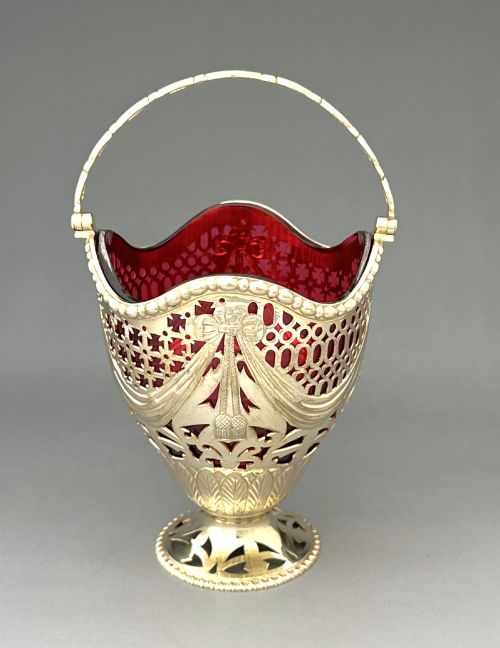
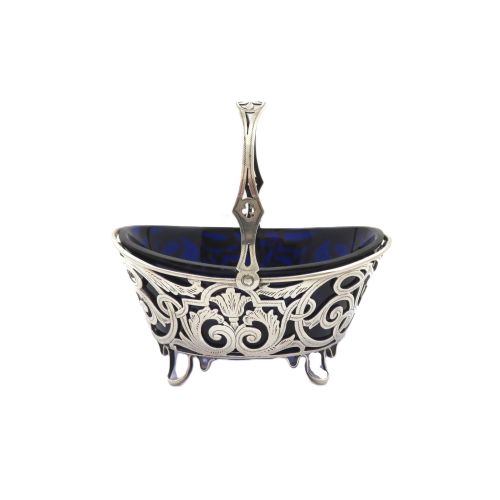
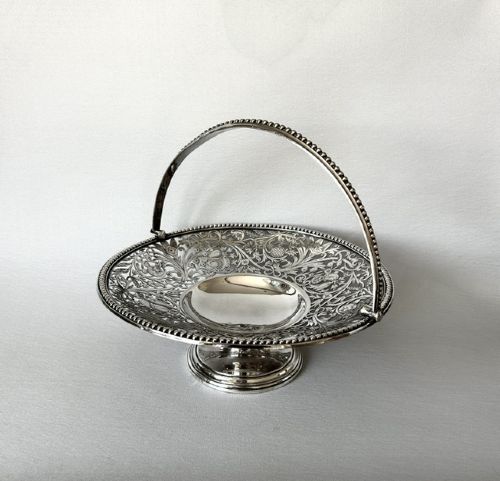
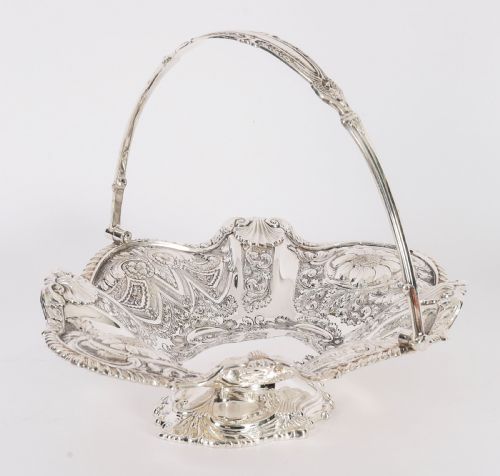
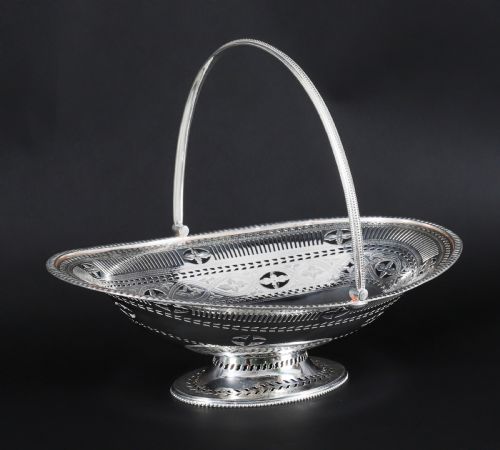
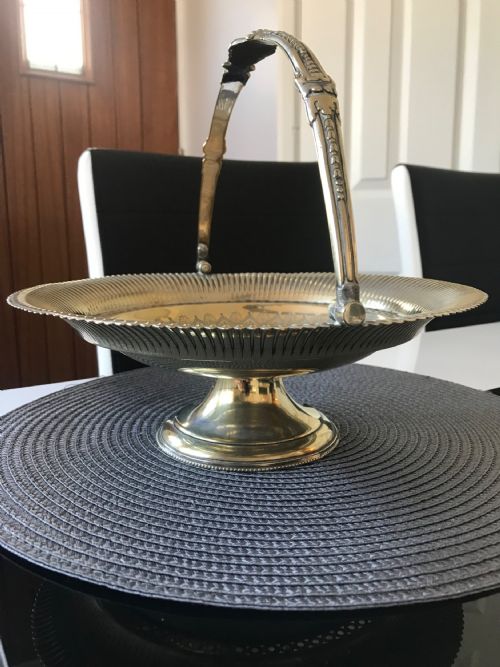
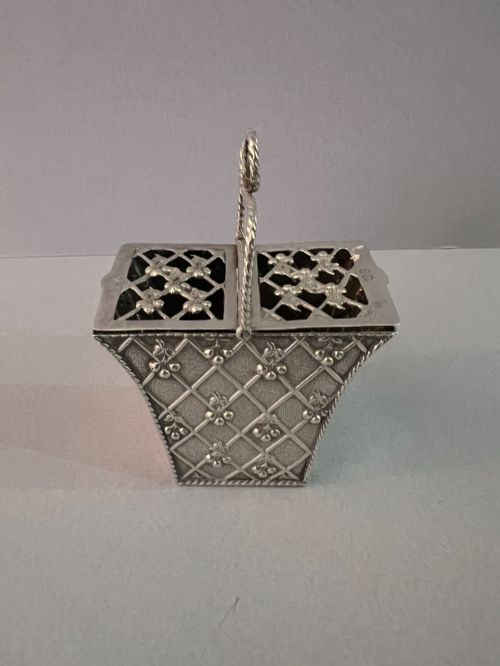
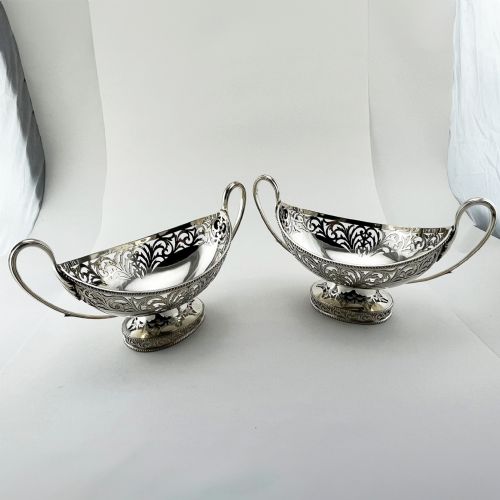
A victorian silver basket handle sits above tableware such as fruit baskets, sugar baskets, sweetmeat bowls, and bread baskets. These vessels originate primarily in the nineteenth century, with specific examples appearing from the 1840s onwards through the Edwardian transition.
The handle itself changes form depending on the vessel's function, ranging from heavy cast floral loops on sugar baskets to slender swing handles on woven wire fruit dishes. Buyers encounter both sterling silver pieces bearing town hallmarks and silver plated examples mounted on metal frames.
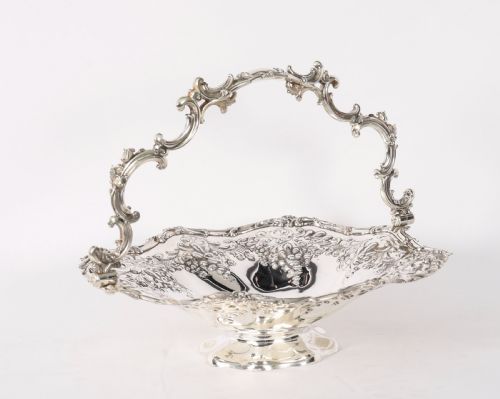
Many designs incorporate coloured glass liners, including cranberry glass, cobalt glass, and opaline glass, held within pierced or solid metal frameworks. The forms bridge several aesthetic movements, reflecting Neoclassical symmetry, Rococo Revival scrolls, and Art Nouveau curves.
Materials and Techniques
Silversmiths and electroplaters constructed these baskets using solid sterling silver or silver plate over a base metal, frequently employing electroplated nickel silver. Piercing, embossing, and intricate wickerwork techniques shaped the metal bodies into open lattice patterns or solid bowls.
Handles were often cast separately with floral or reeded details before being pinned or hinged to the rim to allow movement. Liners of cut crystal or coloured glass were blown and fitted specifically to the metal frameworks.
Victorian Silver Basket Handle Retail Price Guide 2026
Typical asking prices for victorian silver basket handle among the pieces listed under this phrase on Sellingantiques today, from the lower quarter to the upper quarter. They describe what is for sale here now, not the wider market.
Sweetmeat baskets were originally intended for delicate sugar plums passed around during formal Victorian drawing-room gatherings.
Quality and Craftsmanship
The standard of a piece depends on the weight of the metal and the crispness of the hand-chased or embossed detailing. Heavy gauge sterling silver and well-defined cast handles separate finer workshop output from lighter commercial production.
The integrity of the structural joinery on swing handles and the clarity of coloured glass liners dictate the overall calibre of the item. Intricate pierced work and fully legible hallmarks pointing to established makers elevate individual examples.
George W. Scott & Sons Ltd·Thomas Bradbury·James Deakin & Sons·Roberts and Belk·Edward H Stockwell·W M F·George Fox·James Dixon
The Victorian Silver Basket Handle Glossary
- Swing handle
- A movable arched handle attached to the rim of a basket by pivots, allowing it to drop to the sides.
- Pierced work
- A decorative technique where metal is cut through to create openwork patterns such as lattices or scrollwork.
- Silver gilt
- Silver objects coated with a thin layer of gold on the surface, often seen on interior bowls.
- Sweetmeat basket
- A small decorative vessel designed for serving small confections, nuts, or sweet preserves.
- Hallmark
- Official stamped marks indicating the metal purity, assay office, and year of manufacture on British silver.
Victorian Silver Basket Handle: Frequently Asked Questions
How are swing handles attached?
Swing handles are typically mounted on small pivots or hinges fixed directly to the rim of the basket. This allows the handle to move freely from side to side.
In period pieces, these hinge joints are integrated cleanly into the overall design of the rim or border.
What glass liners were used?
Makers utilised blown glass liners in vibrant colours such as cranberry red, cobalt blue, and opaline white. These liners protected the metal from acidic foods and added visual contrast.
Cut crystal liners also appear in heavier table service pieces from the period.
How do I identify a sugar basket?
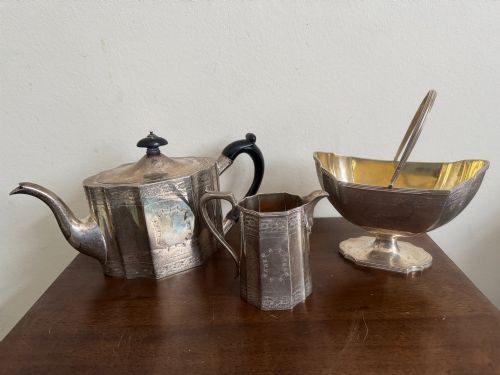
Sugar baskets are generally smaller than fruit or bread baskets and often accompany tea sets or sifter spoons. They frequently feature fixed or swing handles with deep bowls designed for lump sugar.
Many examples include matching glass liners or pierced silver bodies.
What styles influenced these designs?
The pieces reflect several overlapping design movements of the nineteenth century, including Neoclassical symmetry, Rococo Revival scrolls, and Aesthetic Movement motifs. Later examples incorporate Art Nouveau lines.
These stylistic shifts appear in the border patterns, handle castings, and foot mounts.