




Victorian Serving Trolley
A Victorian serving trolley brings practical nineteenth-century engineering and rich timber into a room.
Victorian Serving Trolley
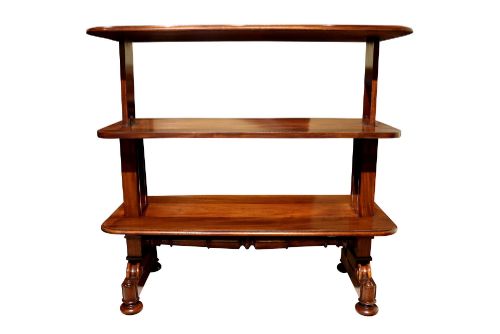
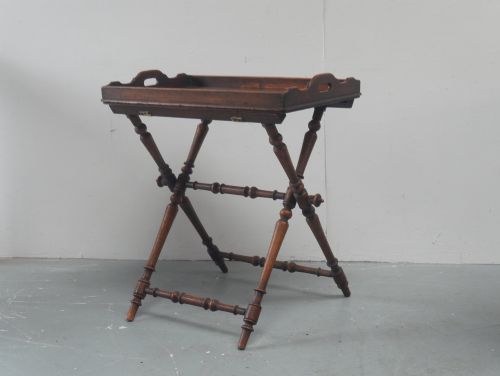
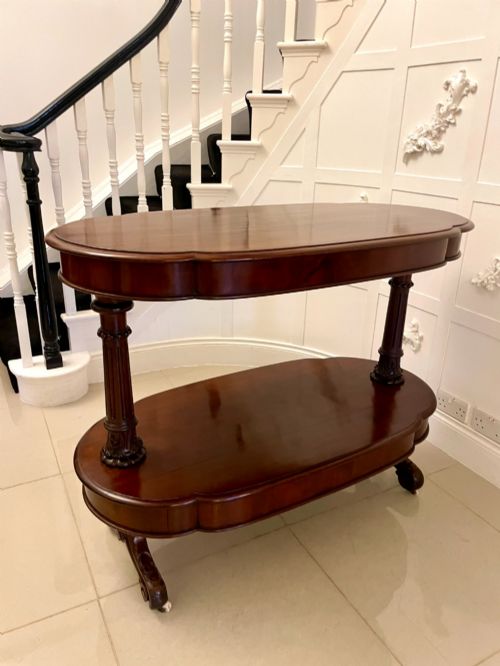
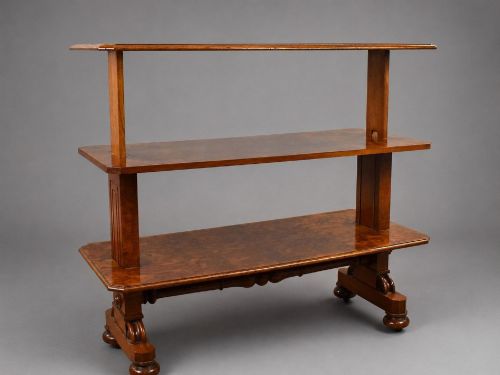
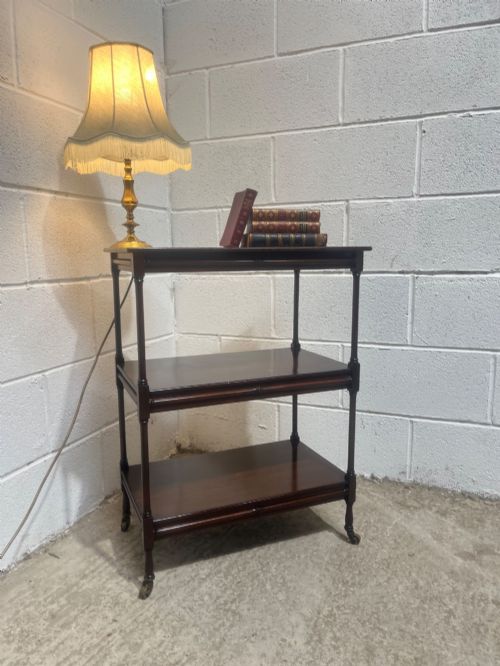
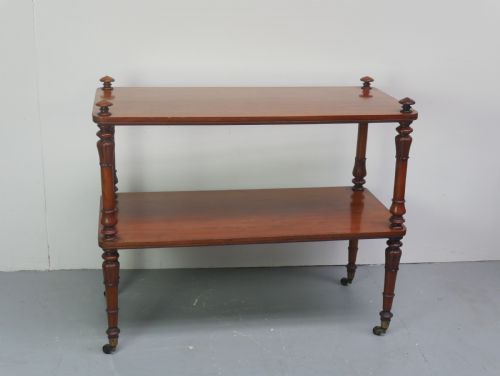
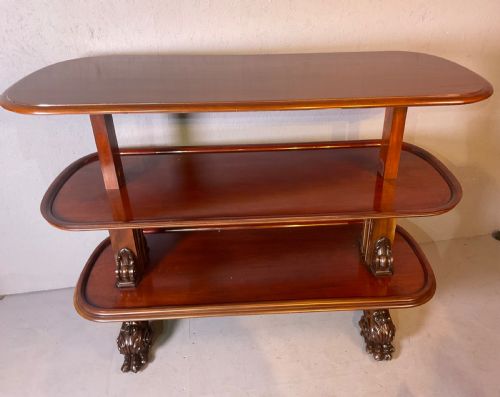
When you search for a victorian serving trolley, you are looking at substantial nineteenth-century furniture designed for moving food, drink and tableware. The pieces on this page span the Victorian era, including specific dates around eighteen-fifty, and take forms such as dumbwaiters, etagere trolleys, drinks trolleys, serving tables, and multi-tiered buffets.
The selection ranges from large metamorphic dumb waiters to open serving trolleys and three-tier buffets. These items originate firmly within the Victorian period, serving as functional dining room furniture that adapts to various serving needs through tiered shelving and telescopic mechanisms.
Materials and construction
The construction of these pieces relies on solid nineteenth-century cabinet-making traditions, utilising a range of distinct timbers. Workshops built these serving tables and dumbwaiters using mahogany, oak, walnut, and burr walnut, alongside pollard oak for specific figured surfaces.
Metal components appear frequently alongside timber to provide structural support and mobility. Brass hardware is integrated into the designs, complementing the polished mahogany and oak tiers of the etageres and trolleys.
Victorian Serving Trolley Retail Price Guide 2026
Typical asking prices for victorian serving trolley among the pieces listed under this phrase on Sellingantiques today, from the lower quarter to the upper quarter. They describe what is for sale here now, not the wider market.
Some nineteenth-century diners preferred their furniture to stretch upward on command, which explains why a heavy oak tea service could suddenly rise in the middle of dinner.
Distinctions in quality
Quality in these serving pieces rests upon the selection of timber and the ambition of the mechanism. Pieces featuring burr walnut or pollard oak display superior figure and grain compared to standard utility items.
Mechanical complexity separates standard multi-tier buffets from exceptional examples. Telescopic columns and metamorphic designs demand precise joinery and engineering that elevate the piece above a static serving table.
The Victorian Serving Trolley Glossary
- Dumbwaiter
- A multi-tiered piece of dining furniture used for holding food and dishes without the need for servants. These items often feature graduating shelves supported by turned columns.
- Metamorphic
- Describing furniture that transforms from one form or size into another through folding or telescopic action. This clever engineering allows a compact stand to expand for service.
- Buffet
- A sideboard or serving table designed for displaying and serving food during nineteenth-century meals. Examples in this category frequently incorporate three tiers of timber shelving.
- Etagere
- A set of open shelves for displaying small objects or serving items, combining lightweight mobility with tiered storage. These pieces often serve as elegant drinks trolleys.
Victorian Serving Trolley: Frequently Asked Questions
How were dumbwaiters used?
Dumbwaiters were positioned near dining tables to hold dishes, glassware, and bottles during meals.
Their multiple tiers allowed hosts to keep serving items close at hand without requiring constant assistance from staff.
What woods are typical for these pieces?
Nineteenth-century makers utilised a variety of hardwoods suited to formal dining environments.
Mahogany and oak form the basis of most items, while burr walnut and pollard oak provide highly figured decorative surfaces.
How do metamorphic trolleys work?
Metamorphic trolleys incorporate mechanical elements that allow the furniture to alter its height or configuration.
Telescopic columns and folding sections enable the piece to expand for active service and contract for storage.