





Victorian Secretary Cabinet
A victorian secretary cabinet brings together a drop-front writing surface and fitted interior drawers behind handsome timber doors.
Victorian Secretary Cabinet
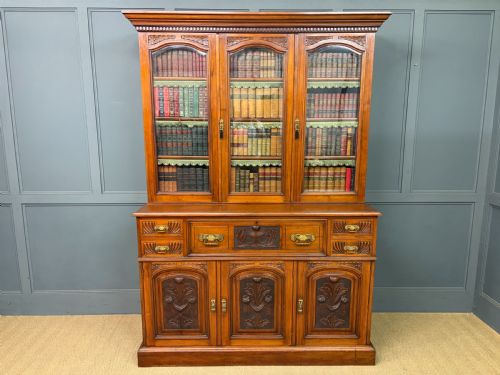
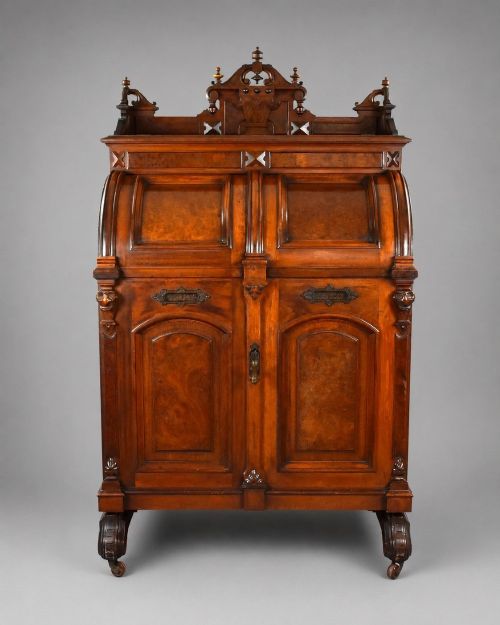
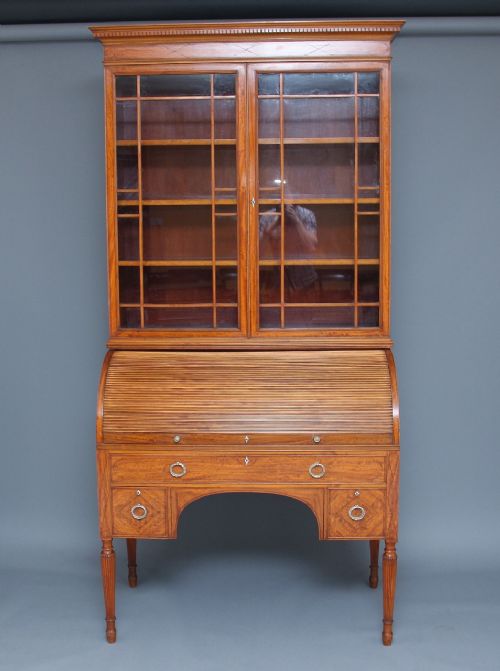
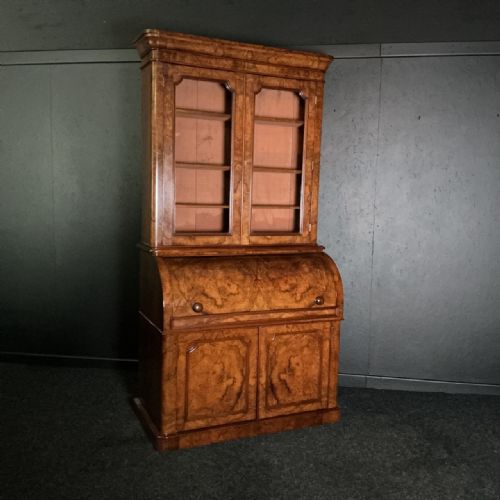
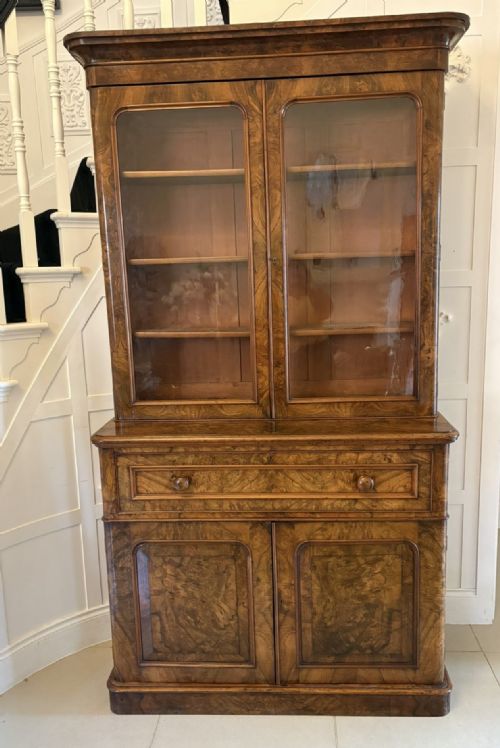
A victorian secretary cabinet combines a practical workspace with upper storage in a single footprint. These pieces include large bookcase cabinets with glazed doors as well as compact cylinder desks and Davenport forms.
Mahogany and walnut dominate the selection, often featuring burr veneers or inlaid details. Most examples date from the nineteenth century, ranging from mid-period walnut items to late Victorian oak designs.
How They Were Made
Cabinet makers utilised dense hardwoods like mahogany, oak, and walnut for the primary carcases, applying burr walnut and satinwood veneers to prominent display surfaces. Brass hardware, glazed panels, and leather writing inserts completed the functional compartments.
Joinery techniques relied on sturdy structural framing to support heavy book collections and drop-front writing surfaces. Intricate marquetry and inlaid banding demonstrate the high level of cabinet-making skill present in these workshop pieces.
The documented pieces span from early Victorian and Georgian antecedents through to Arts and Crafts designs.
What Varies in Quality
The selection of timber grain and veneer matching defines the visual merit of each cabinet. Pieces utilising figured burr walnut, satinwood, or finely cut mahogany exhibit greater depth than plainer examples.
Internal complexity sets apart the finer items, such as fitted stationery compartments inside cylinder desks or intricate marquetry panels. The integration of glazed doors, brass mounts, and original leather writing surfaces indicates the maker's original investment of time and material.
Edwards & Roberts·George W Jack·Harris Lebus·Liberty of London·Morris & Co
The Victorian Secretary Cabinet Glossary
- Secretaire
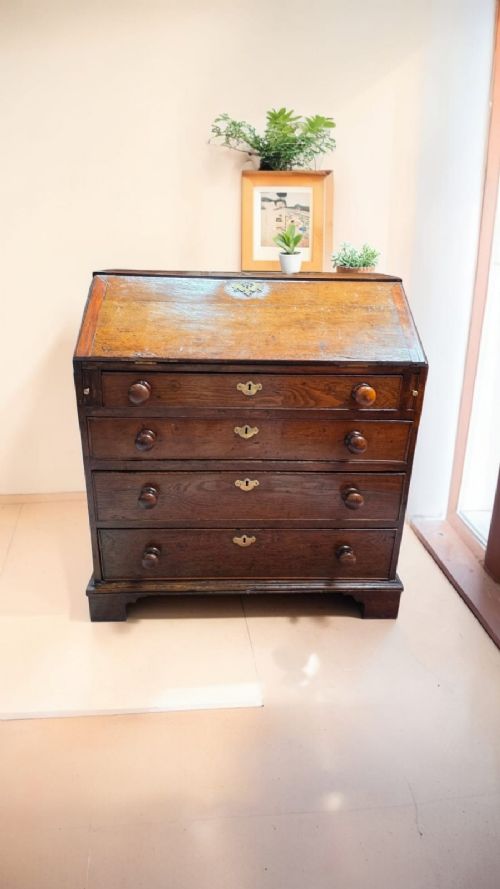
- A writing cabinet featuring a drop-front drawer that opens to reveal small drawers and pigeonholes. This clever mechanism conceals private correspondence while providing a stable writing surface.
- Burr Walnut
- A timber harvested from walnut tree growths that produces swirling, highly decorative grain patterns. Cabinet makers prized this wood for veneering prominent drawer fronts and cabinet doors.
- Bonheur du Jour
- A light lady's writing desk featuring a small cabinet or set of shelves mounted on top. These dainty pieces gained popularity during the nineteenth century for drawing room use.
- Cylinder Desk
- A writing desk with a curved, rotating wooden cylinder that covers the desk top and pigeonholes. When closed, the mechanism conceals all the writing materials within the carcase.
Victorian Secretary Cabinet: Frequently Asked Questions
What is a secretaire bookcase?
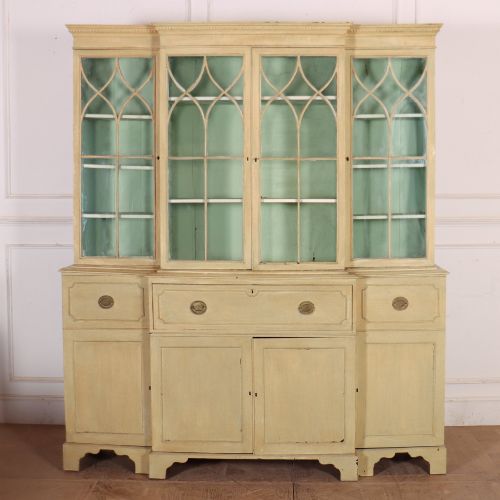
A secretaire bookcase combines a glazed upper section for books with a lower cabinet containing a pull-out writing drawer.
The drop-front drawer opens to display a fitted interior of small drawers and pigeonholes, allowing the piece to function as both a desk and a bookcase.
How do I use a cylinder desk?
The curved wooden cylinder rolls backward into the body of the desk to reveal the writing surface and internal compartments.
Pulling the writing slide forward or lifting the fall-front activates the mechanism on certain models, granting access to the stationery drawers.
Where should I place a secretary cabinet?
These cabinets suit studies, living rooms, and large home offices where their vertical storage and fold-down desks save floor space.
Keep them away from direct sunlight and heat sources to protect timber veneers and leather writing surfaces from drying out.
How do I date a Victorian cabinet?
Examine the timber choices, construction methods, and secondary woods used inside the drawers to determine the approximate period of manufacture.
Mid-century pieces frequently employ solid mahogany, while late Victorian examples often feature oak or walnut with machine-cut dovetails and glass panels.