
Victorian Scottish Landscape Painting
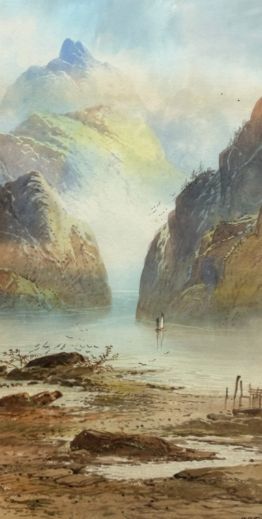
Victorian scottish landscape painting captures dramatic highland terrain, sweeping lochs and cattle under shifting nineteenth-century skies.
Victorian Scottish Landscape Painting
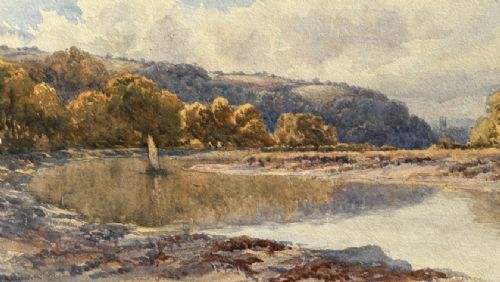
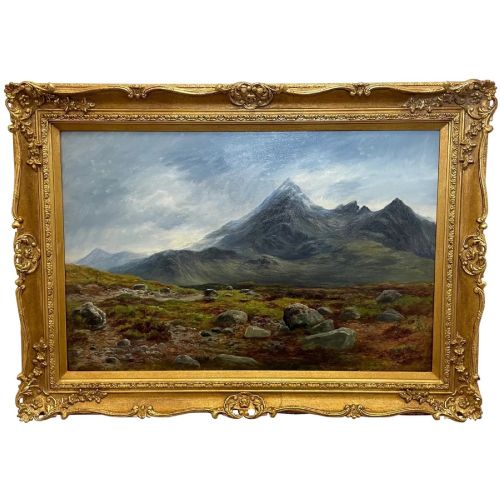
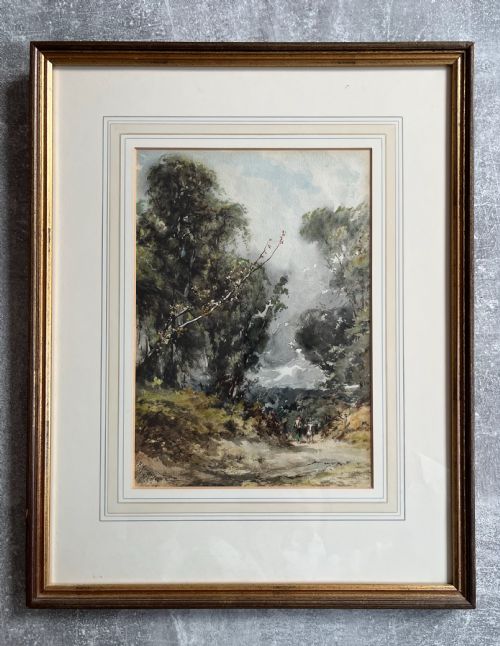
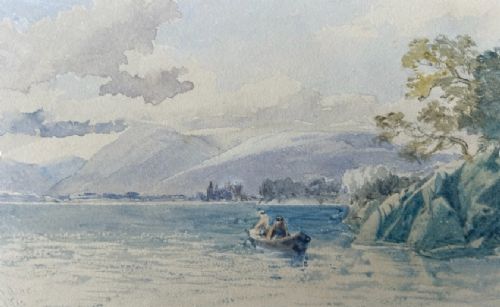
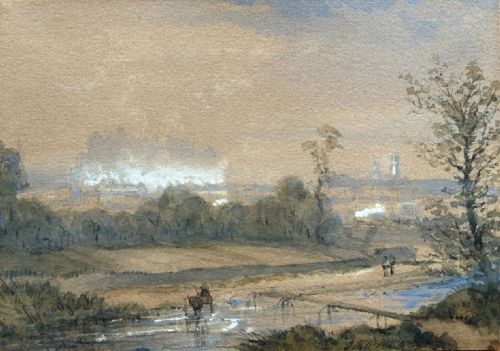
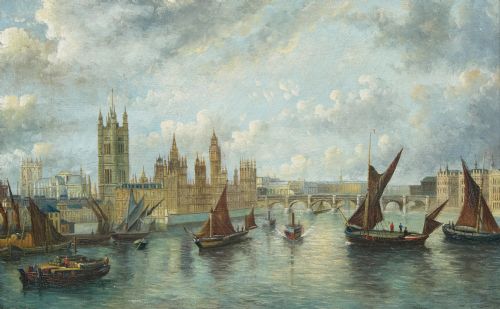
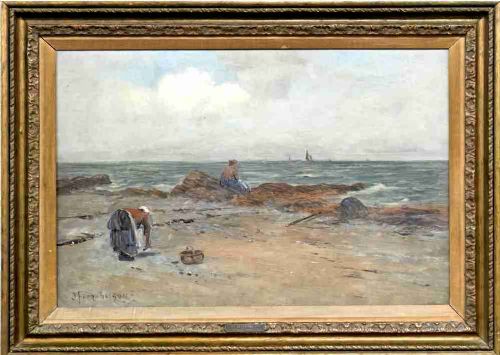
A buyer examining a victorian scottish landscape painting encounters framed works depicting recognizable locations such as Loch Tay, Glen Tilt and Arran. The selections span watercolours on paper and oils on canvas or wood panel, often recording rural crofts, misty mountains and highland wildlife.
Most examples originate from the nineteenth century into the early twentieth century, carrying the stylistic hallmarks of Victorian landscape painting and nineteenth century romanticism. Subjects frequently highlight the dramatic topography and atmospheric weather conditions peculiar to the Scottish highlands and coastal castles.
Materials and Technique
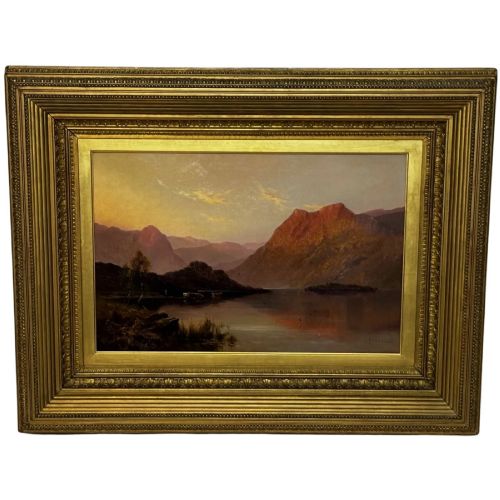
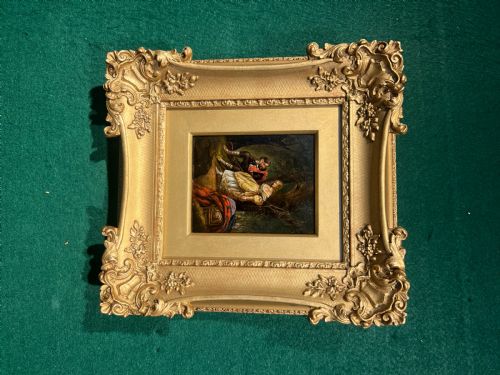
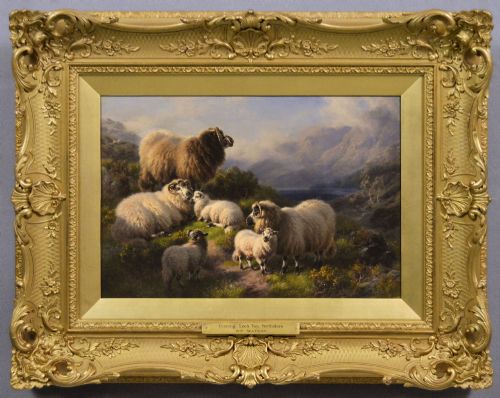
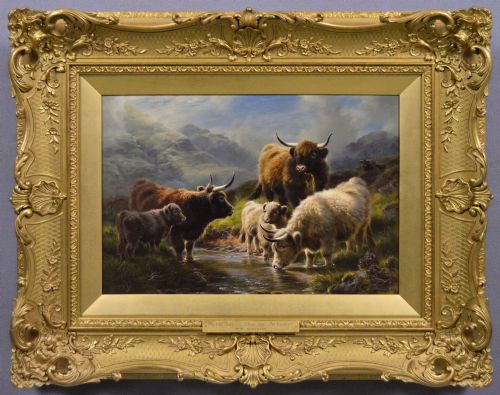
Artists built these compositions primarily using oil paint on canvas or wood panel, alongside delicate watercolour paintings on paper. Canvases frequently sit within period giltwood and gesso frames embellished with gold leaf, reflecting the ornamental framing standards of the era.
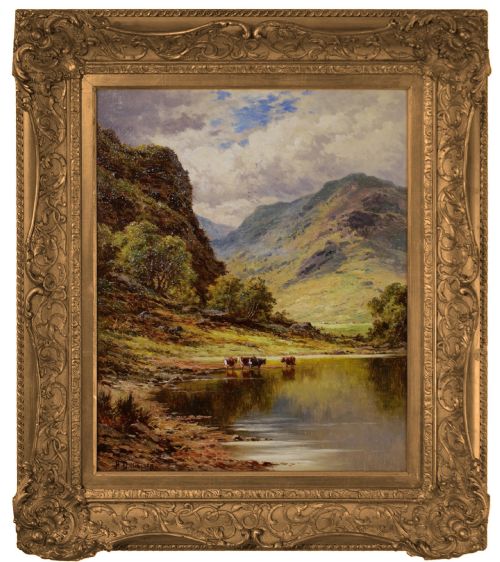
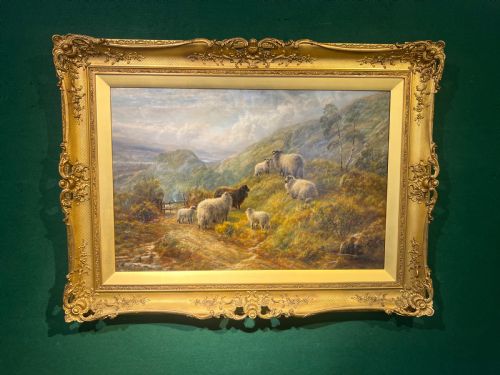
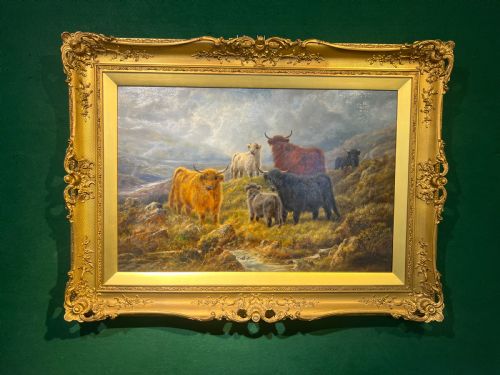
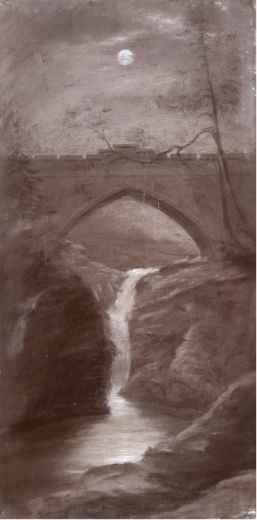
Brushwork ranges from tightly controlled naturalist detail in depicting highland cattle and sheep to looser, atmospheric applications of oil and charcoal capturing moonlight or mist over lochs. Pigments were applied to build depth in mountainous backdrops while maintaining luminous effects across water surfaces.
Several canvases manage to make highland cattle look remarkably stoic while standing knee-deep in freezing Scottish lochs.
Evaluating the Range
Quality in these works rests upon the artist's command of atmospheric light, naturalistic proportion and the handling of complex terrain like crags and moving water. Stronger pieces demonstrate confident draughtsmanship in rendered livestock or architecture balanced against evocative, unforced skies.
The integrity of the original giltwood and gesso frame contributes significantly to the overall standing of a piece, as does a clear signature, legible date or documented exhibition provenance. Works showing sustained compositional harmony outrank routine topographical records.
William Beattie Brown·Thomas Miles Richardson Jnr·Joseph Farquharson·William Watson Jnr·Robert Cleminson
The Victorian Scottish Landscape Painting Glossary
- Gesso
- A plaster-like material applied to wooden frame bases to provide a smooth surface for gilding. It allows intricate moulded ornamentation to be fixed around the perimeter of the canvas.
- Giltwood
- Timber carved and coated with gold leaf or metallic paint. This finish defines the ornate framing typical of nineteenth century exhibition pieces.
- Monogram
- A cipher formed by overlapping initials of an artist's name used in place of a full signature. These marks appear frequently on period watercolours and oils.
- RSA
- The post-nominal letters designating a member of the Royal Scottish Academy. This body represented recognised professional painters working in Scotland.
- Provenance
- The documented history of ownership associated with an artwork. It provides verifiable context regarding where a painting was exhibited or housed.
Victorian Scottish Landscape Painting: Frequently Asked Questions
How do I identify a genuine period frame?
Period frames on these works typically utilise carved wood coated in gesso and gold leaf, showing appropriate wear and oxidisation consistent with the nineteenth century. The mitre joints and moulding profiles correspond to standard Victorian framing practices.
Closer inspection reveals hand-applied ornament rather than modern synthetic resin castings, confirming the frame has remained with the canvas over generations.
What subjects are most common in these works?
Artists focused heavily on highland scenery, featuring domestic livestock such as cattle and sheep resting near lochs or rivers. Coastal castles, ruined crofts and mountainous glens also appear frequently across both oils and watercolours.
These motifs responded directly to nineteenth century romanticism and a growing Victorian fascination with the remote Scottish wilderness.
Are watercolours as collectable as oil paintings?
Watercolour paintings on paper hold a significant place in this category, often executed with remarkable precision by members of royal societies. They provide intimate views of Scottish scenery that complement larger oil on canvas compositions.
Condition plays a vital role when collecting watercolours, as works on paper require careful protection from direct sunlight to preserve pigment vibrancy.
How should I care for an antique oil painting?
Protect the canvas by hanging it away from direct heat sources and fluctuating humidity, which can cause the wooden stretcher and paint layer to crack. Dust the surface gently with a soft, dry brush without applying pressure.
Avoid using liquid cleaners on the paint or the giltwood frame, and consult a professional conservator if the canvas requires cleaning or re-stretching.