




Victorian Scottish Jewellery
Victorian Scottish jewellery brings together silver, banded stone and horn in pieces designed to catch the eye.
Victorian Scottish Jewellery
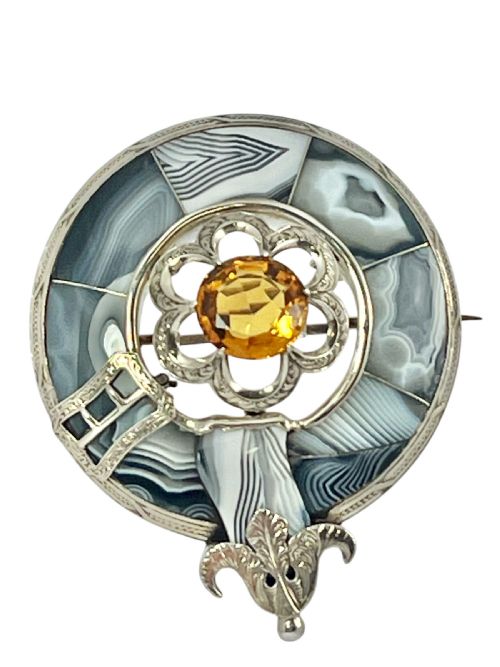
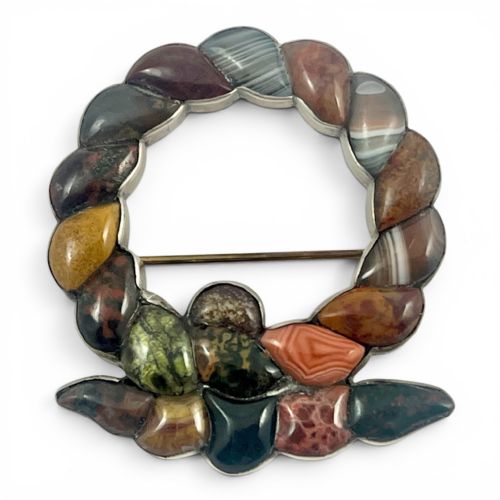
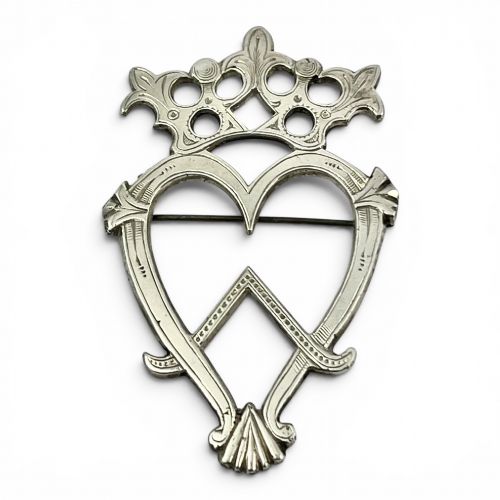
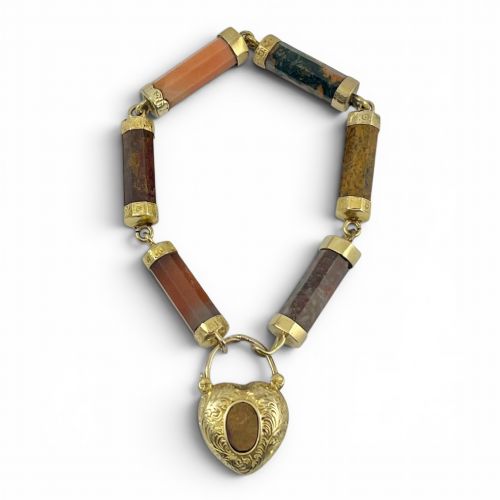
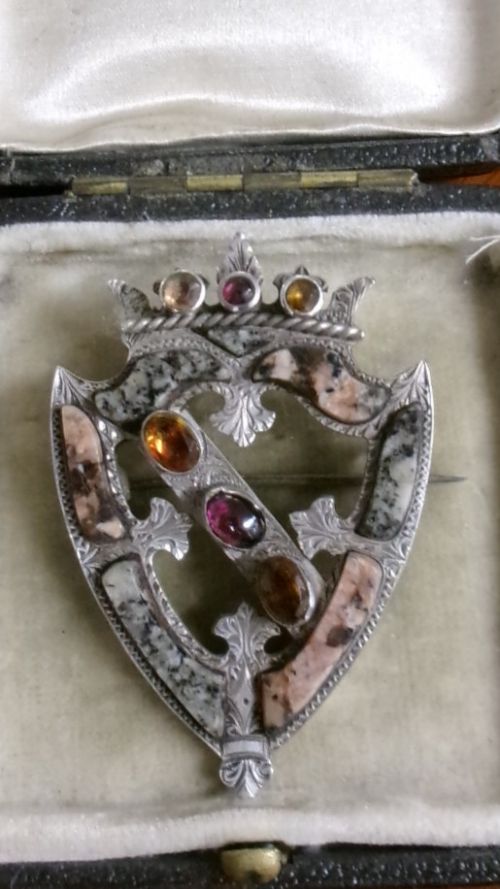
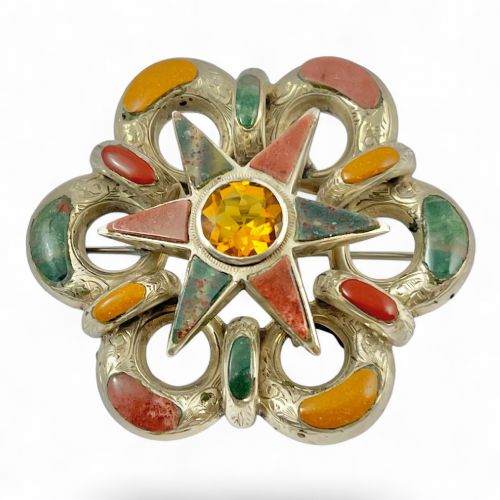
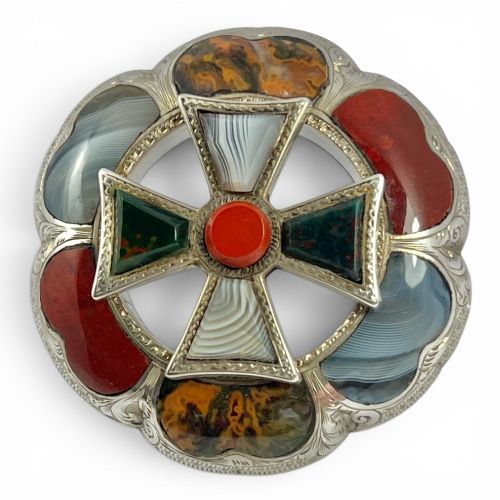
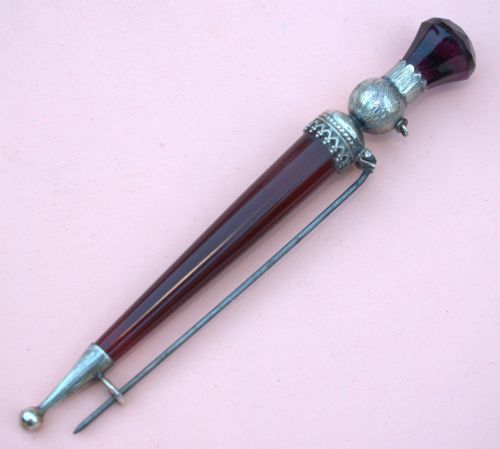
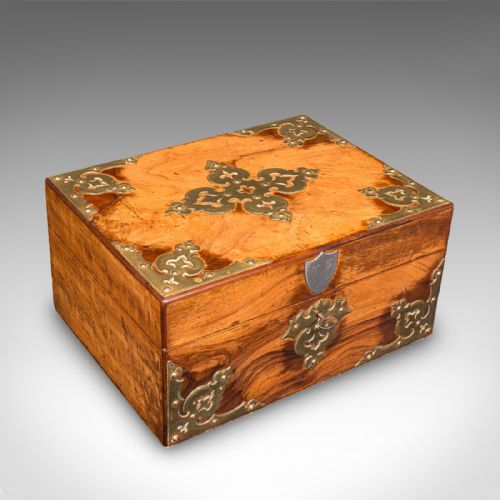
When you search for Victorian Scottish jewellery, you are looking at brooches, vinaigrettes and boxes shaped by nineteenth-century craft. These pieces draw on regional traditions of lapidary work and metalworking, reflecting the romantic revival popularised during the period. Most examples you meet on this page take the form of brooches set with native hardstones, alongside occasional boxes and small containers.
The surviving inventory spans from the early Victorian era through to the later decades of the nineteenth century. Provincial silversmiths and urban makers alike produced these works, utilising local materials to create distinct regional variations. Pieces range from large pebble brooches to intimate personal accessories designed for daily use.
Materials and construction
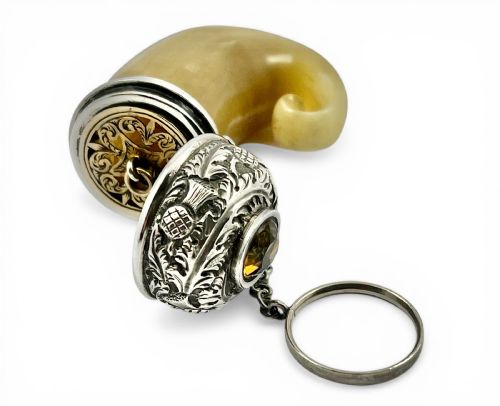
Makers fashioned these pieces primarily in silver and gilt metal, mounting native stones directly into the metalwork. Stones such as agate, jasper, bloodstone, citrine and Montrose agate feature heavily, shaped and polished to highlight natural banding and colour variations. In some instances, organic materials like horn and sycamore were utilised for boxes and vinaigrettes.
Lapidary techniques required precise cutting and fitting of hardstones into metal bezels, often arranged in geometric or pebble formations. Silversmiths worked by hand in provincial centres such as Inverness, applying chased details and secure pins to mount the heavier stones safely.
Victorian ladies once relied on miniature vinegar boxes to survive the overwhelming aromas of the nineteenth-century city street.
Assessing quality
Quality in these pieces rests upon the selection and matching of the hardstones, where well-chosen agate and jasper display striking natural patterns without excessive artificial enhancement. The precision of the lapidary work dictates how flush the stones sit within their silver mounts.
Metalwork execution separates standard production from finer provincial output, visible in the weight of the silver and the crispness of any chased or engraved decoration. The integration of varied stones into a coherent design demonstrates the skill of the original maker.
The Victorian Scottish Jewellery Glossary
- Agate
- A form of chalcedony displaying distinct natural banding or concentric rings, widely used in Scottish pebble jewellery. It was sourced locally and polished to a smooth finish.
- Montrose agate
- A specific variety of banded stone associated with the Montrose area, prized for its particular colouration and transparency within Victorian brooch settings.
- Vinaigrette
- A small decorative container featuring a perforated inner grille, designed to hold a sponge soaked in aromatic vinegar. These were carried for freshening the air during the nineteenth century.
- Provincial silver
- Silverware made and marked outside the main assay towns, often bearing local maker marks unique to specific Scottish burghs such as Inverness.
- Pebble brooch
- A form of jewellery composed of multiple smooth stones mounted together in silver, arranged to mimic natural collections of river stones.
Victorian Scottish Jewellery: Frequently Asked Questions
What is Victorian Scottish jewellery made from?
These pieces incorporate silver, gilt metal, horn and sycamore alongside native hardstones like agate, jasper, bloodstone and citrine.
The materials reflect the natural resources of Scotland, worked by regional makers into wearable accessories and small boxes.
How do I date a Scottish pebble brooch?
Dating relies on the style of the silver mount, the cut of the stones and any accompanying hallmarks or provincial maker marks.
Most surviving examples date from the mid to late nineteenth century, aligning with the Victorian romantic revival.
What was a vinaigrette used for?
A vinaigrette served as a personal container for carrying aromatic vinegar on a sponge beneath a pierced grille.
Owners used them to counter unpleasant odours in public spaces during the Victorian era.
Where were these pieces made?
Makers worked across Scotland, including provincial centres like Inverness as well as larger urban workshops.
Local silversmiths and lapidaries sourced native stones to produce distinctive regional designs.