


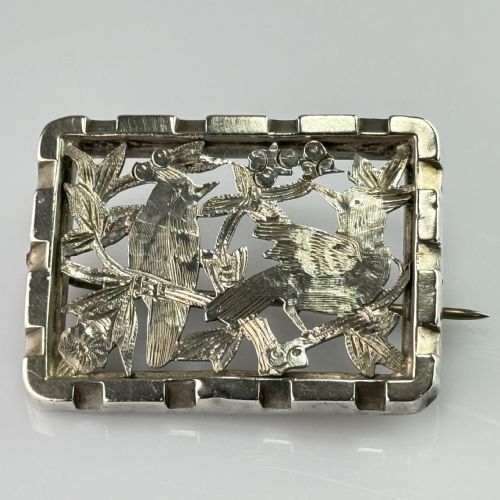

Victorian Silver Lapel Pin
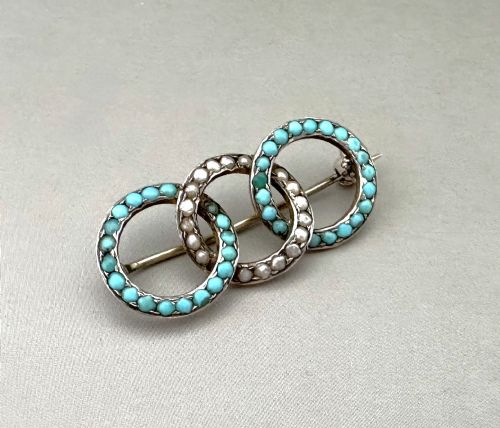
A victorian silver lapel pin fastens a collar or lapel with period character, combining precious metal and stone.
Victorian Silver Lapel Pin
A victorian silver lapel pin on this page typically takes the form of a brooch or pin, originating from the Victorian, Edwardian, and adjacent periods. These pieces serve to fasten garments while displaying decorative motifs.
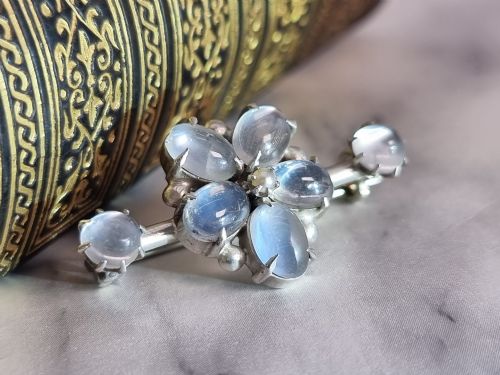
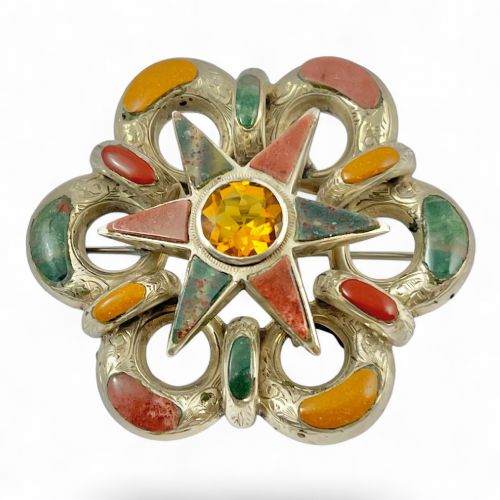
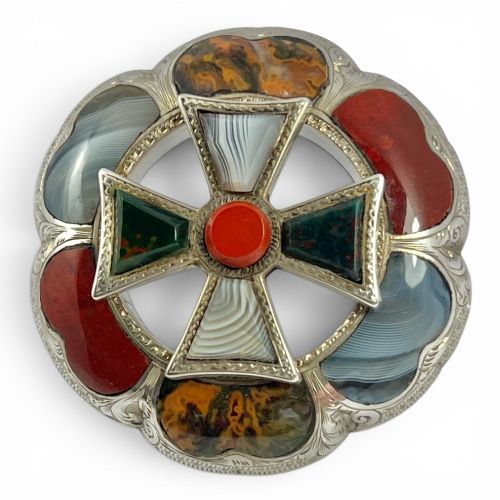
The selection ranges from Scottish pebble brooches set with agate and citrine to delicate flower, bird, and butterfly designs. Buyers frequently encounter silver combined with gold, diamonds, moonstones, and coloured gems across these listings.
What varies in quality
The standard of a piece depends on the crispness of the metal chasing, the precision of stone cutting, and the integrity of the settings. Finer examples display harmonious proportions and balanced placement of multiple gems.
Quality also rests on the preservation of original elements, such as intact enamel, well-matched agate panels, and secure pin mechanisms that sustain the structural balance of the jewel.
Victorian jewellers turned beetles and birds into wearable companions.
The Victorian Silver Lapel Pin Glossary
- Silver gilt
- Silver that has been coated with a thin layer of gold. This technique provides the warmth of gold alongside the durability of silver.
- Rose-cut
- An antique diamond cut featuring a flat base and a domed crown composed of triangular facets. It produces a soft, subtle gleam rather than modern brilliance.
- Pebble brooch
- A form of jewellery utilising polished native hardstones, particularly Scottish agates and jaspers, mounted in silver. These pieces gained popularity during the mid-nineteenth century.
- Collet setting
- A metal collar that wraps around the girdle of a gemstone to hold it in place. It is a traditional method associated with older jewellery manufacture.
- Foliate motif
- A decorative design incorporating leaves, vines, or foliage. This style draws inspiration from natural forms common in nineteenth-century design.
Victorian Silver Lapel Pin: Frequently Asked Questions
How were these pins worn?
These pieces were pinned directly to jackets, coats, cravats, or heavy wool garments to fasten cloth and ornamentation simultaneously.
In the nineteenth century, larger Scottish pebble designs secured plaid shawls, while smaller floral or insect motifs adorned lapels and collars.
How do I date a piece?
Dating relies on stylistic clues, material combinations, and motifs such as swallows, floral sprays, or Scottish hardstones typical of the Victorian and Edwardian eras.
Makers often utilised specific gemstone cuts, like rose-cut diamonds, which help narrow the production period.
Can I wear them on modern clothing?
These pins function well on heavier fabrics such as wool coats, tweed jackets, and thick cardigans that can support the weight of metal and stone.
Delicate silks may require a protective backing or careful placement to avoid pulling the threads.